
William F. Buckley, Jr. Biography Quotes 28 Report mistakes
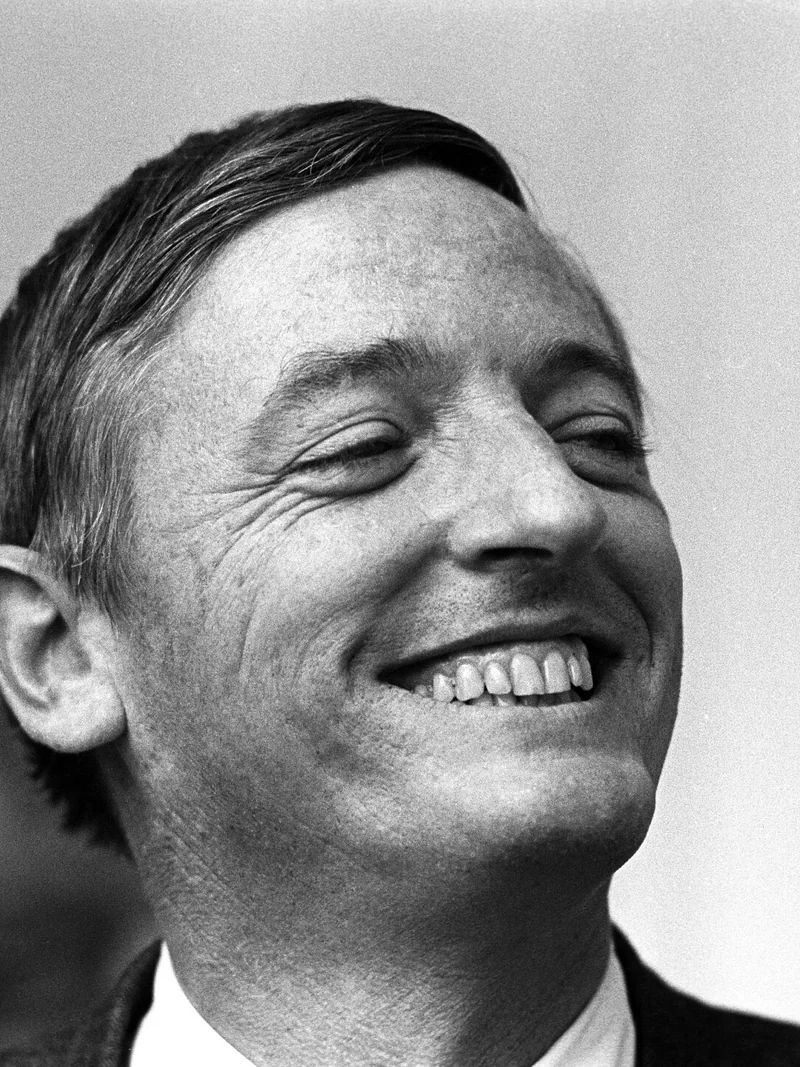
Attr: chronicle.com
| 28 Quotes | |
| Born as | William Francis Buckley Jr. |
| Occup. | Journalist |
| From | USA |
| Born | November 24, 1925 New York City, U.S. |
| Died | February 27, 2008 Stamford, Connecticut, U.S. |
| Aged | 82 years |
| Cite | |
Citation Formats
APA Style (7th ed.)
William f. buckley, jr. biography, facts and quotes. (2026, February 11). FixQuotes. https://fixquotes.com/authors/william-f-buckley-jr/
Chicago Style
"William F. Buckley, Jr. biography, facts and quotes." FixQuotes. February 11, 2026. https://fixquotes.com/authors/william-f-buckley-jr/.
MLA Style (9th ed.)
"William F. Buckley, Jr. biography, facts and quotes." FixQuotes, 11 Feb. 2026, https://fixquotes.com/authors/william-f-buckley-jr/. Accessed 25 Mar. 2026.
Early Life and Background
William Francis Buckley Jr. was born on November 24, 1925, in New York City and raised in a large, intensely Catholic family whose wealth, discipline, and worldly reach stamped him early. His father, William F. Buckley Sr., an oil entrepreneur, and his mother, Aloise Steiner Buckley, cultivated a household in which languages, music, and argument were everyday equipment, not adornments. The Buckleys moved frequently, including long periods in Connecticut, and the children were drilled in manners and rhetoric as if for public life.Buckley came of age as the United States entered global war and as the prestige of New Deal liberalism hardened into establishment common sense. He absorbed, at close range, the tensions that would define his adult career: gratitude for American power, suspicion of centralized government, and a patrician confidence that ideas mattered because they made institutions. The result was a personality at once playful and relentless - a man who could treat politics as sport and simultaneously as moral emergency.
Education and Formative Influences
After preparatory schooling that reinforced his Catholic and anti-communist sensibilities, Buckley served in the U.S. Army during World War II, then attended Yale University, graduating in 1950. At Yale he honed the traits that became his signature: an athletic delight in debate, a cultivated vocabulary used as both invitation and weapon, and a conviction that elite opinion could be wrong in systematic ways. His early encounters with campus liberal orthodoxy, combined with the emerging Cold War, pushed him toward a conservatism that fused traditional religion, free-market economics, and militant anti-communism.Career, Major Works, and Turning Points
Buckley briefly worked for the CIA and as an editor before detonating into public life with God and Man at Yale (1951), a critique of his alma mater for sidelining Christianity and laissez-faire capitalism. He followed with McCarthy and His Enemies (1954), a controversial defense of Joseph McCarthy that later shadowed his reputation, then built the central platform of postwar American conservatism by founding National Review in 1955. Through National Review, and later the television program Firing Line (1966-1999), he acted as a gatekeeper and impresario: elevating writers, disciplining factions, and trying to make conservatism both intellectually respectable and electorally effective. His high-profile 1965 run for mayor of New York City, his debates with figures like James Baldwin, and his long friendship with Ronald Reagan placed him at the hinge where movement ideas became governing ideology, even as he periodically distanced himself from conspiracy-minded extremists to keep the coalition coherent.Philosophy, Style, and Themes
Buckley sold conservatism not only as a program but as a temperament - skeptical of utopian schemes, allergic to bureaucratic confidence, and unembarrassed by hierarchy so long as it served liberty and virtue. His famous self-description, “A Conservative is a fellow who is standing athwart history yelling 'Stop!'”. captured his sense that modernity had a velocity that could flatten inherited restraints: religion, local authority, and the moral expectations that make freedom sustainable. Yet his was not a purely nostalgic mind; he believed the Cold War required a hard realism and that democratic societies needed intellectual opposition to avoid the complacency of one-party culture.His style turned argument into theater, mixing erudition with a duelist's timing. The barbed courtesy - the grin that preceded the thrust - is distilled in, “I won't insult your intelligence by suggesting that you really believe what you just said”. That line was less a punchline than a psychological tactic: to shame cant, to force clarity, and to make viewers feel that precision was a moral duty. Underneath the wit lay a consistent suspicion of credentialed authority, sharpened by his campus experiences and his view that elites often confuse expertise with wisdom: “I'd rather entrust the government of the United States to the first 400 people listed in the Boston telephone directory than to the faculty of Harvard University”. The joke conveyed an inner faith in ordinary judgment and an outer strategy - puncturing the aura of institutional sanctity that, in his eyes, protected bad ideas from scrutiny.
Legacy and Influence
Buckley died on February 27, 2008, in Stamford, Connecticut, after more than half a century as conservatism's leading stylist and organizer. His enduring influence lies in infrastructure as much as in prose: National Review shaped generations of writers and legislators; Firing Line modeled long-form televised argument; and his own books, columns, and speeches taught the American right to see itself as an intellectual tradition rather than a mood. The record is complicated - especially his early stance on civil rights and his defense of anti-communist excesses - but his larger achievement was to make ideas socially consequential again, proving that a single journalist, armed with confidence, networks, and sentences built like traps, could refashion a political era.Our collection contains 28 quotes written by William, under the main topics: Witty One-Liners - Ethics & Morality - Truth - Wisdom - Dark Humor.
William F. Buckley, Jr. Famous Works
- 1976 Saving the Queen (Novel)
- 1959 Up from Liberalism (Book)
- 1954 McCarthy and His Enemies (Book)
- 1951 God and Man at Yale (Book)