
William Faulkner Biography Quotes 49 Report mistakes
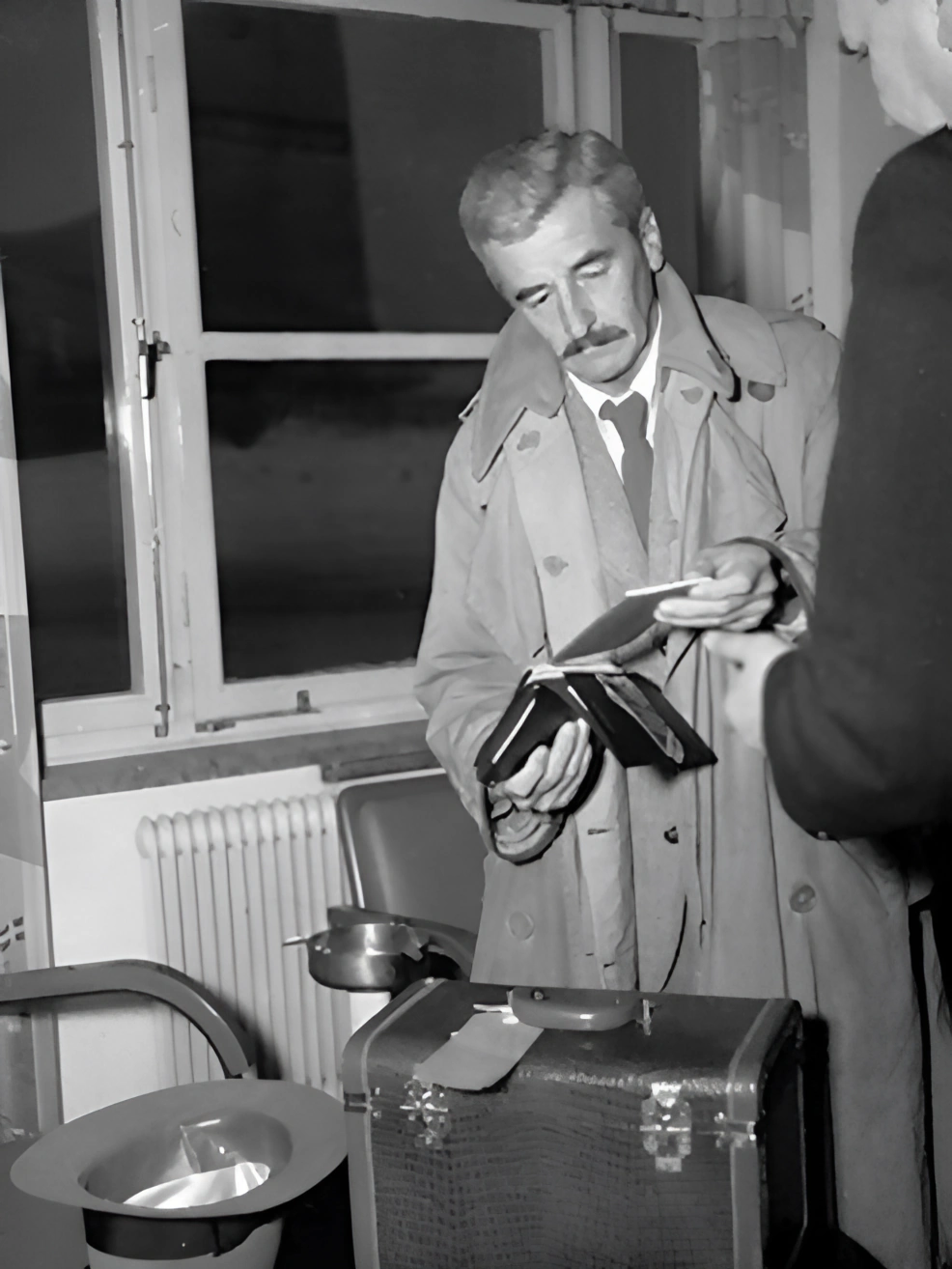
| 49 Quotes | |
| Born as | William Cuthbert Faulkner |
| Occup. | Novelist |
| From | USA |
| Born | September 25, 1897 New Albany, Mississippi, USA |
| Died | July 6, 1962 Byhalia, Mississippi, USA |
| Aged | 64 years |
| Cite | |
Citation Formats
APA Style (7th ed.)
William faulkner biography, facts and quotes. (2026, February 11). FixQuotes. https://fixquotes.com/authors/william-faulkner/
Chicago Style
"William Faulkner biography, facts and quotes." FixQuotes. February 11, 2026. https://fixquotes.com/authors/william-faulkner/.
MLA Style (9th ed.)
"William Faulkner biography, facts and quotes." FixQuotes, 11 Feb. 2026, https://fixquotes.com/authors/william-faulkner/. Accessed 5 Mar. 2026.
Early Life and Background
William Cuthbert Faulkner was born on September 25, 1897, in New Albany, Mississippi, into a family that carried both pride and fracture as inheritances. His great-grandfather, the Confederate officer and railroad entrepreneur William Clark Falkner, had been a local legend - and a cautionary tale - and the family memory of status, violence, and loss seeded Faulkner's lifelong fixation on how a community mythologizes itself. When he was a child the family moved to Oxford, in Lafayette County, a courthouse-town culture of talk, kinship, debt, and racial hierarchy that would later be transfigured into Yoknapatawpha County.Faulkner grew up amid Reconstruction's long shadow and the rigid codes of Jim Crow, watching the public theater of deference and the private knowledge of brutality. He read widely, drew, and wrote early, but also cultivated the pose of the Oxford young man who could vanish into silence. That mixture - performative confidence and inward unease - became part of his method: he would write about the South not as a set of regional quirks, but as a moral weather system in which families and counties are pressured by history until they crack.
Education and Formative Influences
He was an uneven student and left high school before graduating, more drawn to books than classrooms, and his early formation came from voracious self-education and local mentorship. He tried to enter the US Army in World War I, then joined the Royal Canadian Air Force; the war ended before he saw combat, yet the experience deepened his sense of missed destinies and invented identities - he sometimes embellished his service afterward. In Oxford he fell into a circle around the poet Phil Stone, encountered modernist writing, and absorbed both the discipline of craft and the shock of new forms; his early poems and the first novel, Soldiers' Pay (1926), were steps toward the larger project of turning Mississippi into an imaginative universe.Career, Major Works, and Turning Points
Faulkner's major turning point came with Sartoris (1929), his first sustained attempt to write the doomed genealogy of a Southern family, followed quickly by The Sound and the Fury (1929), As I Lay Dying (1930), Sanctuary (1931), Light in August (1932), and Absalom, Absalom! (1936) - a run that remade the American novel through fractured chronology, interior monologue, and choral narration. He supported himself with short stories (many in magazines) and intermittent Hollywood screenwriting, including work for director Howard Hawks, a compromise he alternately needed and resented. In 1949 he received the Nobel Prize in Literature, and late masterpieces like Intruder in the Dust (1948) and the Snopes trilogy - The Hamlet (1940), The Town (1957), The Mansion (1959) - extended his scrutiny from aristocratic decay to the triumph of acquisitive modernity. He died on July 6, 1962, in Byhalia, Mississippi, after years marked by alcoholism, injuries, and periods of ferocious productivity.Philosophy, Style, and Themes
Faulkner wrote as if consciousness were a crowded room: voices overlap, sentences spool into clauses that mimic obsession, and time behaves less like a line than a pressure. His signature insight - that history is not behind us but within us - appears in his blunt credo, “The past is never dead. It's not even past”. In his fiction, that is not an abstract proposition; it is the felt experience of families trapped by inheritance, counties trapped by racial violence, and individuals trapped by what they refuse to name. He returned again and again to Mississippi because it offered a compact stage where the American contradictions could be intensified without being simplified: “To understand the world, you must first understand a place like Mississippi”. The region, for him, was both particular and emblematic - a place where land, labor, and law were braided into a social order sustained by storytelling and denial.His psychological engine was a stern belief that suffering yields knowledge, though never redemption on schedule. The novels test characters by forcing them to endure grief, shame, and bodily ruin until their self-justifications collapse; the work implies that numbness is the true moral failure, which is why he could say, “Given a choice between grief and nothing, I'd choose grief”. That preference is not romantic; it is diagnostic of a mind that feared emptiness more than pain and mistrusted easy consolation. Across his best books, truth arrives not as a tidy fact but as a contested narrative, produced by gossip, confession, and the distortions of memory - a stylistic choice that makes the reader participate in judgment the way a community does, sentence by sentence, rumor by rumor.
Legacy and Influence
Faulkner's achievement was to invent an entire county as a moral laboratory and make it feel as deep as a nation, influencing writers as different as Toni Morrison, Gabriel Garcia Marquez, Flannery O'Connor, Cormac McCarthy, and countless others drawn to his methods of polyphony and temporal fracture. He expanded what an American sentence could carry and what an American setting could mean, proving that provincial ground could sustain world literature when treated with uncompromising attention. His work remains central not because it flatters the South, but because it anatomizes how societies manufacture innocence, how private guilt becomes public custom, and how language itself can be both a refuge and an indictment.Our collection contains 49 quotes written by William, under the main topics: Witty One-Liners - Ethics & Morality - Wisdom - Truth - Art.
Other people related to William: Bennett Cerf (Journalist), Alfred Kazin (Critic), Sherwood Anderson (Writer), Irving Ravetch (Screenwriter), Malcolm Cowley (Critic), Claude Simon (Writer)
William Faulkner Famous Works
- 1962 The Reivers (Novel)
- 1959 The Mansion (Novel)
- 1957 The Town (Novel)
- 1954 A Fable (Novel)
- 1948 Intruder in the Dust (Novel)
- 1942 The Bear (Novella)
- 1942 Go Down, Moses (Collection)
- 1940 The Hamlet (Novel)
- 1939 Barn Burning (Short Story)
- 1938 The Unvanquished (Collection)
- 1936 Absalom, Absalom! (Novel)
- 1932 Light in August (Novel)
- 1931 Sanctuary (Novel)
- 1931 These 13 (Collection)
- 1930 A Rose for Emily (Short Story)
- 1930 As I Lay Dying (Novel)
- 1929 The Sound and the Fury (Novel)
- 1929 Sartoris (Novel)
- 1927 Mosquitoes (Novel)
- 1926 Soldiers' Pay (Novel)