
William Gibson Biography Quotes 17 Report mistakes
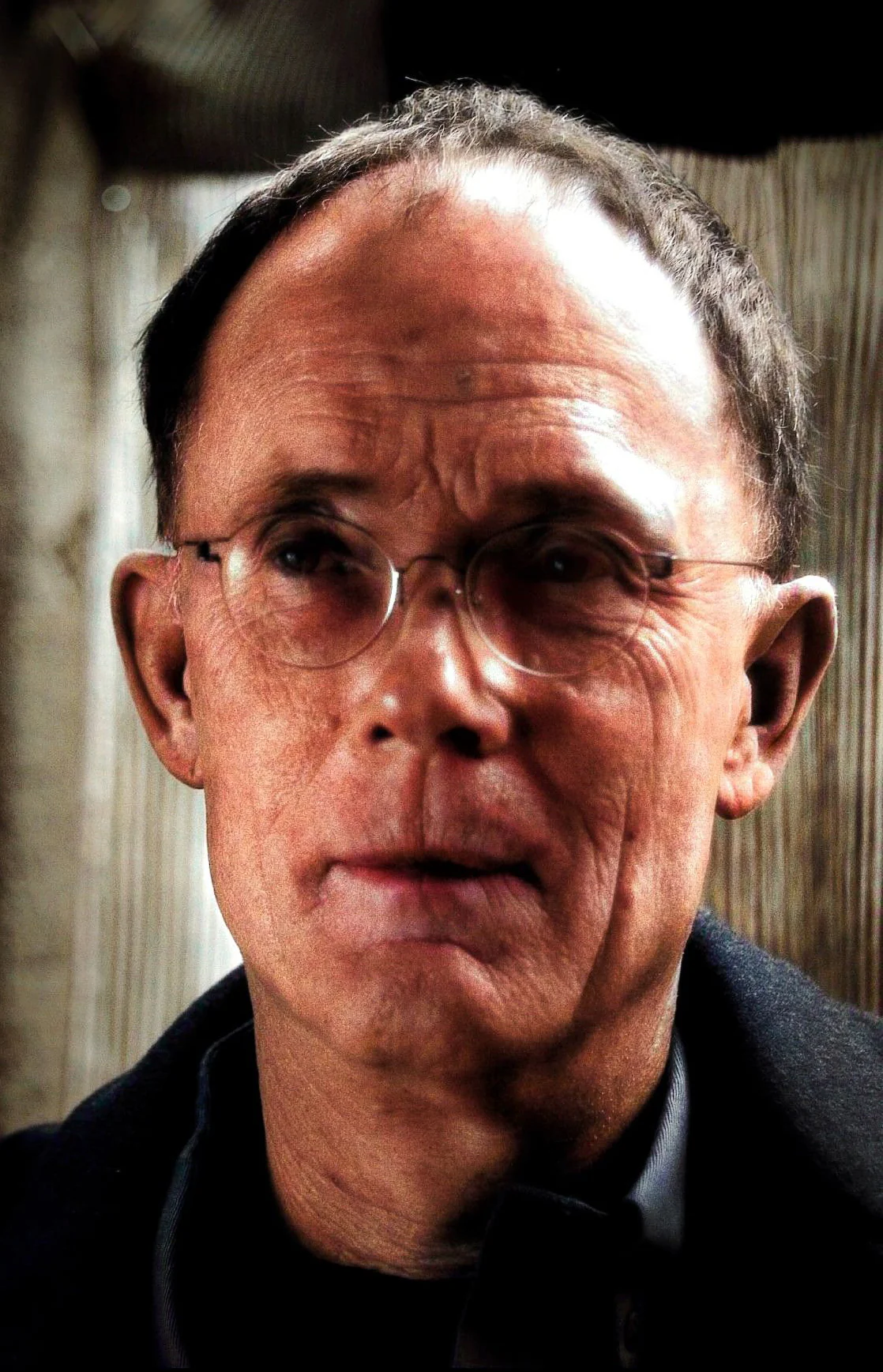
Attr: Gonzo Bonzo, CC BY-SA 2.0
| 17 Quotes | |
| Born as | William Ford Gibson |
| Occup. | Writer |
| From | USA |
| Spouse | Deborah Thompson |
| Born | March 17, 1948 Conway, South Carolina, United States |
| Age | 77 years |
| Cite | |
Citation Formats
APA Style (7th ed.)
William gibson biography, facts and quotes. (2026, February 11). FixQuotes. https://fixquotes.com/authors/william-gibson/
Chicago Style
"William Gibson biography, facts and quotes." FixQuotes. February 11, 2026. https://fixquotes.com/authors/william-gibson/.
MLA Style (9th ed.)
"William Gibson biography, facts and quotes." FixQuotes, 11 Feb. 2026, https://fixquotes.com/authors/william-gibson/. Accessed 5 Mar. 2026.
Early Life and Background
William Ford Gibson was born on March 17, 1948, in Conway, South Carolina, and grew up in the shifting landscape of the postwar American South, where military bases, new highways, and television signals pressed the future into daily life. His father, a manager in the construction industry, moved the family repeatedly; the instability left Gibson watchful and inward, a child attuned to surfaces, accents, and the small social codes that let one pass unnoticed. That stance - half participant, half anthropologist - later became the motor of his fiction, which treats technology less as a gadgetry of progress than as a social weather system.A decisive rupture came in 1959 when his father died suddenly after choking at a restaurant. Gibson was eleven. The loss, followed by further relocation, hardened his sense that security was provisional and that the self is assembled from fragments - grief, memory, adopted mannerisms, scavenged culture. He later moved with his mother to Virginia, where he read compulsively and developed a taste for pulp, comics, and the sleek menace of mid-century modernity. The emotional temperature of his later worlds - cool surfaces with hot, private fears underneath - owes much to this early apprenticeship in estrangement.
Education and Formative Influences
Gibson attended the University of British Columbia in Vancouver, Canada, after leaving the United States in the late 1960s, a period shaped by the Vietnam War draft, counterculture experimentation, and a widening distrust of official narratives. Canada offered distance and a new vantage point: North American consumer life seen slightly askew, like a familiar city viewed through tinted glass. He immersed himself in science fiction, noir, and avant-garde literature, and found in the era's media saturation an artistic problem rather than a mere background condition - how consciousness changes when information, style, and fear circulate faster than institutions can name them.Career, Major Works, and Turning Points
After writing stories in the late 1970s and early 1980s, Gibson broke through with Neuromancer (1984), a novel that helped define cyberpunk and won the Nebula, Philip K. Dick, and Hugo awards. With its sequels Count Zero (1986) and Mona Lisa Overdrive (1988), he mapped a near-future shaped by multinational capital, street-level improvisation, and networked hallucination. In the 1990s he pivoted from tomorrow to the just-now: Virtual Light (1993), Idoru (1996), and All Tomorrow's Parties (1999) tracked how subcultures, brands, and surveillance co-evolve. Later, Pattern Recognition (2003), Spook Country (2007), and Zero History (2010) treated the post-9/11 world as a paranoid marketplace of data and desire; The Peripheral (2014) and Agency (2020) returned to speculative architecture, linking economic power, political instability, and technological leverage across timelines. Across these turning points, his consistent gift was not prediction but diagnosis - noticing how new tools remake old appetites.Philosophy, Style, and Themes
Gibson's style begins in sensation and ends in systems. His most famous opening - “The sky above the port was the color of television, tuned to a dead station”. - is not just an image but a worldview: nature perceived through media, and mood set by technological failure as much as by beauty. He writes like a camera that has read too much theory: quick cuts, brand names as vernacular poetry, and descriptions that treat consumer objects as religious icons. Behind the cool is a moral intuition about power. In his work, the rich do not merely have more; they become other, and his characters feel that otherness as a biological warning signal, as in the moment of "instinctive mammalian certainty" about the inhumanity of extreme wealth . The psychological center is often a vulnerable observer - a courier, a hacker, a researcher - whose survival depends on reading environments with near-predatory attention.His themes turn on perception: how language, memory, and networks shape what feels real. “Language is to the mind more than light is to the eye”. captures his belief that vocabulary is not decoration but infrastructure - it determines what can be noticed, desired, or feared. He is also a writer of time-lag and psychic afterimage, where history does not pass so much as accumulate and replay, and identity is something edited from stored impressions, betrayals, and memes. The recurring Gibson protagonist is therefore less a hero than a sensor, learning to navigate worlds where corporations behave like governments, and where the future is a supply chain unevenly delivered.
Legacy and Influence
Gibson's influence is both literary and cultural: he helped establish cyberpunk's grammar, popularized the very idea of "cyberspace", and offered artists, designers, and technologists a vocabulary for the texture of networked life. Filmmakers, game creators, and musicians have borrowed his neon-noir atmospheres, while academics have treated his novels as case studies in late capitalism and mediated selfhood. Yet his enduring importance lies in the psychological realism beneath the circuitry: he made technological change feel intimate, anxious, and socially specific, showing that the future is not an event but a lived condition - uneven, seductive, and never fully under anyone's control.Our collection contains 17 quotes written by William, under the main topics: Ethics & Morality - Wisdom - Sarcastic - Writing - Equality.
Other people related to William: John Shirley (Author), Bruce Sterling (Writer)
William Gibson Famous Works
- 2003 Pattern Recognition (Novel)
- 1996 Idoru (Novel)
- 1993 Virtual Light (Novel)
- 1988 Mona Lisa Overdrive (Novel)
- 1986 Count Zero (Novel)
- 1984 Neuromancer (Novel)
Source / external links