
William Gilbert Biography Quotes 13 Report mistakes
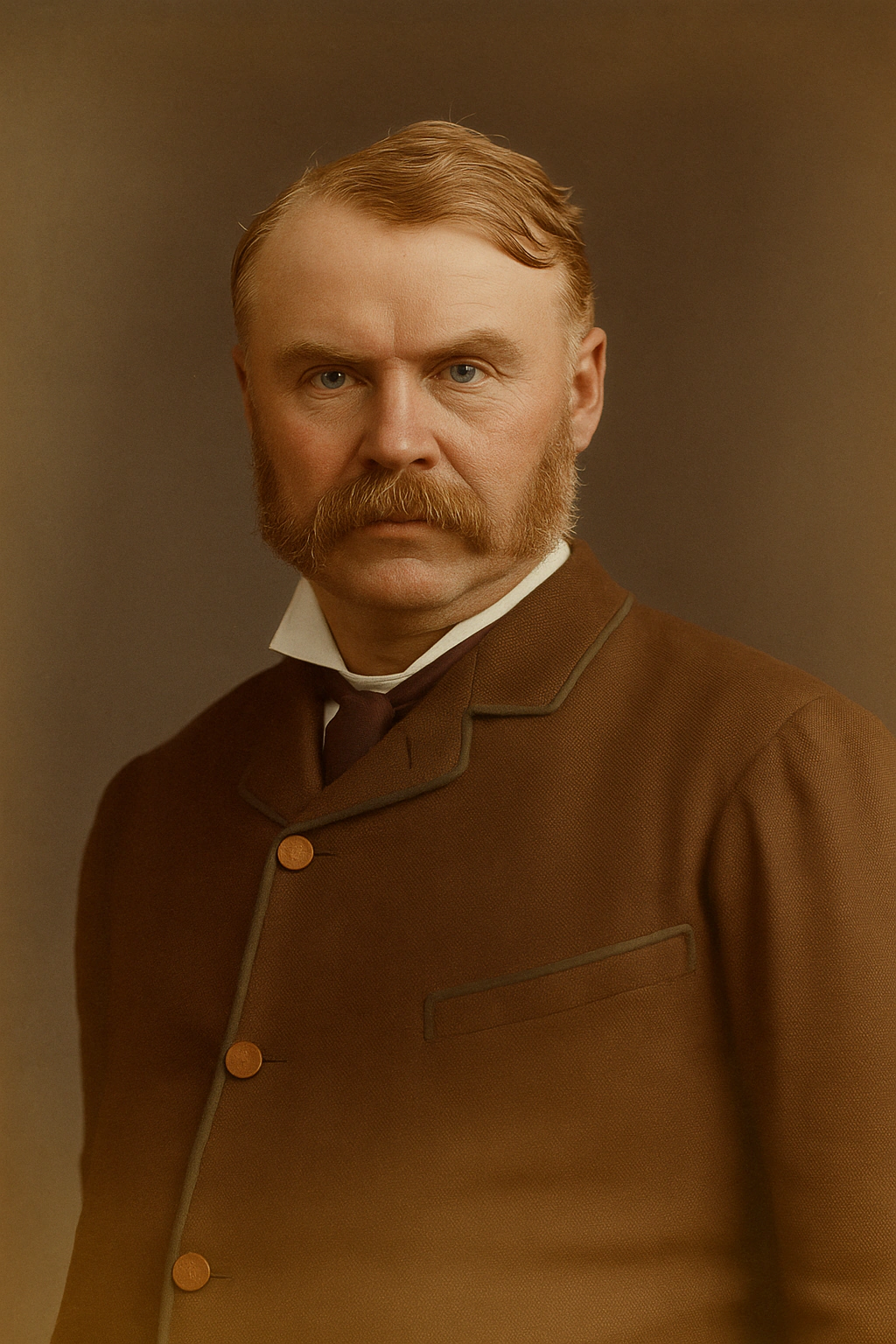
Attr: Elliott & Fry
| 13 Quotes | |
| Born as | William Schwenck Gilbert |
| Known as | W. S. Gilbert |
| Occup. | Composer |
| From | United Kingdom |
| Born | November 18, 1836 London, England |
| Died | May 29, 1911 Grim's Dyke, Harrow, England |
| Aged | 74 years |
| Cite | |
Citation Formats
APA Style (7th ed.)
William gilbert biography, facts and quotes. (2026, February 11). FixQuotes. https://fixquotes.com/authors/william-gilbert/
Chicago Style
"William Gilbert biography, facts and quotes." FixQuotes. February 11, 2026. https://fixquotes.com/authors/william-gilbert/.
MLA Style (9th ed.)
"William Gilbert biography, facts and quotes." FixQuotes, 11 Feb. 2026, https://fixquotes.com/authors/william-gilbert/. Accessed 26 Mar. 2026.
Early Life and Background
William Schwenck Gilbert was born on November 18, 1836, in London, the son of William Gilbert, a retired naval surgeon turned novelist, and Ann Morris. The household was middle-class, literate, and restless - a mix that helped produce a child who watched adult pretensions closely and learned early that language could both decorate and puncture authority. Britain in the 1840s and 1850s was a nation of confident institutions and anxious social climbing, and Gilbert would spend his life turning that tension into comedy sharp enough to draw blood yet elegant enough to pass as entertainment.His childhood included periods abroad - notably in Italy - and the experience of being an English boy observing manners at a distance sharpened his sense of the ridiculous in social codes. He grew into a tall, self-contained man, quick to defensiveness, with a near-professional sensitivity to being underestimated. That touchiness, later notorious in theatrical disputes, was not mere vanity; it was the armor of someone who believed craft and fairness should matter more than pedigree, yet knew the Victorian marketplace often rewarded noise, not merit.
Education and Formative Influences
Gilbert was educated at Ealing School and later at King's College London before training for the law, eventually being called to the bar at the Inner Temple in 1863. The law gave him more than a profession he never fully embraced - it trained his mind for paradox, definitions, and the comic potential of loopholes, and it supplied a lifelong fascination with rules that collapse under their own logic. At the same time, London journalism and magazine culture offered a faster path to an audience, and he learned to write to deadline, to sharpen punch lines, and to make satire sing without losing its sting.Career, Major Works, and Turning Points
Gilbert first became widely known through the comic verse and drawings of the "Bab Ballads" in Fun magazine, where he developed the brisk narrative wit and moral backflip that would later power his libretti. After early theatrical experiments, including burlesques and the one-act "Trial by Jury" (1875), he entered the decisive partnership of his life with composer Arthur Sullivan, helped by producer Richard D'Oyly Carte. Between 1878 and 1889 they created the Savoy Operas - "H.M.S. Pinafore" (1878), "The Pirates of Penzance" (1879), "Patience" (1881), "Iolanthe" (1882), "The Mikado" (1885), and others - works that fused tunefulness with verbal precision and made a new model of English comic opera. Success brought money and status, but also conflict: Gilbert's insistence on principle and contractual exactness erupted in the 1890 "carpet quarrel" with Carte and Sullivan, a dispute as Gilbertian as any plot he wrote. In later years he wrote with other composers and was knighted in 1907; he died on May 29, 1911, after entering a lake at his home in Harrow Weald to help a young woman in distress.Philosophy, Style, and Themes
Gilbert's trademark method was the "topsy-turvy" premise: take a respectable institution - Parliament, the navy, aesthetic fashion, the law, romance itself - and follow its stated logic to an absurd conclusion. The joke is never just that people are foolish; it is that systems reward foolishness when it is properly costumed. His lyrics are built like legal arguments set to melody: definitions, exceptions, and ruthless cross-examination, all delivered with apparent lightness. This duality - sparkle on the surface, iron beneath - reflects a personality that craved order and recoiled from cant, yet understood that society runs on agreed-upon illusions.What makes the satire enduring is its psychological bite. Gilbert distrusted mass conformity and the empty inflation of status: “When everyone is somebody, then no one's anybody”. He also knew, perhaps with a grudging self-recognition, that modern success is often a performance: “If you wish in this world to advance your merits you're bound to enhance; You must stir it and stump it, and blow your own trumpet, Or, trust me, you haven't a chance”. His comic worlds are full of people who outsource judgment to party, class, or fashion - “And I always voted at my party's call, and I never thought of thinking for myself at all”. - and the laughter lands because the targets are not monsters but ordinary, plausible selves. Beneath the gaiety sits a moralist's impatience: he is less interested in sin than in self-deception.
Legacy and Influence
Gilbert, often mislabeled merely a "composer" because his work lives through music, was in fact the defining English librettist of the 19th century, and one of the great architects of modern musical theater dialogue and lyric craft. His partnership with Sullivan set standards for integrated comic opera, ensemble writing, and patter-song virtuosity, and his insistence on clear staging and textual authority shaped rehearsal practice long after him. Later writers from Noel Coward to Stephen Sondheim drew on his rhyming exactitude, structural neatness, and willingness to satirize power without abandoning pleasure. The Savoy Operas remain repertory not because they preserve a quaint Victorian world, but because Gilbert mapped a permanent one - the world where institutions preen, language lies, and the clever survive by singing the truth sideways.Our collection contains 13 quotes written by William, under the main topics: Witty One-Liners - Motivational - Wisdom - Dark Humor - Sarcastic.
Other people related to William: J. B. Morton (Writer), Lillie Langtry (Actress), Hesketh Pearson (Actor)
Frequently Asked Questions
- Lucy Agnes Turner: Lucy Agnes Turner was an English actress and singer who became Lucy Agnes Gilbert when she married W. S. Gilbert in 1867; she appeared in some of his early stage works.
- W.S. Gilbert Ballads: W. S. Gilbert’s ballads, known as “The Bab Ballads,” are comic poems with his own illustrations, featuring witty verse and characters that inspired many Gilbert and Sullivan plots.
- WS Gilbert poems: W. S. Gilbert wrote humorous and satirical verse, notably collected in “The Bab Ballads,” which often provided material and ideas later used in the Gilbert and Sullivan operas.
- William 's Gilbert: William Schwenck Gilbert, known as W. S. Gilbert, was an English dramatist, librettist, and poet, famed for his satirical comic operas written with composer Arthur Sullivan.
- W.S. Gilbert death: W. S. Gilbert died on 29 May 1911 at his home in Harrow Weald, Middlesex, after suffering a heart attack while attempting to rescue a young woman from a lake.
- Arthur Sullivan: Arthur Sullivan was an English composer who partnered with W. S. Gilbert to create the Savoy operas, including H.M.S. Pinafore, The Pirates of Penzance, and The Mikado.
- How old was William Gilbert? He became 74 years old
Source / external links