
William Golding Biography Quotes 9 Report mistakes
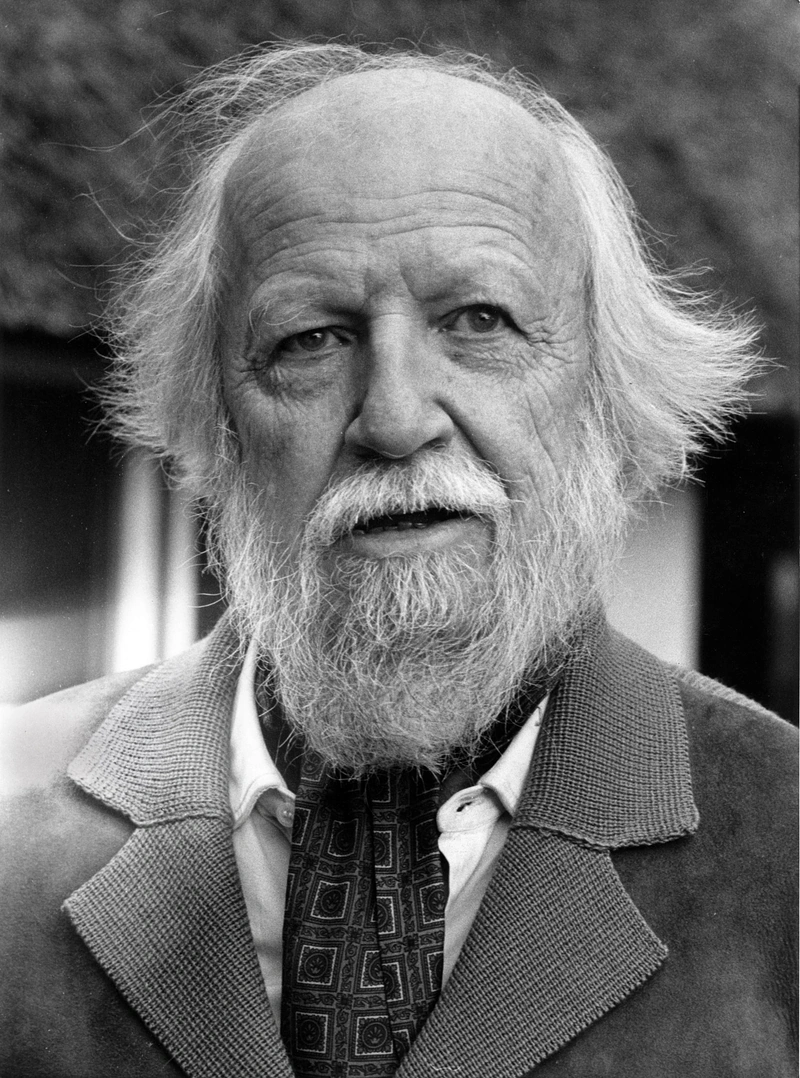
| 9 Quotes | |
| Born as | William Gerald Golding |
| Known as | Sir William Golding |
| Occup. | Novelist |
| From | England |
| Born | September 19, 1911 Newquay, Cornwall, England |
| Died | June 19, 1993 Perranarworthal, Cornwall, England |
| Aged | 81 years |
| Cite | |
Citation Formats
APA Style (7th ed.)
William golding biography, facts and quotes. (2026, February 11). FixQuotes. https://fixquotes.com/authors/william-golding/
Chicago Style
"William Golding biography, facts and quotes." FixQuotes. February 11, 2026. https://fixquotes.com/authors/william-golding/.
MLA Style (9th ed.)
"William Golding biography, facts and quotes." FixQuotes, 11 Feb. 2026, https://fixquotes.com/authors/william-golding/. Accessed 6 Mar. 2026.
Early Life and Background
William Gerald Golding was born on 19 September 1911 in St Columb Minor, near Newquay in Cornwall, a landscape of sea, rock, and sudden weather that later served him as more than scenery. His father, Alec Golding, was a schoolmaster with rationalist politics and faith in progress; his mother, Mildred Curnoe Golding, was active in the suffrage movement. Between a home shaped by liberal confidence and a county thick with older myths and chapels, Golding grew up inside a tension that would become central to his fiction: the tug between enlightened plans and the older, darker weather of human impulses.As a boy he read greedily, wrote early, and absorbed both the discipline of school and the unruly theater of playground cruelty. England between the wars offered the promise of modernity alongside mass trauma and economic uncertainty; Golding entered adulthood with the sense that civilization was thin but insistently performed. That sense was not yet a doctrine, more a pressure in the background, as if the world expected the young to become useful and optimistic while whispering that catastrophe was never far away.
Education and Formative Influences
Golding studied at Marlborough Grammar School, where his father taught, then went to Brasenose College, Oxford, beginning in natural sciences before turning to English literature; the change signaled an early refusal to let explanation be only technical. He published a small volume of poems in 1934, worked briefly in settlement houses and theater, and read widely in Greek tragedy, the Bible, and adventure tales, influences that later collided in his stark fables. In 1939 he married Ann Brookfield and soon settled into teaching, a profession that placed him daily among children - observant, hierarchical, improvisational - giving him a laboratory for how quickly order forms and breaks.Career, Major Works, and Turning Points
World War II was Golding's turning point: he served in the Royal Navy from 1940, took part in the D-Day landings and other operations, and watched modern technology amplify ancient brutality. After the war he returned to teaching at Bishop Wordsworth's School in Salisbury, writing at dawn and late night, converting wartime disillusion into parable. After several rejected manuscripts, he published Lord of the Flies (1954), his breakthrough - an adventure story turned moral autopsy - followed by The Inheritors (1955), Pincher Martin (1956), Free Fall (1959), and The Spire (1964), each testing a different model of conscience under pressure. Later came Darkness Visible (1979) and the sea trilogy Rites of Passage (1980, Booker Prize), Close Quarters (1987), and Fire Down Below (1989). He was awarded the Nobel Prize in Literature in 1983 and was knighted in 1988; he died on 19 June 1993 in Perranarworthal, Cornwall.Philosophy, Style, and Themes
Golding's novels are often called pessimistic, but their real subject is moral realism: the soul as a battlefield where self-justifying stories compete with the evidence of deeds. He distrusted tidy explanation and the comforting alibi of systems. “What a man does defiles him, not what is done by others”. That line captures his recurring method - to put characters in situations where excuses fall away and action reveals the person, whether boys on an island, a dean building an impossible spire, or a shipboard elite staging civility over appetite. His religious imagination was heterodox but persistent; sin, in his work, is less a church term than a diagnosis of how easily power and fear rewrite ethics.His style is compressed, sensuous, and frequently hallucinatory, pushing realism toward myth without surrendering to abstraction. Golding understood how language can domesticate terror, and he resisted that comfort: “Language fits over experience like a straight-jacket”. The pressure of what cannot quite be said gives his prose its charged, listening quality, as if the narrator stands close to the animal life under thought. He also wrote as a craftsman rather than a medium, suspicious of romantic legends about inspiration: “Novelists do not write as birds sing, by the push of nature. It is part of the job that there should be much routine and some daily stuff on the level of carpentry”. The discipline mattered to him because the material he handled - violence, shame, ecstatic delusion, the seductions of leadership - required control, not indulgence.
Legacy and Influence
Golding endures because he made the modern fable intellectually serious without turning it into a sermon. Lord of the Flies became a classroom staple and a cultural shorthand for social breakdown, yet his larger achievement lies in the range of his experiments: prehistoric elegy, metaphysical survival tale, psychological confession, and historical sea novel, all tethered to the same question of what civilization is made of and how quickly it can be unmade. In postwar British literature he stands as a counterweight to easy progress narratives, influencing writers and filmmakers drawn to closed systems, group dynamics, and moral testing grounds; his work remains a harsh mirror held up to the hopeful stories societies tell about themselves.Our collection contains 9 quotes written by William, under the main topics: Ethics & Morality - Wisdom - Writing - Deep - Life.
Other people related to William: Peter Brook (Producer), Geoffrey Faber (Publisher)
William Golding Famous Works
- 1995 The Double Tongue (Novel)
- 1989 Fire Down Below (Novel)
- 1987 Close Quarters (Novel)
- 1984 The Paper Men (Novel)
- 1980 Rites of Passage (Novel)
- 1971 The Scorpion God (Collection)
- 1965 The Hot Gates (Collection)
- 1964 The Spire (Novel)
- 1959 Free Fall (Novel)
- 1958 The Brass Butterfly (Play)
- 1956 Pincher Martin (Novel)
- 1955 The Inheritors (Novel)
- 1954 Lord of the Flies (Novel)