
William Hazlitt Biography Quotes 93 Report mistakes
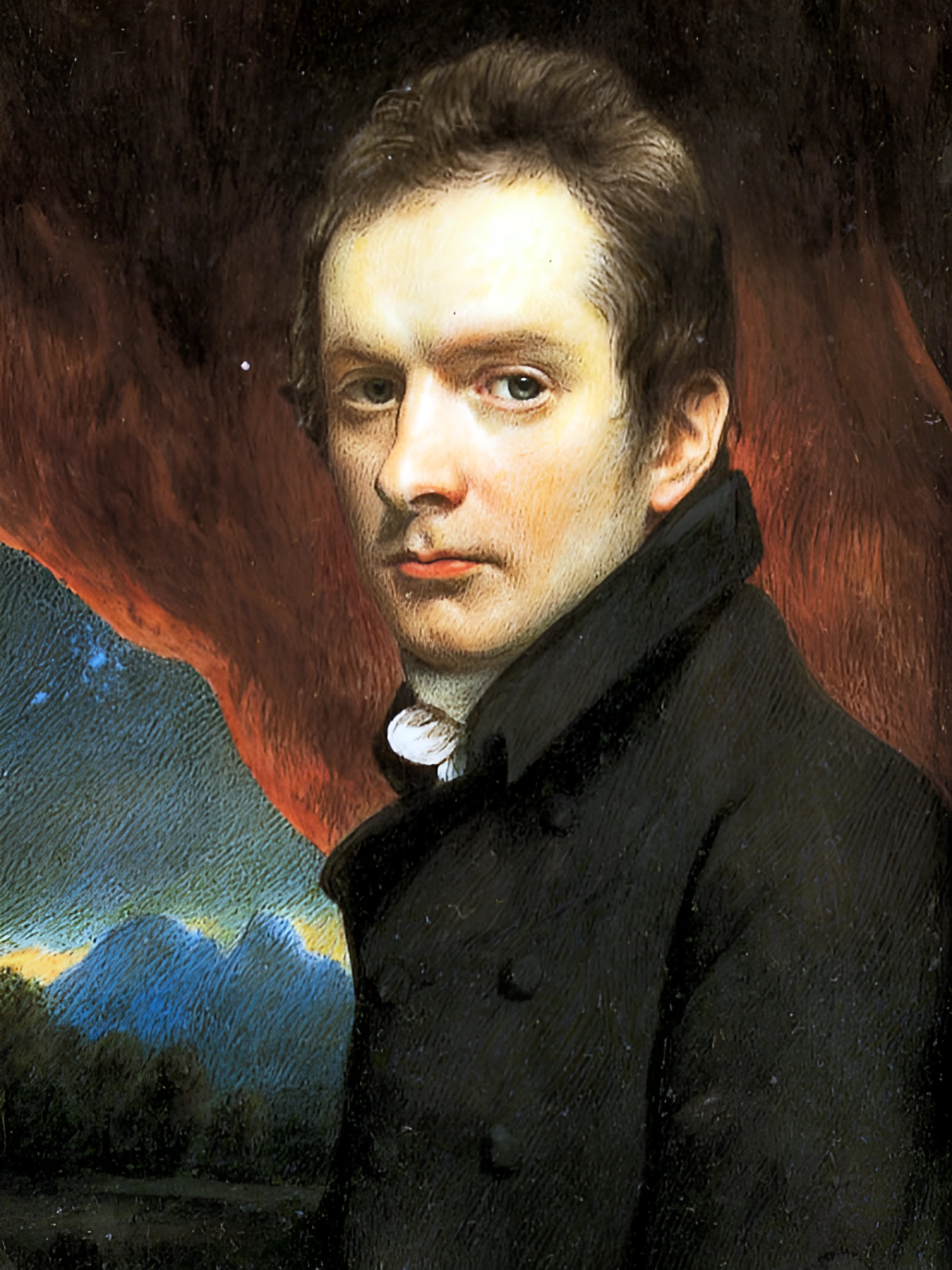
Attr: Self Portrait | Art UK
| 93 Quotes | |
| Occup. | Critic |
| From | England |
| Born | April 10, 1778 England |
| Died | September 18, 1830 London, England |
| Cause | Stroke |
| Aged | 52 years |
| Cite | |
Citation Formats
APA Style (7th ed.)
William hazlitt biography, facts and quotes. (2026, February 11). FixQuotes. https://fixquotes.com/authors/william-hazlitt/
Chicago Style
"William Hazlitt biography, facts and quotes." FixQuotes. February 11, 2026. https://fixquotes.com/authors/william-hazlitt/.
MLA Style (9th ed.)
"William Hazlitt biography, facts and quotes." FixQuotes, 11 Feb. 2026, https://fixquotes.com/authors/william-hazlitt/. Accessed 22 Mar. 2026.
Early Life and Background
William Hazlitt was born on April 10, 1778, in Maidstone, Kent, into the precarious respectability of English Dissent. His father, the Rev. William Hazlitt, was a Unitarian minister whose sermons carried the moral earnestness and political suspicion that followed Dissenters in late Georgian Britain. The household moved with the currents of ministry and controversy - from Kent to Bandon, County Cork, and then across the Atlantic to the United States in the early 1780s - giving the boy an early education in dislocation, argument, and the feeling of standing slightly outside the national church and its social hierarchy.Back in England by the later 1780s, Hazlitt grew up during the decade when the French Revolution electrified and polarized British public life. The language of liberty and the crackdown that followed formed his emotional weather: hope, then a bruising realism. He was temperamentally intense and easily wounded, and he learned early that public opinion could be both a weapon and a crowd. That sensitivity - and the stubborn pride that defended it - would later harden into the combative independence of his criticism.
Education and Formative Influences
In 1793 he entered the Unitarian college at Hackney (New College), where he absorbed the Dissenting tradition of rational inquiry and moral seriousness while privately outgrowing the vocation of the pulpit. The books that mattered most to him were philosophical and political - Locke and Hartley for associationism, Burke as an adversary, and above all the contemporary revolution in German thought as filtered through English radicals. A decisive influence arrived in 1798, when he met Samuel Taylor Coleridge and heard him preach: Hazlitt later described the encounter as an awakening, a collision between metaphysical ambition and personal charisma. Soon after, meeting William Wordsworth deepened his sense that literature could be a moral instrument and a battleground, not merely an ornament.Career, Major Works, and Turning Points
Hazlitt first tried to make a life as a painter, studying and exhibiting portraits, but by the early 1800s he shifted decisively toward prose, where his quickness of judgment and tactile eye for particulars became advantages rather than liabilities. He lectured at the Surrey Institution, wrote for the Morning Chronicle and other journals, and emerged during the Regency as England's most forceful essayist-critic, shaping taste while also chronicling political betrayal and cultural change. His major books include Characters of Shakespear's Plays (1817), the brilliantly partisan Political Essays (1819), Table-Talk (1821-1822), The Spirit of the Age (1825) - a gallery of contemporary minds - and The Plain Speaker (1826). Personal scandal and loneliness culminated in Liber Amoris (1823), an exposed nerve in print, which damaged his reputation but also clarified his lifelong theme: how desire, vanity, and self-deception strain against the need for truth.Philosophy, Style, and Themes
Hazlitt wrote as if thought were a physical act - pressure, impact, recoil. He distrusted systems that floated above sensation, yet he never stopped chasing first principles: why power corrupts, why crowds turn cruel, why art feels like freedom. His criticism is rooted in experience, but it is not merely autobiographical; it turns the self into an instrument for measuring the world. He believed the inner life could be read in gesture and cadence, and that style was a moral event as much as an aesthetic one. “Gracefulness has been defined to be the outward expression of the inward harmony of the soul”. For Hazlitt, the sentence itself had to prove that harmony - or admit its absence - and his best pages vibrate with the honest friction between aspiration and temperament.The era that made him - revolutionary hope, Napoleonic war, reaction, and the rise of a commercial reading public - also trained his attention on performance: politicians acting virtue, poets acting sincerity, the self acting courage. He watched this theater with fascination and disgust, and he understood how easily identity becomes a role worn to survive. “Man is a make-believe animal: he is never so truly himself as when he is acting a part”. Yet he also insisted that criticism must protect living energy against dead prescription, defending Shakespeare, the Elizabethans, and the Romantic imagination against pedantry and timid respectability. “Rules and models destroy genius and art”. The aphorism fits his method: not law but contact - the critic as a mind pressing directly upon the thing seen.
Legacy and Influence
Hazlitt died in London on September 18, 1830, and his afterlife has been a long argument about what he was: partisan, confessionalist, moralist, stylist. Time has settled the case in his favor. He helped invent modern criticism as a form of literature - subjective yet disciplined, political yet sensuous - and his essays remain templates for writing that thinks in public without surrendering to fashion. Later essayists from Dickens to Orwell and beyond drew on his example: the courage to name cant, the willingness to risk exposure, and the belief that close attention to art is inseparable from attention to power and character. His enduring influence lies in the way his prose turns judgment into experience, making the reader feel how ideas are lived.Our collection contains 93 quotes written by William, under the main topics: Witty One-Liners - Motivational - Ethics & Morality - Truth - Wisdom.
Frequently Asked Questions
- Hazlitt pronunciation: Hazlitt is pronounced as 'HAZ-lit.'
- Hazlitt Economics: Refers to Henry Hazlitt, an economist known for his book 'Economics in One Lesson,' not William Hazlitt.
- Hazlitt meaning: Hazlitt typically refers to William Hazlitt, an English essayist, or Henry Hazlitt, an American economist.
- William Hazlitt death cause: William Hazlitt died of stomach cancer on September 18, 1830.
- William Hazlitt poems: William Hazlitt was primarily an essayist and critic, not a poet. He did not write poetry.
- How old was William Hazlitt? He became 52 years old
Source / external links