
William Henry Harrison Biography Quotes 9 Report mistakes
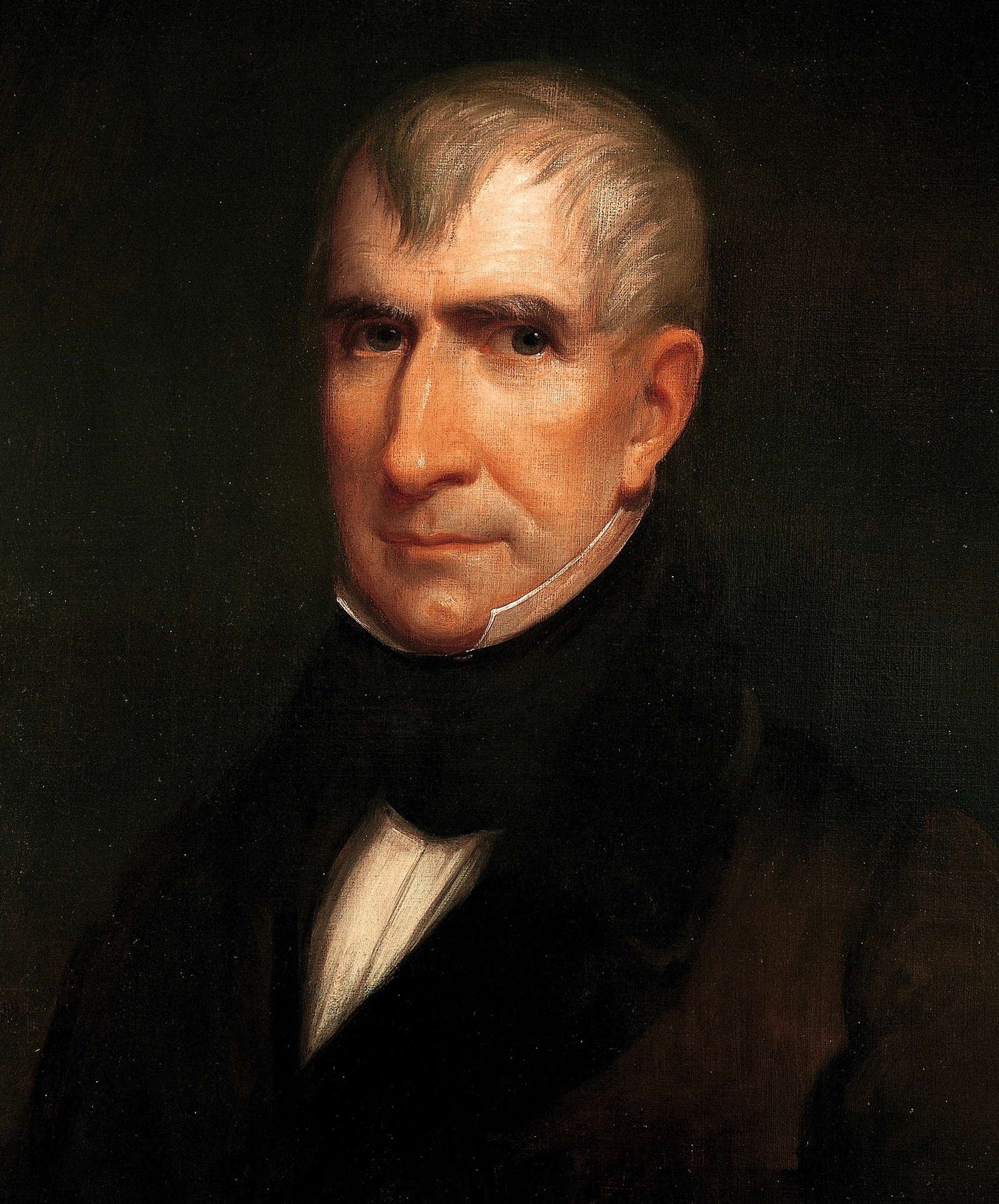
Attr: James Lambdin
| 9 Quotes | |
| Occup. | President |
| From | USA |
| Born | February 9, 1773 Charles City County, Virginia, USA |
| Died | April 4, 1841 Washington, D.C., USA |
| Cause | Pneumonia |
| Aged | 68 years |
| Cite | |
Citation Formats
APA Style (7th ed.)
William henry harrison biography, facts and quotes. (2026, February 11). FixQuotes. https://fixquotes.com/authors/william-henry-harrison/
Chicago Style
"William Henry Harrison biography, facts and quotes." FixQuotes. February 11, 2026. https://fixquotes.com/authors/william-henry-harrison/.
MLA Style (9th ed.)
"William Henry Harrison biography, facts and quotes." FixQuotes, 11 Feb. 2026, https://fixquotes.com/authors/william-henry-harrison/. Accessed 6 Mar. 2026.
Early Life and Background
William Henry Harrison was born on February 9, 1773, at Berkeley Plantation on the James River in Charles City County, Virginia, into one of the Tidewater's most politically connected families. His father, Benjamin Harrison V, was a signer of the Declaration of Independence and a former governor of Virginia; the household moved in the orbit of the Revolutionary elite, where republican virtue was praised in public and tested in private by slavery, debt, and the fragile economics of plantation life.Harrison came of age as the early republic struggled to define itself: a nation wary of standing armies, hungry for western land, and riven by arguments over who counted as "the people". The death of his father in 1791 left him with ambition but less patrimony than the legend suggests, and it helped push him toward a career that could convert public service into stature. The frontier, more than the Virginia gentry, would become his proving ground - and the place where his name was forged in both bloodshed and propaganda.
Education and Formative Influences
He was educated by tutors and briefly studied medicine at Hampden-Sydney College and in Richmond, where he reportedly heard lectures by Dr. Benjamin Rush, before abandoning the profession for the army in 1791, aided by family connections. The choice aligned him with the Federal government's immediate problem: asserting authority in the Northwest Territory, where Native confederacies resisted U.S. settlement. In that borderland Harrison learned administration under pressure - supply failures, political suspicion of regular troops, and the constant reality that national policy was being made at the edge of a bayonet.Career, Major Works, and Turning Points
Commissioned an ensign, Harrison served under Gen. Anthony Wayne and fought at Fallen Timbers (1794), then moved into territorial politics as secretary of the Northwest Territory (1798) and, soon after, delegate to Congress, where he helped shape the 1800 division that created Indiana Territory; he became its governor that year. As governor he negotiated (and aggressively pursued) land cessions, built patronage networks, and clashed with Tecumseh and Tenskwatawa, culminating in the Battle of Tippecanoe (1811), which his allies framed as preventive defense and his critics as an unnecessary escalation. In the War of 1812 he commanded in the Northwest, rebuilding his reputation with the victory at the Battle of the Thames (1813), where Tecumseh was killed - a turning point that broke the confederacy but also cemented Harrison's frontier fame. Afterward he cycled through elective office (U.S. House from Ohio, U.S. Senate, and a stint as minister to Gran Colombia in 1828-1829) before becoming the Whig Party's carefully packaged candidate, sold as the log-cabin hero of "Tippecanoe and Tyler Too", and elected ninth president in 1840.Philosophy, Style, and Themes
Harrison's inner political life was shaped by a lifelong fear that republican government could be quietly converted into rule by force or by moneyed interests. Beneath the martial image, he repeatedly argued that legitimacy flowed upward from citizens rather than downward from executive will: “The only legitimate right to govern is an express grant of power from the governed”. That insistence was not merely theoretical. In his mind, frontier command, territorial governance, and the presidency were all vulnerable to the same corruption - power expanding to fill any silence in the Constitution.His rhetoric returned obsessively to limits: limits on armies, on patronage, and on the presidency itself. He warned that “There is nothing more corrupting, nothing more destructive of the noblest and finest feelings of our nature, than the exercise of unlimited power”. , a line that reads like self-portrait as much as principle - the veteran administrator reminding himself that authority can deform the man who wields it. At the same time, he cultivated a populist suspicion of concentrated wealth, declaring, “I believe that all the measures of the Government are directed to the purpose of making the rich richer and the poor poorer”. The tension between his background as a Virginia planter's son and his adopted pose as a tribune of the "plain" citizen became a defining theme of his public style: patrician manners deployed in defense of a democratic story.
Legacy and Influence
Harrison's presidency lasted only a month; he died on April 4, 1841, after falling ill soon after his long inaugural address, and his death triggered the first major constitutional test of presidential succession, effectively establishing that Vice President John Tyler became president, not merely an acting caretaker. Yet Harrison's longer influence lies in the political technology that carried him to office: the modern, image-driven campaign that fused biography, slogans, and mass rallies into a party instrument. As a soldier-governor he helped accelerate U.S. expansion in the Old Northwest at devastating cost to Native nations; as a candidate he proved that memory could be weaponized into votes; and as a brief president he inadvertently strengthened the presidency by clarifying its continuity.Our collection contains 9 quotes written by William, under the main topics: Ethics & Morality - Justice - Freedom - Life - Equality.
Other people related to William: John Tyler (President), Benjamin Harrison (President), Anna Harrison (First Lady)
William Henry Harrison Famous Works
- 1841 Inaugural Address Made by William Henry Harrison to the People of the United States of America on his Being Sworn Into Office (Speech)
- 1838 A Discourse on the Aborigines of the Valley of the Ohio (Book)
Source / external links