
William J. Clinton Biography Quotes 35 Report mistakes
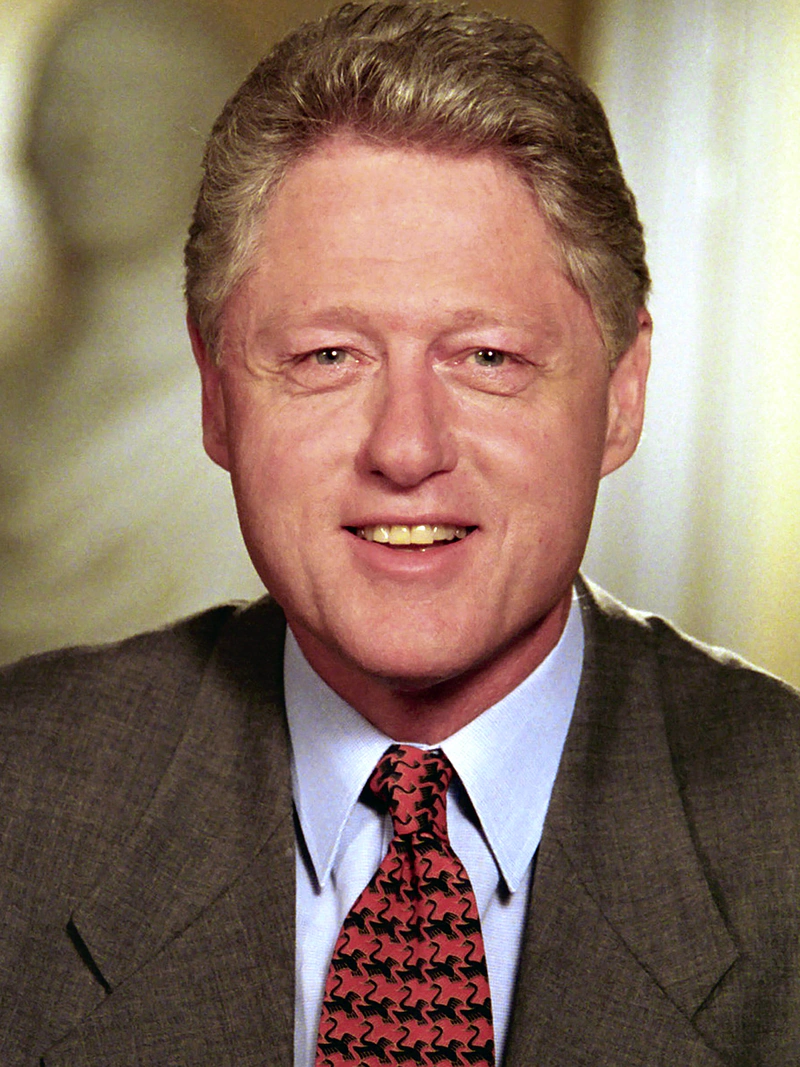
| 35 Quotes | |
| Born as | William Jefferson Blythe III |
| Known as | Bill Clinton |
| Occup. | President |
| From | USA |
| Born | August 19, 1946 Hope, Arkansas, U.S. |
| Age | 79 years |
| Cite | |
Citation Formats
APA Style (7th ed.)
William j. clinton biography, facts and quotes. (2026, February 11). FixQuotes. https://fixquotes.com/authors/william-j-clinton/
Chicago Style
"William J. Clinton biography, facts and quotes." FixQuotes. February 11, 2026. https://fixquotes.com/authors/william-j-clinton/.
MLA Style (9th ed.)
"William J. Clinton biography, facts and quotes." FixQuotes, 11 Feb. 2026, https://fixquotes.com/authors/william-j-clinton/. Accessed 25 Mar. 2026.
Early Life and Background
William Jefferson Blythe III was born on August 19, 1946, in Hope, Arkansas, into a South shaped by segregation, courthouse politics, and the long aftershock of the Great Depression. His father, William Jefferson Blythe Jr., a traveling salesman, died in a car accident before he was born, leaving Clinton with an early sense of life as contingent and reputation as something you build, not inherit.Raised largely in Hot Springs after his mother, Virginia Kelley, remarried, he took the surname Clinton from stepfather Roger Clinton Sr., an alcoholic whose volatility shadowed the household. The boy who learned to mediate domestic storms also learned to read rooms - to soothe, bargain, and endure. That private apprenticeship in conflict management helped form the public Clinton: relentlessly verbal, intensely social, and convinced that problems yield to persuasion, detail, and stamina.
Education and Formative Influences
A standout student, Clinton came of age as the civil rights movement and Vietnam reshaped American moral language. In 1963 he visited Washington, D.C., as a Boys Nation delegate and met President John F. Kennedy, a moment he later treated as a spark of vocation. He attended Georgetown University (BSFS, 1968), worked for Senator J. William Fulbright, won a Rhodes Scholarship to Oxford, and completed Yale Law School (JD, 1973), where he met Hillary Rodham. The era trained him in policy as argument: Great Society idealism colliding with war, distrust, and the demand that leaders justify power in public.Career, Major Works, and Turning Points
After teaching law in Arkansas, Clinton entered politics, losing a 1974 congressional race before winning as Arkansas attorney general (1976) and, at 32, governor (1978). Defeated in 1980, he engineered a comeback in 1982, then governed for a decade with a centrist blend of education reform, business recruitment, and pragmatic coalition-building, while nurturing the Democratic Leadership Council and the "New Democrat" brand. Elected the 42nd president in 1992, he pursued deficit reduction, NAFTA, a failed push for national health reform, welfare reform (1996), and deregulation amid rapid globalization and a tech boom. His second term was dominated by scandal and impeachment in 1998, ending in acquittal by the Senate, even as he brokered the Good Friday Agreement (1998) and confronted terrorism and Balkan wars. He left office in 2001 with high approval ratings and a legacy split between prosperity, triangulation, and moral controversy.Philosophy, Style, and Themes
Clinton governed as a diagnostic politician - less prophet than problem-solver - convinced that the American system could be nudged toward justice by competence, growth, and carefully built majorities. His most characteristic optimism sounded like a secular creed: “There is nothing wrong with America that cannot be cured with what is right in America”. The line captures both his hope and his method: treat national division as a reversible condition, not a fate, and treat policy as the lever that can turn civic virtue into measurable outcomes.But his inner drama was always self-control versus appetite - for connection, admiration, and the thrill of risk. Even his famous evasions reveal psychology as much as rhetoric; “I tried marijuana once. I did not inhale”. shows a mind seeking a third option between confession and denial, a way to survive a moral test by linguistic calibration. That impulse - to reframe rather than surrender - powered his resilience after defeats and investigations, yet also fed the impression that he could talk his way around boundaries. In policy, the same temperament favored incrementalism and compromise; in public life, it invited relentless scrutiny and an adversarial press ecosystem he understood with mordant clarity: “Never pick a fight with people who buy ink by the barrel”.
Legacy and Influence
Clinton's enduring influence lies in the template he set for post-Cold War Democratic politics: market-friendly, culturally empathetic, and intensely focused on economic growth, skills, and opportunity, even as critics argue that parts of his agenda accelerated inequality and carceral policy. His impeachment redefined the partisan temperature of Washington and hardened the expectation of permanent scandal management, while his post-presidency - through the Clinton Foundation, global health initiatives, and high-profile campaign roles - kept him a central figure in modern liberal networks. In memory he remains a paradox: a gifted empath and coalition builder whose personal lapses and tactical flexibility became inseparable from his achievements, illustrating how charisma can both expand a leader's reach and magnify the costs of human weakness.Our collection contains 35 quotes written by William, under the main topics: Witty One-Liners - Wisdom - Art - Justice - Leadership.
Other people related to William: Monica Lewinsky (Celebrity), James Carville (Lawyer), Rahm Emanuel (Politician), Paul Begala (Journalist), Christopher Hitchens (Author), Julie Bowen (Actress), Warren Christopher (Statesman), Linda Tripp (Celebrity), Lawrence Summers (Economist), Robert Reich (Economist)
William J. Clinton Famous Works
- 2021 The President's Daughter (Novel)
- 2018 The President Is Missing (Novel)
- 2011 Back to Work: Why We Need Smart Government for a Strong Economy (Non-fiction)
- 2007 Giving: How Each of Us Can Change the World (Non-fiction)
- 2004 My Life (Autobiography)
- 1996 Between Hope and History: Meeting America's Challenges for the 21st Century (Non-fiction)
- 1992 Putting People First: How We Can All Change America (Non-fiction)