
William J. H. Boetcker Biography Quotes 13 Report mistakes
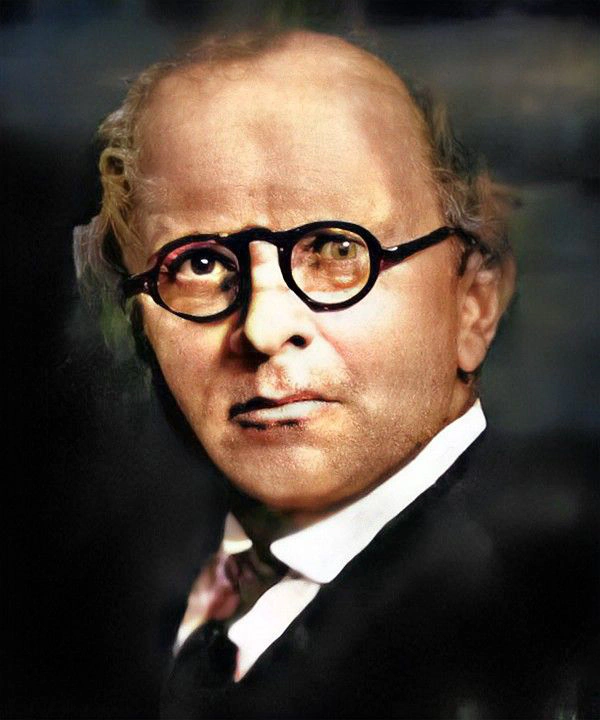
| 13 Quotes | |
| Born as | William John Henry Boetcker |
| Occup. | Clergyman |
| From | USA |
| Born | October 17, 1873 Hamburg, Germany |
| Died | November 1, 1962 USA |
| Aged | 89 years |
| Cite | |
Citation Formats
APA Style (7th ed.)
William j. h. boetcker biography, facts and quotes. (2026, February 11). FixQuotes. https://fixquotes.com/authors/william-j-h-boetcker/
Chicago Style
"William J. H. Boetcker biography, facts and quotes." FixQuotes. February 11, 2026. https://fixquotes.com/authors/william-j-h-boetcker/.
MLA Style (9th ed.)
"William J. H. Boetcker biography, facts and quotes." FixQuotes, 11 Feb. 2026, https://fixquotes.com/authors/william-j-h-boetcker/. Accessed 22 Mar. 2026.
Early Life and Background
William John Henry Boetcker was born on October 17, 1873, in the United States, and came of age in the long shadow of the Civil War era and the accelerating upheavals of industrial capitalism. The America of his childhood was a nation of swelling cities, vast new fortunes, and equally vast insecurity for workers and small proprietors. Boetcker would spend his life trying to translate Christian moral language into a public ethic for that anxious middle ground - the families who feared both exploitation and disorder, and who wanted a vocabulary of duty that could survive the pressures of modern life.He is best remembered as a clergyman and public moralist whose name circulated less through parish fame than through pamphlets, speeches, and quotable maxims that traveled widely in civic and business circles. The public Boetcker projected a sturdy, practical seriousness: religion not as retreat but as a discipline of character. That stance fit an age when Protestant leaders competed to define what faith should mean amid labor unrest, mass immigration, and the newly visible machinery of corporate power.
Education and Formative Influences
Boetcker was formed by the broad currents of late-19th-century American Protestantism: revivalist earnestness, the Social Gospel impulse to apply Christianity to social questions, and the rising culture of self-improvement literature that linked virtue to success. He learned to speak in the idioms audiences already trusted - civic uplift, thrift, work, and moral responsibility - while using the pulpit-trained skills of cadence and direct address to make those ideals memorable beyond the sanctuary.Career, Major Works, and Turning Points
Ordained to ministry and increasingly drawn toward public exhortation, Boetcker built his reputation through lecturing and widely reprinted short-form texts rather than through a single canonical book. His most famous artifact, often circulated in workplaces and civic organizations, was the "Ten Cannots" (commonly associated with him and frequently reprinted in early-20th-century America), a blunt set of propositions about responsibility, productivity, and the limits of entitlement politics. In the Progressive Era and into the Depression and postwar years, he functioned as a kind of moral interpreter for business leaders, civic clubs, and ordinary readers seeking certainty - arguing that social stability required personal discipline as much as policy.Philosophy, Style, and Themes
Boetcker wrote and spoke in compressed, aphoristic sentences designed for repetition. The form itself reveals a psychological preference for clarity over ambiguity and for moral choice over moral spectacle: he distrusted the sentimental and tried to steel the will. When he insisted, “That you may retain your self-respect, it is better to displease the people by doing what you know is right, than to temporarily please them by doing what you know is wrong”. , he was not merely advising etiquette. He was describing the interior battle he expected every person to fight - the daily trade between conscience and applause - and placing self-respect at the center of spiritual health.His public ethics also aimed at balancing compassion with reciprocity. In an industrial society tempted to cast economic life as warfare between classes, Boetcker argued that durable reform had to account for both sides of the wage relationship: “We will never have real safety and security for wage earners unless we provide for safety and security for the wage payers and wage savers”. This was not a call to ignore hardship; it was his attempt to anchor social peace in mutual obligation, portraying the economy as a network of responsibilities rather than a moralized zero-sum contest. Beneath the policy implication lies a pastoral impulse - to cool resentment, to warn against easy villains, and to press individuals toward habits that outlast political moods.
At his most characteristic, Boetcker fused Protestant moral psychology with the language of character-building. “The individual activity of one man with backbone will do more than a thousand men with a mere wishbone”. compresses his worldview into a single contrast: resolve versus desire, agency versus complaint. His themes return obsessively to self-mastery, productive service, and the conviction that dignity is earned through action. Even when addressing success, he treated it as a byproduct of inner formation - a life organized around duty, restraint, and a practical love expressed in work.
Legacy and Influence
Boetcker died on November 1, 1962, after a lifetime spanning Reconstruction memory, industrial expansion, two world wars, the Depression, and the early Cold War. His legacy endures less in denominational history than in the American repertoire of moral commonplaces: posters in offices, quotations in sermons, and civic speeches that echo his belief that character is the foundation of both freedom and order. To admirers, he offered bracing counsel against passivity and moral drift; to critics, he could seem to spiritualize structural problems. Either way, his phrases survived because they met a recurring American need - to turn anxiety about modern life into a program of personal responsibility that sounded like both religion and common sense.Our collection contains 13 quotes written by William, under the main topics: Motivational - Wisdom - Kindness - Knowledge - Honesty & Integrity.
Source / external links