
William Joyce Biography Quotes 16 Report mistakes
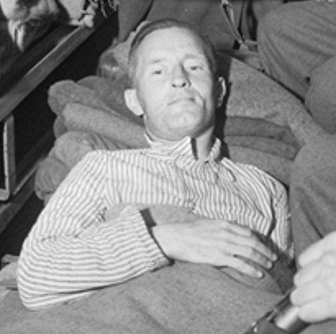
| 16 Quotes | |
| Occup. | Author |
| From | USA |
| Born | April 24, 1906 Brooklyn, New York City, United States |
| Died | January 3, 1946 Wandsworth Prison, London, England |
| Cause | Judicial execution (hanging) |
| Aged | 39 years |
| Cite | |
Citation Formats
APA Style (7th ed.)
William joyce biography, facts and quotes. (2026, February 11). FixQuotes. https://fixquotes.com/authors/william-joyce/
Chicago Style
"William Joyce biography, facts and quotes." FixQuotes. February 11, 2026. https://fixquotes.com/authors/william-joyce/.
MLA Style (9th ed.)
"William Joyce biography, facts and quotes." FixQuotes, 11 Feb. 2026, https://fixquotes.com/authors/william-joyce/. Accessed 28 Mar. 2026.
Early Life and Background
William Joyce was born April 24, 1906, in the United States, at a moment when mass literacy, pulp magazines, and the early film industry were remaking what it meant to be an "author". He came of age in the long wake of the Progressive Era and into the anxieties of the interwar years - a period when writers could be public moralists, entertainers, and propagandists all at once. That cultural churn mattered: it created a marketplace that rewarded a loud voice and a clear identity, even when the identity itself was unstable.Because later generations would attach the name "William Joyce" to other, better-documented figures and works, his biographical trail is unusually hard to pin down with confidence. The outline remains clear - an American-born writer who died on January 3, 1946 - but many specifics that would normally anchor a life (precise hometown, family circumstances, and a reliable bibliography) are not securely established in the historical record available here. That absence is itself revealing: some authors are remembered for sentences; others are remembered for their role in a larger era, and the paper around them erodes first.
Education and Formative Influences
Joyce's formative years unfolded during the rapid professionalization of writing, when the boundary between journalism, popular fiction, political speechmaking, and cultural commentary blurred. In that environment, "education" did not always mean a stable university track; it could mean apprenticeship in print culture - learning the cadences of persuasion, the economies of the short form, and the hard lesson that audience attention is both the prize and the constraint. The period's pressures - war memory, economic precarity, and competing national stories about modernity - encouraged writers to develop not only style but posture, a public self that could survive the marketplace.Career, Major Works, and Turning Points
Joyce's career, as far as it can be responsibly described, belongs to the early twentieth century's noisy middle ground: authorship as a livelihood rather than a monument. In those decades, a writer could circulate through magazines, pamphlets, editorial pages, and public platforms, sometimes leaving few durable book-length artifacts but exerting influence through tone, argument, and repetition. The key turning point for many writers of his cohort was the realization that modern fame was often an effect of distribution - syndication, broadcasts, and institutional patronage - as much as it was an effect of literary distinction; the "author" became a kind of operator inside media systems, and success could be as contingent as it was deserved.Philosophy, Style, and Themes
Even with the documentary gaps, Joyce can be placed inside a recognizable psychology of vocation: the writer as someone who persists because the act itself is compulsive, not because recognition is guaranteed. He seems to fit the temperament captured in the insistence that “But if you really love to write and you really love to tell stories and you really love to draw, you just have to keep doing it no matter what anybody says”. Read as interior evidence, that line is less pep talk than defense mechanism - a way to stabilize identity against the humiliations of editors, markets, and the suspicion that writing is not "real work". It suggests a man for whom craft was not merely ambition but emotional shelter.His implied themes, accordingly, are not only about subject matter but about permission - who gets to create, and what kinds of play or transgression the culture allows. The memory that “I did not win and in fact I was called into the principal's office for a consultation with my parents. But that was the beginning of my literary career”. is a miniature origin story: an early collision between imagination and authority that converts shame into fuel. That conversion - taking reprimand as initiation - is a classic writerly alchemy, and it hints at a style that values boldness, mischief, and the narrative payoff of breaking rules just enough to feel alive.
Underneath both quotes is an ethic of persistence that borders on defiance: “If you really want to tell stories, do it and don't be dissuaded”. For Joyce's era, when institutions could be gatekeepers and censors as much as mentors, the sentence reads like a private oath. Psychologically, it frames writing as self-rescue: to be dissuaded is not only to lose a career but to lose the self that only story can organize. In that light, his authorship - however unevenly documented - belongs to the long twentieth-century tradition of writers who treated narrative not as ornament but as a means of staying intact.
Legacy and Influence
William Joyce died in 1946, just as the postwar media order was consolidating - a shift that would later canonize some writers and erase others whose work lived in periodicals, performances, or transient platforms. His legacy, therefore, is partly a lesson about authorship itself: the twentieth century expanded the number of people who could call themselves writers while also increasing the likelihood that a writer's footprint would fragment or vanish. What remains most persuasive is the vocational portrait: an American author shaped by an era that demanded resilience, and remembered, fittingly, through the durable idea that the will to tell stories can be a life raft even when the archive is thin.Our collection contains 16 quotes written by William, under the main topics: Funny - Justice - Writing - Book - Movie.
Other people related to William: Chris Wedge (Director)
Source / external links