
William L. Jenkins Biography Quotes 11 Report mistakes
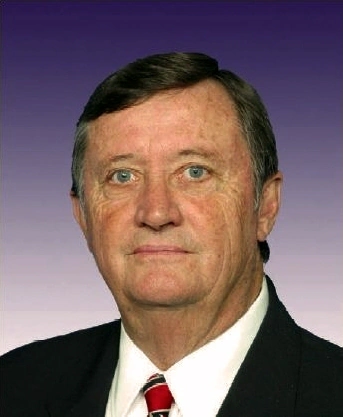
| 11 Quotes | |
| Occup. | Politician |
| From | USA |
| Born | November 29, 1936 |
| Age | 89 years |
| Cite | |
Citation Formats
APA Style (7th ed.)
William l. jenkins biography, facts and quotes. (2026, February 11). FixQuotes. https://fixquotes.com/authors/william-l-jenkins/
Chicago Style
"William L. Jenkins biography, facts and quotes." FixQuotes. February 11, 2026. https://fixquotes.com/authors/william-l-jenkins/.
MLA Style (9th ed.)
"William L. Jenkins biography, facts and quotes." FixQuotes, 11 Feb. 2026, https://fixquotes.com/authors/william-l-jenkins/. Accessed 12 Feb. 2026.
Early Life and Roots
William L. Jenkins, born in 1936, emerged from the communities of East Tennessee at a time when the region's political culture prized pragmatism, close attention to local concerns, and continuity in public service. Those traits shaped his temperament and public persona. He developed early ties to the values of the Appalachian foothills, self-reliance, thrift, and neighborly obligation, that later became the hallmarks of his approach to lawmaking and constituent service.He trained as a lawyer before entering elective office, giving him both a legal toolkit and a process-oriented mindset that he carried through a long career. Early mentors and colleagues in local bar associations and courthouse circles exposed him to the everyday challenges of rural counties, courts, roads, school funding, and land and water stewardship, concerns he would continue to elevate as he moved through higher levels of responsibility.
State Legislative Leadership
Jenkins entered the Tennessee House of Representatives during a period dominated by long-entrenched Democratic leadership in Nashville. He built a reputation for courtesy across the aisle, detailed command of rules, and a steady hand with the budget. That blend of skills vaulted him into the speakership of the Tennessee House in the late 1960s, a rare elevation for a Republican in that era. As Speaker, he balanced committee chairs with district needs, focused on predictable budgeting, and emphasized institutional fairness, priorities that earned respect from both Republican allies and Democratic counterparts who prized stability.Among the figures around him, veteran lawmakers from both parties and legislative staff directors played outsized roles in translating his priorities into daily practice. Jenkins's speakership was not about grand gestures so much as careful management: keeping the calendar moving, shielding rank-and-file members from unnecessary crossfire, and finding workable compromises on public safety, education, and infrastructure.
Executive and Judicial Service
After his turn holding the gavel, Jenkins transitioned to executive responsibilities in state government, serving under Governor Winfield Dunn. In that capacity he worked closely with agency professionals, county executives, and conservation advocates on resource management and recreational assets, an arena where his East Tennessee sensibilities meshed with the needs of a state rich in rivers, ridges, and public lands. The job demanded patience with permitting, contracting, and intergovernmental coordination, and it refined his belief that careful stewardship and economic development could coexist.He later returned to the courtroom as a state judge in East Tennessee. The robe suited his methodical temperament. The judge's chambers connected him again to clerks, sheriffs, prosecutors, defense counsel, and families navigating the legal system. Those relationships deepened his appreciation for law's practical impacts and the importance of consistency, clarity, and procedural fairness, qualities that would color his congressional work.
United States House of Representatives
In 1996, with long-serving Congressman Jimmy Quillen retiring from Tennessee's First Congressional District, Jenkins sought and won the open seat, entering the U.S. House in January 1997. He stepped into a lineage of East Tennessee Republican representation that emphasized steady service over spectacle. Quillen's legacy loomed large in the district, and the transition underscored both continuity and renewal: a new member, but the same core attentiveness to the Tri-Cities and surrounding counties.In Washington, Jenkins kept a low profile, favoring committee work and coalition-building. He concentrated on issues that mattered immediately back home: agriculture and forestry, transportation links through the mountains and river valleys, veteran services, and the stability of energy and economic development institutions that anchor the region. He worked closely with mayors, county commissioners, university and community college leaders, hospital administrators, and small-business owners, often bringing those voices to committee rooms and agency meetings. His colleagues in the House knew him as even-keeled and respectful of process, someone who prepared thoroughly and delivered for his district without chasing headlines.
He cultivated a close relationship with district staff and caseworkers, insisting that constituent services, veterans benefits, Social Security matters, and federal permits, receive the same attention as legislation. Inside the delegation, he collaborated with fellow Tennesseans and committee chairs to secure practical outcomes: targeted infrastructure upgrades, water and sewer improvements, and support for regional workforce training. He served during the governorships that spanned both parties in Nashville, coordinating with state officials to align federal and state efforts rather than compete over credit.
After five terms, Jenkins chose not to seek reelection in 2006. He was succeeded by David Davis, another East Tennessee Republican, ensuring the district's continuity of conservative representation focused on local priorities. The handoff mirrored his own earlier succession from Jimmy Quillen: a deliberate transition designed to keep constituent service and regional development at the forefront.
Approach, Character, and Relationships
Jenkins's style was understated and disciplined. He valued fiscal restraint, procedural order, and incremental progress. While firmly conservative, he rarely indulged in incendiary rhetoric, preferring to negotiate with committee leaders and agency directors to achieve outcomes. He kept close counsel with local officials, business owners, and veterans groups, relying on their expertise to shape his votes and oversight questions. In Nashville, earlier in his career, he worked amid a Democratic majority; in Washington, he navigated periods of divided government. In both settings he treated opponents as problem-solving partners when possible.People around him mattered. The example of Jimmy Quillen set a template for district-first representation. Governor Winfield Dunn's executive shop helped refine his sense of stewardship. Legislative colleagues from both parties, as well as a trusted circle of staffers in the district and on Capitol Hill, were instrumental in carrying out his careful brand of service. His family provided the grounding that allowed long commutes and steady hours, and his neighbors back home offered candid feedback he actively sought.
Later Years and Legacy
After leaving Congress in 2007, Jenkins returned to East Tennessee life with the same aversion to fanfare that had marked his career. He remained engaged with civic groups and stayed accessible to local leaders seeking advice on federal and state coordination. Tributes from across the region emphasized his steadiness, decency, and a results-over-rhetoric philosophy. He died in 2021, and memories shared by constituents, former staff, and elected officials painted a consistent portrait: a lawyer-turned-legislator who saw public office as custodial work on behalf of his neighbors, who preferred listening to talking, and whose legacy endures in the quiet durability of the institutions and infrastructure he helped strengthen.Jenkins's career traces a coherent arc: local legal practice to state legislator and Speaker, executive stewardship and judgeship, then a decade in the U.S. House. Through each chapter he kept the same priorities, fair process, fiscal prudence, and relentless attention to the problems that most immediately touched the lives of East Tennesseans. That continuity, buttressed by the relationships he cultivated with figures like Jimmy Quillen, Winfield Dunn, and his successor David Davis, defined both his effectiveness and the imprint he left on the region.
Our collection contains 11 quotes written by William, under the main topics: Justice - Leadership - Freedom - Faith - Legacy & Remembrance.
Source / external links