
William McFee Biography Quotes 9 Report mistakes
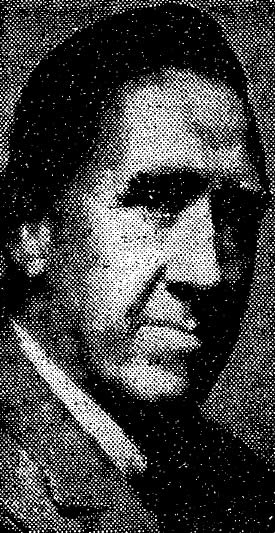
| 9 Quotes | |
| Occup. | Writer |
| From | USA |
| Born | June 15, 1881 London, England |
| Died | July 2, 1966 |
| Aged | 85 years |
| Cite | |
Citation Formats
APA Style (7th ed.)
William mcfee biography, facts and quotes. (2026, February 17). FixQuotes. https://fixquotes.com/authors/william-mcfee/
Chicago Style
"William McFee biography, facts and quotes." FixQuotes. February 17, 2026. https://fixquotes.com/authors/william-mcfee/.
MLA Style (9th ed.)
"William McFee biography, facts and quotes." FixQuotes, 17 Feb. 2026, https://fixquotes.com/authors/william-mcfee/. Accessed 28 Mar. 2026.
Early Life and Background
William McFee was born on June 15, 1881, in England to American parents and grew up with the mixed loyalties of an Atlantic world that was tightening through steam, cable, and imperial trade. That in-between identity - American by passport and temperament, British by early experience and professional training - would later become one of his central imaginative positions: the observer who belongs and does not belong, the sailor who is at home only in motion.
His early life unfolded against the late-Victorian and Edwardian cult of expertise, when engineering promised social mobility and the sea remained one of the last vast workplaces ruled by hierarchy, risk, and weather. The working ship became for him both a school of character and a laboratory of human types: officers with brittle pride, stokers with fatalism, and passengers who carried their drawing rooms onto the ocean and called it civilization.
Education and Formative Influences
McFee trained as a marine engineer and went to sea in the merchant service, absorbing the hard grammar of steamship life - watches, breakdowns, improvisation, and the constant moral accounting that follows danger. Those years mattered less as colorful backdrop than as discipline: they gave him a technical precision uncommon among literary sea-writers and an intimate knowledge of modern labor, the engine room as an industrial underworld that powered the age's empires and migrations.
Career, Major Works, and Turning Points
After establishing himself as a writer of maritime fiction and essays, McFee reached a wide audience with the long novel "Casuals of the Sea" (1916), a detailed, unsentimental portrait of merchant shipping and its human debris, written with the authority of lived routine rather than nautical romance. He continued with novels and memoir-inflected work that returned again and again to ships, ports, and the moral weather of men under strain; his career also reflected the era's shifting readership, as the First World War and then interwar disillusion made his practical, iron-scented realism feel newly relevant.
Philosophy, Style, and Themes
McFee wrote from inside responsibility rather than from the heroic quarterdeck. His characters rarely receive the consolations of tidy justice; instead, they inhabit a universe where competence is necessary and still insufficient, and where ethics are tested by accident, bureaucracy, and fatigue. That stance is captured in his blunt recognition that “Doing what's right is no guarantee against misfortune”. Psychologically, it reads as a credo forged not from cynicism but from repetitive exposure to mechanical failure and human error - the engineer's knowledge that a perfectly kept system can still be undone by a bad bearing, a sudden squall, or a single lapse at 3 a.m.
His prose style is tactile and associative, steeped in sensory triggers that unlock interior life amid outward routine. He understood how memory rides on the body, not the intellect, and he could pivot from technical description to sudden recollection with the ease of a man hearing an old port in a new engine note: “There is nothing like an odor to stir memories”. That sensitivity to sense impression underwrites his interest in secrecy, confession, and the half-lit zones of human candor - “It is so much easier to tell intimate things in the dark”. In McFee, darkness is not only literal but social: the spaces below deck and off duty where class roles blur and truth leaks out, briefly, before the next bell.
Legacy and Influence
McFee's enduring value lies in how he made the modern sea legible: not as melodrama but as industrial life, a workplace that exposed the era's faith in technology and its stubborn vulnerability to chance. He helped shift maritime writing toward realism grounded in labor, anticipating later twentieth-century interest in systems, institutions, and the quiet heroism of competence. Though never a mass celebrity on the scale of the most famous sea novelists, he remains a touchstone for readers who want ships rendered with technical authority and men rendered with moral complexity - a writer who treated the engine room, and the human heart, as places where pressure reveals the truth.
Our collection contains 9 quotes written by William, under the main topics: Ethics & Morality - Wisdom - Never Give Up - Live in the Moment - Romantic.
Source / external links