
William Merritt Chase Biography Quotes 4 Report mistakes
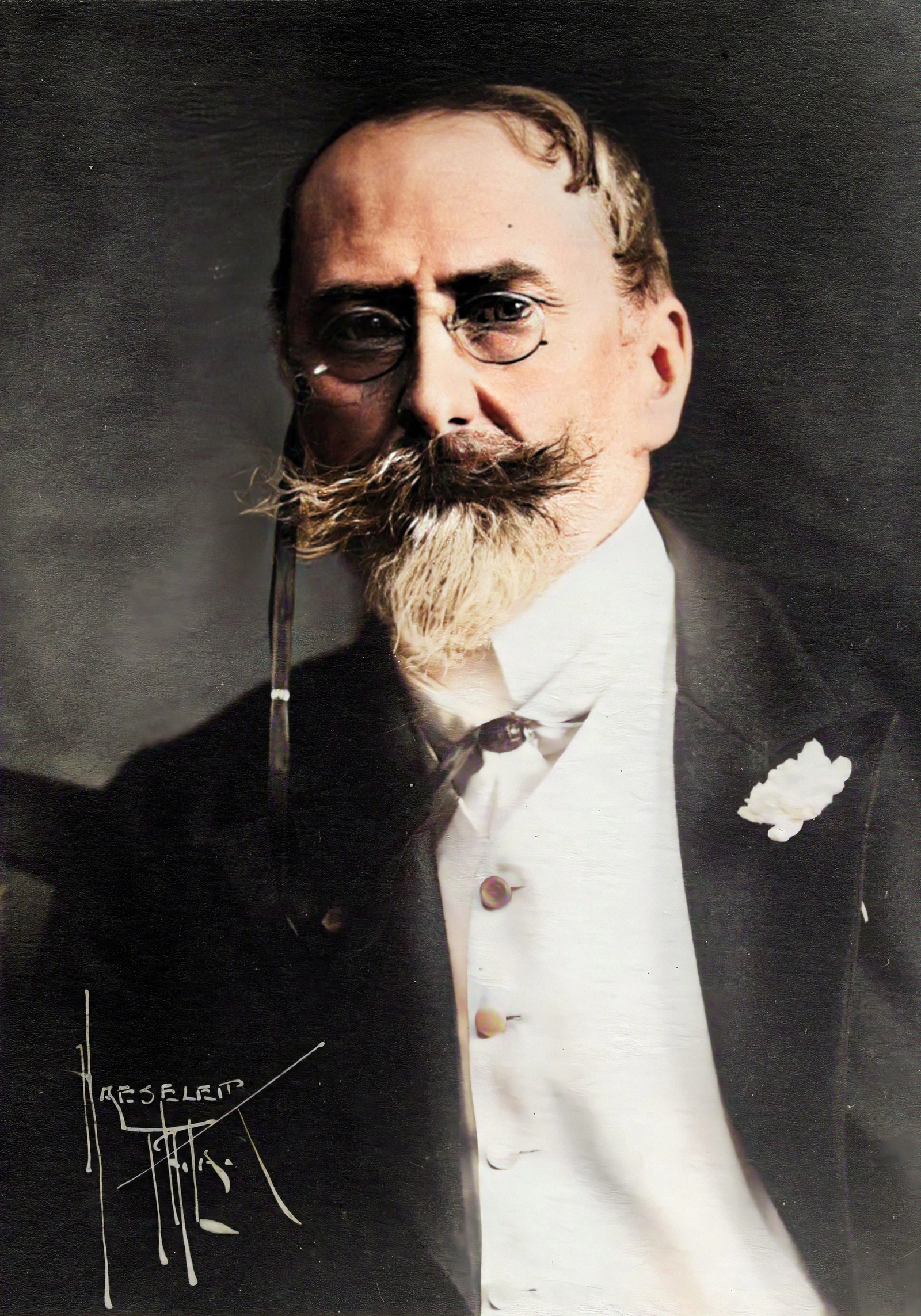
| 4 Quotes | |
| Occup. | Artist |
| From | USA |
| Born | November 1, 1849 |
| Died | October 25, 1916 |
| Aged | 66 years |
| Cite | |
Citation Formats
APA Style (7th ed.)
William merritt chase biography, facts and quotes. (2026, February 11). FixQuotes. https://fixquotes.com/authors/william-merritt-chase/
Chicago Style
"William Merritt Chase biography, facts and quotes." FixQuotes. February 11, 2026. https://fixquotes.com/authors/william-merritt-chase/.
MLA Style (9th ed.)
"William Merritt Chase biography, facts and quotes." FixQuotes, 11 Feb. 2026, https://fixquotes.com/authors/william-merritt-chase/. Accessed 24 Mar. 2026.
Early Life
William Merritt Chase was born in the American Midwest in 1849 and grew up in Indiana, where his precocious talent for drawing was encouraged. As a teenager in Indianapolis he studied with Barton S. Hays, a local portraitist who helped him acquire a disciplined approach to draftsmanship. Seeking broader horizons, he moved east and briefly worked in St. Louis before going to New York. There he studied with Lemuel Wilmarth, a rigorous teacher associated with the National Academy of Design and the newly formed Art Students League, and absorbed both academic technique and a conviction that serious art demanded study from the live model.Training and European Years
Like many ambitious American painters of his generation, Chase pursued advanced training in Europe. In the early 1870s he enrolled at the Royal Academy in Munich, where the celebrated history painter Karl von Piloty led an atelier known for its strong tonal painting and bravura brushwork. Among his peers were Frank Duveneck and John Henry Twachtman, kindred spirits who shared an enthusiasm for direct, painterly handling. Munich gave Chase a commanding technical base and a taste for full, resonant color laid in with confidence. Travels to Italy, the Low Countries, and Spain deepened his admiration for Velazquez and Frans Hals, whose crisp light and economy of means became touchstones. He also followed developments in the work of James McNeill Whistler, whose harmony of tone and urbane aestheticism would leave a lasting mark on Chase's interiors and portraits.Return to New York and the Tenth Street Studio
Chase returned to New York by the late 1870s and quickly positioned himself at the center of the citys art world. He established a famously theatrical studio in the Tenth Street Studio Building, a social and professional hub for painters and patrons. The space, filled with Japanese fans, blue-and-white porcelain, oriental rugs, armor, and curios from his travels, became both a subject and a stage set for his art. Works like sumptuous studio interiors, still lifes with fish and game, and stylish portraits announced a painter equally at home with virtuoso technique and cosmopolitan taste. He exhibited with the National Academy of Design and the new Society of American Artists, aligning himself with colleagues who sought fresh directions for American painting while maintaining high professional standards. He formed productive ties with designers and decorators, notably Candace Wheeler and her daughter Dora Wheeler, reflecting a period when fine and decorative arts intertwined in New Yorks cultural life.Teacher and Mentor
Chase proved to be as influential a teacher as he was a painter. He taught for years at the Art Students League of New York, offering crisp demonstrations and critiques that emphasized painting from life and a lively, confident touch. In the 1890s he founded his own school, known as the Chase School and later the New York School of Art, where a generation of American artists found their footing. Robert Henri would eventually teach there, and the overlap among their students helped shape the next wave of American art. Chase also taught at the Pennsylvania Academy of the Fine Arts in Philadelphia and led peripatetic summer classes in Europe, where he took students to paint in Italy, Spain, and the Netherlands. Among the many artists who studied with him, Georgia O Keeffe, Edward Hopper, Rockwell Kent, and Charles Sheeler are often cited, each absorbing, in different ways, his insistence on clear seeing, structural brushwork, and the conviction that everyday subjects could yield serious art.Shinnecock and American Impressionism
Chase was a key transmitter of Impressionist practices to American soil. In the early 1890s he organized a summer school at Shinnecock Hills on Long Island, where he taught plein air painting amid dunes, scrub pines, and Atlantic light. With students and family around him, he produced a celebrated series of sunlit landscapes and scenes of domestic leisure, adopting a lighter palette and broken brushwork while retaining the compositional clarity trained in Munich. At Shinnecock, in Central Park, and in Brooklyn parks, he explored the pleasures of modern life in fresh air: women in white dresses, children on the sand, and lawns pricked with late-afternoon shadows. These pictures helped define an American Impressionism rooted in local landscape and urban green spaces, distinct from but conversant with the work of contemporaries such as John Henry Twachtman and Childe Hassam.Subjects and Style
Across his career Chase moved fluidly among genres. His early still lifes, including bravura arrangements of fish and game, show his Munich heritage in their deep tone and tactile paint. His portraits combine incisive characterization with a flair for costume and setting; he painted family members, students, and patrons with an ease that could be both affectionate and stylish. Interior scenes set in his studio are celebrations of looking, composed as harmonies of color and texture. Later landscapes, especially at the shore, adopt a higher key and quick, descriptive touches that catch the flicker of light on grass or the heat of summer sky. Through all shifts of subject, his work is bound by confident brushwork, acute observation, and an abiding interest in the painterly surface.Professional Networks and Exhibitions
Chase exhibited widely in New York and in major national and international venues, earning prizes that confirmed his standing. He served on juries, joined artists clubs, and showed with both established academies and reformist groups, navigating the complex landscape of late 19th-century institutions. In an era when rival factions debated the future of American art, he maintained collegial relationships across divisions, tempering tradition with openness to new modes. He knew the work of international contemporaries, including John Singer Sargent, and helped American audiences cultivate a taste for modern painting without abandoning craftsmanship.Personal Life
In the mid-1880s Chase married Alice Gerson, who often appears in his paintings, and their growing family supplied beloved subjects for domestic scenes. He was a devoted father, and images of his children playing in sunlit rooms or on breezy lawns combine tenderness with formal rigor. His collecting habits, which filled his studio with textiles, ceramics, and prints, expressed his curiosity about global art and gave him a repertoire of motifs that enriched his compositions. Friends, students, and patrons gathered in his studio for musicales, critiques, and lively conversation, reinforcing his role as a catalyst in New Yorks artistic community.Later Years and Legacy
Through the first decade of the 20th century, Chase continued to teach, exhibit, and travel, sustaining an output that was both prolific and varied. He revisited European museums with students, paying repeated homage to Velazquez and Hals, and he adapted his instruction to a generation increasingly interested in experimentation while insisting on the discipline of drawing and painting from observation. He died in 1916, leaving behind an impressive body of work and, just as importantly, an expansive pedagogical legacy. Many of the most consequential American artists of the 20th century passed through his classrooms and summer schools, carrying forward his respect for craft, his embrace of direct experience, and his belief that the modern American scene could be a worthy and beautiful subject. His paintings, whether of studio interiors hung with oriental rugs, silver-scaled fish glistening on a slab, or luminous beaches at Shinnecock, testify to a life spent reconciling virtuosity with freshness, tradition with modernity.Our collection contains 4 quotes written by William, under the main topics: Art - Meaning of Life - Teaching.
Source / external links