
William Penn Biography Quotes 42 Report mistakes
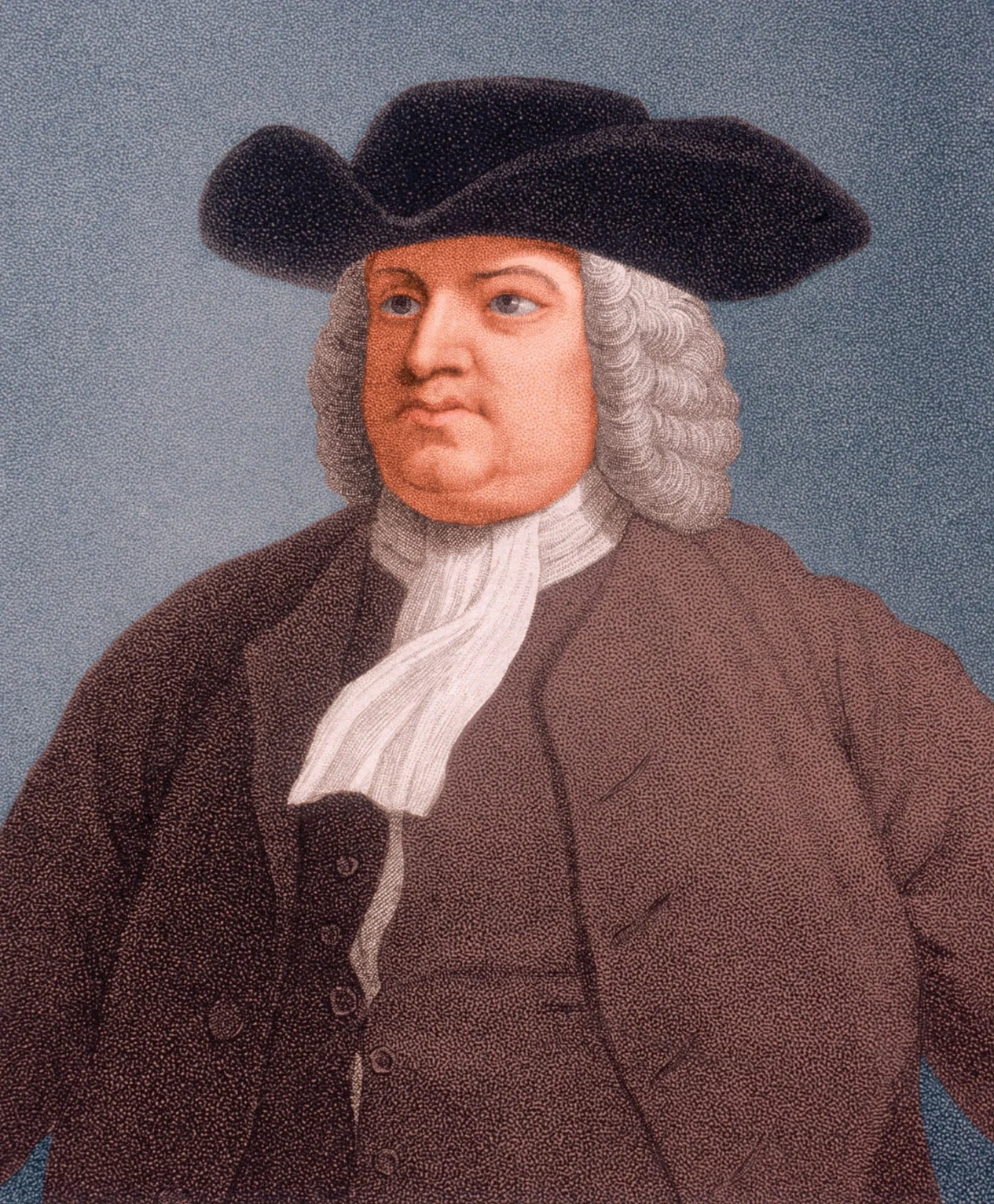
| 42 Quotes | |
| Occup. | Leader |
| From | England |
| Born | October 14, 1644 |
| Died | July 30, 1718 |
| Aged | 73 years |
| Cite | |
Citation Formats
APA Style (7th ed.)
William penn biography, facts and quotes. (2026, February 2). FixQuotes. https://fixquotes.com/authors/william-penn/
Chicago Style
"William Penn biography, facts and quotes." FixQuotes. February 2, 2026. https://fixquotes.com/authors/william-penn/.
MLA Style (9th ed.)
"William Penn biography, facts and quotes." FixQuotes, 2 Feb. 2026, https://fixquotes.com/authors/william-penn/. Accessed 25 Mar. 2026.
Early Life and Background
William Penn was born on October 14, 1644, in London, during the convulsions of the English Civil Wars. He grew up between the capital and the naval world of his father, Admiral Sir William Penn, a formidable Parliamentarian-turned-Restoration officer whose rise brought the family wealth, court access, and an expectation that his only son would serve the restored Stuart order. The boy inherited an early sense of command and public destiny, but also watched how quickly regimes changed and how easily conscience could be conscripted by politics.The Restoration of 1660 made loyalty fashionable again, and Penn moved in circles where conformity to the Church of England functioned as both belief and credential. Yet the atmosphere that formed him was also saturated with dissent - Baptists, Independents, Fifth Monarchists, and the newly emergent Society of Friends - and the state answered religious nonconformity with fines, prisons, and public stigma. Penn learned early that law could be an instrument of unity or coercion, and that personal faith, if taken seriously, might place a man at odds with his class, his family, and the Crown.
Education and Formative Influences
Penn was educated at Christ Church, Oxford, where he encountered Puritan preaching and refused the required chapel forms, leading to disciplinary trouble and his eventual departure; he then spent time in France, where the polish of court culture and the intellectual seriousness of Protestant thinkers widened his horizons, and later studied at Lincoln's Inn, absorbing the language of property, charters, and constitutional argument. A decisive turn came in Ireland in the mid-1660s when he heard the Quaker minister Thomas Loe, whose emphasis on the inward Light, plain speech, and disciplined conscience broke through Penn's aristocratic assumptions; from that point, the tension between inherited privilege and chosen testimony became the engine of his life.Career, Major Works, and Turning Points
Penn publicly embraced Quakerism in 1667, a choice that brought rupture with his father and repeated confrontations with the state; he wrote early defenses such as "Truth Exalted" (1668) and, after imprisonment in the Tower of London, his most influential theological synthesis, "No Cross, No Crown" (1669), arguing that authentic Christianity required inward transformation and outward simplicity. In 1670 he was tried with William Mead for unlawful assembly; the jury's refusal to convict helped establish the independence of juries in English law. Penn then became a leading Quaker spokesman, negotiating with authorities, organizing transatlantic meetings, and defending toleration. His greatest political act came in 1681, when King Charles II granted him a proprietary colony in repayment of a crown debt to his father; Penn shaped Pennsylvania as a "holy experiment" with generous religious liberty, representative assemblies, and relatively liberal land policies, set out in his Frame of Government (1682) and publicized in "Some Account of the Province of Pennsylvania". He traveled to America (1682-1684), founded Philadelphia, and pursued treaties with the Lenape, attempting purchase and consent over conquest, though later administration and settler pressure strained those ideals. Financial troubles, political suspicion during the Glorious Revolution, years of litigation, and a debilitating series of strokes darkened his later life; he died on July 30, 1718, at Ruscombe, Berkshire, with his colony secure in law but his personal accounts unsettled.Philosophy, Style, and Themes
Penn's inner life joined mystical inwardness to civic practicality. Quaker worship trained him to treat silence as a moral technology, a way to discipline ego and listen for guidance; he framed this as restorative rather than escapist: “True silence is the rest of the mind, and is to the spirit what sleep is to the body, nourishment and refreshment”. That habit of inward watchfulness helped explain his unusual combination of firmness and moderation - he could endure prison and still write as a negotiator - because the seat of authority, for him, was not social rank but obedience to a higher rule.From that inward center he developed a political ethic aimed at restraining power without surrendering the world to cynicism. He warned that government divorced from conscience degenerates into coercion: “Men must be governed by God or they will be ruled by tyrants”. Yet his idea of religion was socially activating, not monastic: “True godliness does not turn men out of the world, but enables them to live better in it and excites their endeavors to mend it”. In prose that is plain, argumentative, and legally aware, Penn returned to recurring themes - liberty of conscience, the danger of force in matters of faith, the moral limits of means, and the possibility of social peace through fair dealing. His tenderness toward enemies was not softness but strategy, rooted in the belief that persuasion outlasts compulsion and that civic trust can be built by consistent restraint.
Legacy and Influence
Penn's legacy is inseparable from Pennsylvania: a colony that, at its best, institutionalized religious toleration, participatory governance, and a comparatively less violent posture toward Native peoples than many contemporaries, even as later expansion contradicted early promises. His trial helped strengthen common-law protections for juries; his constitutional frames and public arguments fed the long Anglo-American conversation about rights, consent, and the limits of the state. As a Quaker leader, he modeled a rare posture for a man of power - using access to argue for the marginalized - and his "holy experiment" became a touchstone for later pluralist societies: imperfect in execution, enduring in aspiration, and still studied as evidence that conscience can be made into policy rather than merely private sentiment.Our collection contains 42 quotes written by William, under the main topics: Witty One-Liners - Ethics & Morality - Truth - Wisdom - Justice.
Other people related to William: Robert Barclay (Writer), Edward Hicks (Artist), George Fox (Clergyman)
William Penn Famous Works
- 1696 Primitive Christianity Revived (Book)
- 1693 Some Fruits of Solitude in Reflections and Maxims (Book)
- 1693 Fruits of Solitude (Book)
- 1692 A Key (Book)
- 1670 The Great Case of Liberty of Conscience (Book)
- 1668 No Cross, No Crown (Book)
Source / external links