
William Pennington Biography Quotes 3 Report mistakes
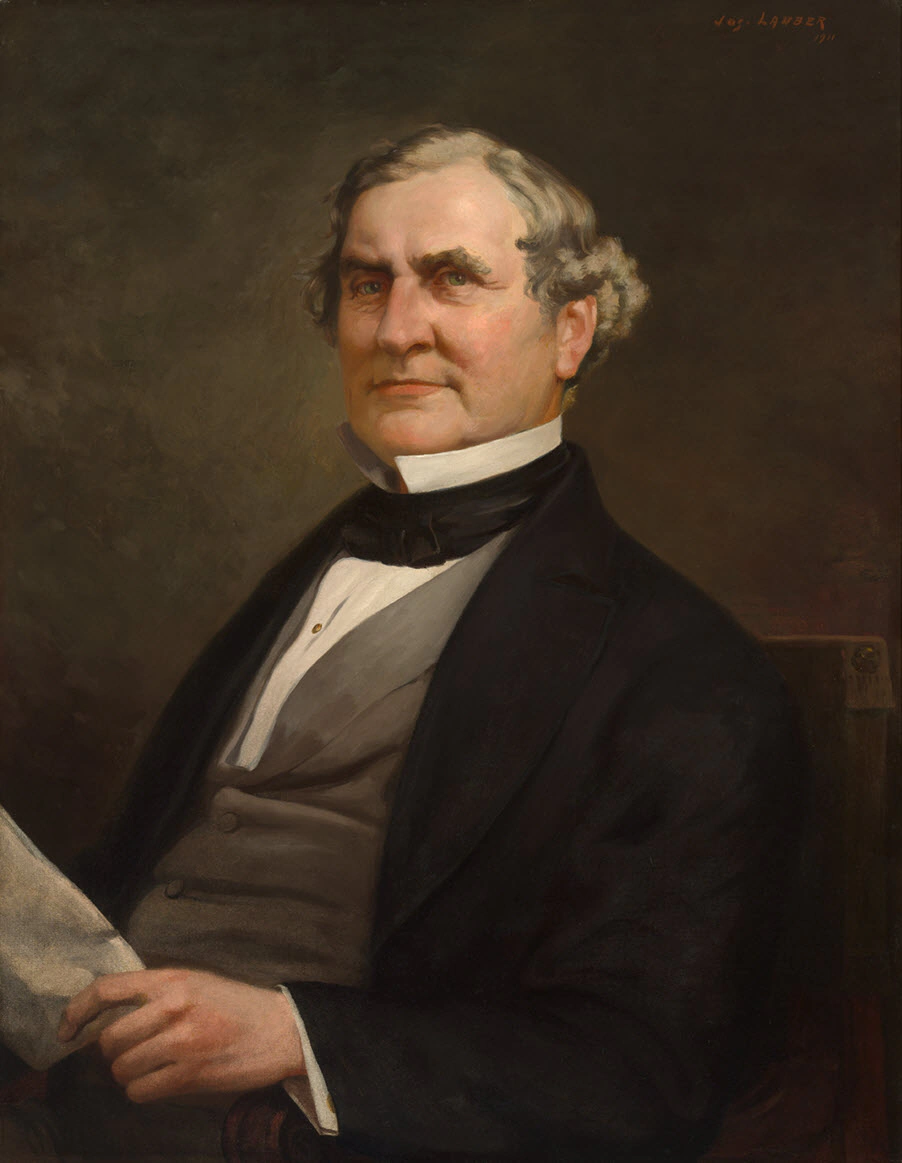
| 3 Quotes | |
| Occup. | Politician |
| From | USA |
| Born | May 4, 1796 USA |
| Died | February 16, 1862 USA |
| Aged | 65 years |
| Cite | |
Citation Formats
APA Style (7th ed.)
William pennington biography, facts and quotes. (2026, February 23). FixQuotes. https://fixquotes.com/authors/william-pennington/
Chicago Style
"William Pennington biography, facts and quotes." FixQuotes. February 23, 2026. https://fixquotes.com/authors/william-pennington/.
MLA Style (9th ed.)
"William Pennington biography, facts and quotes." FixQuotes, 23 Feb. 2026, https://fixquotes.com/authors/william-pennington/. Accessed 27 Mar. 2026.
Early Life and Background
William Pennington was born on May 4, 1796, in Newark, New Jersey, into a family whose public standing and commercial ties reflected the ambitions of a town growing into a strategic hub between New York and Philadelphia. He came of age in the long afterglow of the American Revolution, when the new republic was still improvising its institutions and citizens argued about what virtue and authority should look like in practice. Newark, with its churches, courts, and busy roads, offered a boy daily lessons in how moral language, property, and politics braided together.
The early nineteenth century also trained him in uncertainty. The War of 1812, the rise of party newspapers, and recurring financial panics made public life feel simultaneously necessary and precarious. Pennington absorbed the era's expectation that a gentleman should be both practical and civic-minded, and his later career would show a preference for stability, orderly procedure, and the steadying influence of religion. In a period when political identity could harden into faction, he cultivated a reputation for seriousness and restraint.
Education and Formative Influences
Pennington prepared for the law and was shaped by the classical-legal curriculum typical of aspiring statesmen of his generation: careful reading, argumentation, and an ethic of duty that joined personal rectitude to public service. Admitted to the bar and practicing in New Jersey, he learned politics the way many antebellum leaders did - through courtrooms, local patronage, and the practical problems of towns and counties. The intellectual climate around him was shifting toward mass democracy and sharper sectional conflict; he remained a man of institutions, convinced that legitimacy came from procedure and conscience rather than spectacle.
Career, Major Works, and Turning Points
Pennington built his public life in New Jersey, moving from state politics into national prominence as a Whig and later as a Republican aligned with the Union cause. His most consequential moment came in 1860, when he was elected Speaker of the U.S. House of Representatives after a grueling, weeks-long contest that exposed the fragmentation of the party system on the eve of civil war. As Speaker of the 36th Congress he presided during the secession crisis, when every ruling, committee assignment, and recognition of debate carried existential stakes; his temperament suited the role of institutional guardian rather than tribune, but the office placed him at the center of a collapsing consensus. He remained identified with the attempt to hold the Union together through constitutional means and a moral vocabulary that could still speak across bitterness.
Philosophy, Style, and Themes
Pennington's political psychology is best read through the intersection of faith and discipline. His public manner projected calm, but it was the calm of a man who expected strain as the natural condition of civic life. “The great duty of life is not to be free from care, but to learn how to bear it with a brave and cheerful spirit”. That sentence captures a governing idea: endurance as a civic virtue. In the Speaker's chair, surrounded by threats of disunion and personal invective, his ideal was not theatrical heroism but the steady bearing of responsibility - a belief that character reveals itself less in triumph than in how one holds a difficult line.
His religious language was not ornamental; it framed politics as moral testing under providence. “Our Father and Our God, unto thee, O Lord, we lift our souls”. The tone is intimate and communal - "our" rather than "my" - suggesting a statesman who understood leadership as intercession for a people, not self-assertion. Even toward opponents, he tried to keep open a pathway from conflict to reconciliation: “Lord, bless our enemies; have mercy upon them; may they turn their course and let us alone, and let us live in peace at our homes in our own native land”. This is not naive softness so much as a strategic moral stance, treating adversaries as misguided neighbors rather than permanent enemies, and treating peace as a homeward, domestic good - the right to live safely where one belongs.
Legacy and Influence
Pennington died on February 16, 1862, with the Civil War already remaking the nation he had tried to preserve through parliamentary order and moral appeal. His legacy is less about a single signature law than about what his speakership symbolized: a final, strenuous effort to keep constitutional government functioning while the Union fractured. In an age that rewards the loudest voice, his example endures as a quieter model of statesmanship - procedural fairness, religiously grounded responsibility, and the conviction that public office is, above all, a burden to be carried without surrendering one's humanity.
Our collection contains 3 quotes written by William, under the main topics: Resilience - Prayer.
Frequently Asked Questions
- Who is William Pennington Jr.? William Pennington Jr. is his son, who continues to represent his family's business and philanthropic interests.
- What is William Pennington Foundation? The William Pennington Foundation is a non-profit organization, established in 2004 after his death to provide grants and support for education and community projects.
- William Pennington Circus Circus: William Pennington co-founded the Circus Circus hotel and casino in Las Vegas, Nevada.
- Was William Pennington in the Navy: William Pennington served in the U.S. Navy during the World War II era.
- How old was William Pennington? He became 65 years old
Source / external links