
William Ralph Inge Biography Quotes 27 Report mistakes
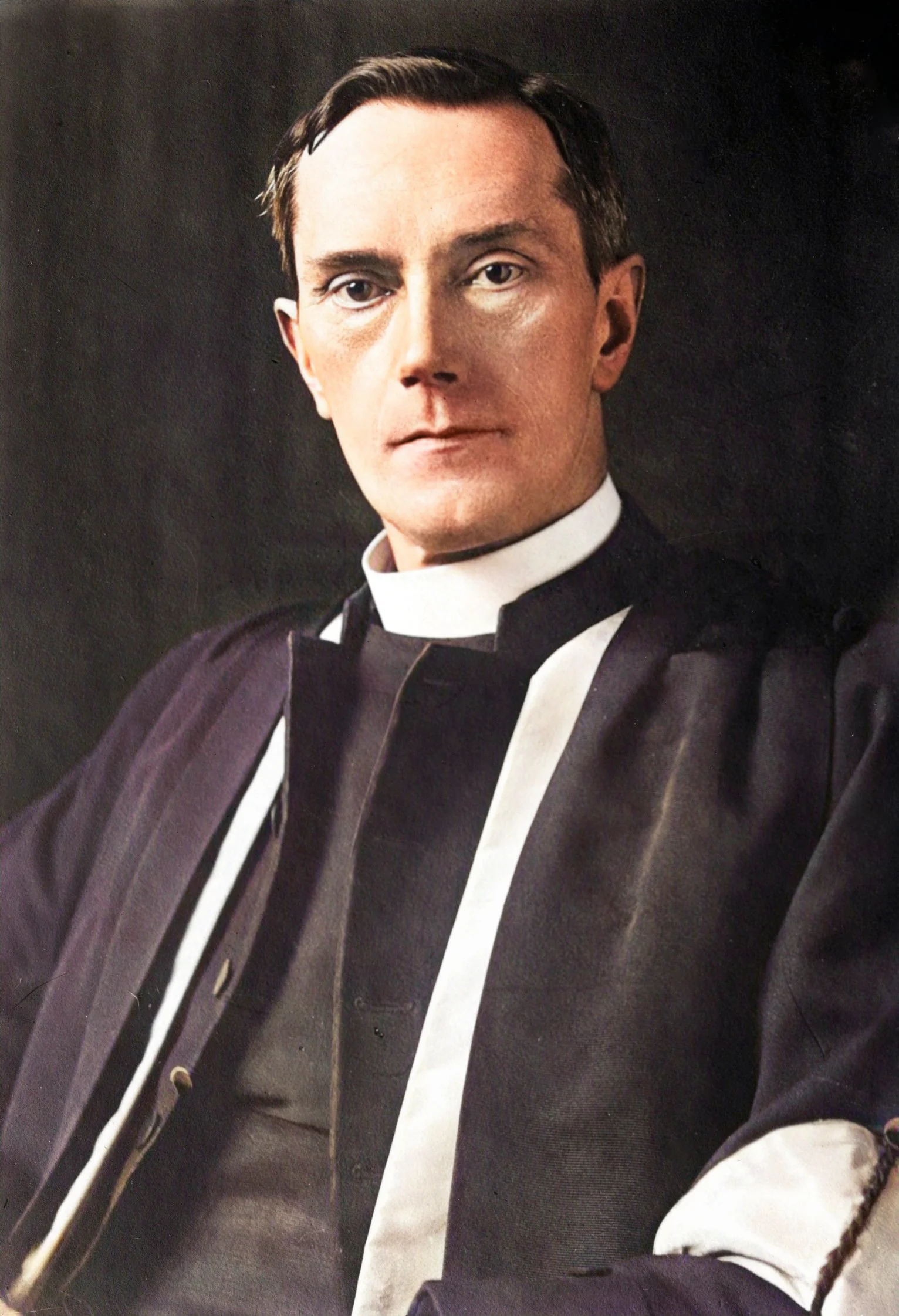
| 27 Quotes | |
| Occup. | Clergyman |
| From | England |
| Born | June 6, 1860 Crayke, Yorkshire, England |
| Died | February 26, 1954 Wallingford, Oxfordshire, England |
| Aged | 93 years |
| Cite | |
Citation Formats
APA Style (7th ed.)
William ralph inge biography, facts and quotes. (2026, February 2). FixQuotes. https://fixquotes.com/authors/william-ralph-inge/
Chicago Style
"William Ralph Inge biography, facts and quotes." FixQuotes. February 2, 2026. https://fixquotes.com/authors/william-ralph-inge/.
MLA Style (9th ed.)
"William Ralph Inge biography, facts and quotes." FixQuotes, 2 Feb. 2026, https://fixquotes.com/authors/william-ralph-inge/. Accessed 5 Mar. 2026.
Early Life and Background
William Ralph Inge was born on June 6, 1860, in England, into the long Victorian afternoon when the Church of England still carried cultural authority but already felt the pressure of science, industrial capital, and an expanding electorate. He grew up amid the moral confidence and the latent anxiety of late-19th-century Anglicanism - a church asked to bless progress while also defending tradition, and to speak to an empire whose spiritual self-image was increasingly complicated by doubt and social conflict.From early on he showed the temperament that later earned him the nickname "the Gloomy Dean": austere, intellectually exacting, and suspicious of easy optimism. Yet the gloom was less personal bitterness than a moral seriousness - a conviction that modern life tempted people to replace spiritual discipline with slogans, and to trade conscience for comfort. Inge learned to watch public opinion with a cleric's pastoral concern and a classicist's skepticism, seeing how quickly crowds could sanctify what they merely desired.
Education and Formative Influences
Inge was educated in the elite channels of English intellectual life, taking a rigorous classical formation at Oxford that anchored him in Greek philosophy and the cadences of the English Bible. His mind was shaped by the Anglican tradition of learned preaching as public argument, but also by the era's confrontation with Darwinian science, higher criticism, and the new social sciences. He absorbed Platonic and Neo-Platonic currents that offered a metaphysical grammar for moral experience, and he developed an affinity for Christian mysticism that sought depth rather than novelty. This combination - classical clarity, mystical inwardness, and public moral critique - became his lifelong signature.Career, Major Works, and Turning Points
Ordained in the Church of England, Inge became one of the most recognized Anglican voices of the early 20th century, known both as preacher and essayist, and eventually serving as Dean of St Paul's Cathedral in London (1911-1934). From that pulpit he addressed an England passing through the crisis of the First World War, the contested settlement of the interwar years, and the spiritual fatigue of modern mass society. He wrote widely in lectures and essays on religion, ethics, culture, and politics; his Gifford Lectures, published as The Philosophy of Plotinus (1918), disclosed how seriously he took metaphysics as a moral resource, while his long engagement with Christian mysticism - including Studies in English Mysticism (1906) and later writings - defended inward spirituality against both sentimental piety and secular reduction. The turning point of the Great War hardened his fear that technological modernity could scale up human violence faster than it could deepen human wisdom, and it confirmed his role as a public intellectual cleric: not a party leader, but a conscience speaking in the language of tradition.Philosophy, Style, and Themes
Inge's inner life revolved around a tension: he loved the permanent and distrusted the fashionable, yet he also believed Christianity must speak honestly to its century. His most enduring religious instinct was Platonic: the visible world was real but not final, and the soul is judged by the loves it chooses. From that came his skepticism toward ideological enthusiasm and his allergy to moral grandstanding. He could be caustic because he feared self-deception more than he feared being disliked; his prose, spare and epigrammatic, aimed to puncture cant rather than to soothe. The goal, for him, was integrity - a life ordered by values that outlast the news cycle and the ballot box.His best-known aphorisms are not mere witticisms; they are windows into a mind trained to detect coercion, hypocrisy, and the seductions of conformity. He warned that “Whoever marries the spirit of this age will find himself a widower in the next”. , a line that captures his psychological resistance to crowds and his belief that moral truth cannot be timed to fashion. Politics, he thought, becomes spiritually dangerous when it substitutes noise for reasoned persuasion: “The enemies of freedom do not argue; they shout and they shoot”. Even his darker humor - “It is useless for the sheep to pass resolutions in favor of vegetarianism, while the wolf remains of a different opinion”. - reveals a realist's impatience with comfortingly symbolic action, and a pastor's worry that naive moralism invites predation. Across sermons, essays, and lectures, his themes recur: the fragility of freedom, the limits of rational planning in human affairs, the necessity of inner discipline, and the conviction that spirituality is not an escape from reality but a sharper way of seeing it.
Legacy and Influence
Inge endures as a distinctively English figure: an Anglican dean who spoke like a philosopher, a public moralist whose pessimism was rooted in spiritual seriousness rather than despair. His influence survives less through institutional reform than through a recognizable voice - clipped, lucid, and morally insistent - that still appeals to readers wary of propaganda and hungry for depth. In an age that often rewards certainty without reflection, Inge remains a reminder that tradition can be a tool of critique, that mysticism can coexist with intellectual rigor, and that a cleric can address modernity without flattering it.Our collection contains 27 quotes written by William, under the main topics: Witty One-Liners - Ethics & Morality - Wisdom - Truth - Art.
Other people related to William: Evelyn Underhill (Writer)
Source / external links