
William Redington Hewlett Biography Quotes 3 Report mistakes
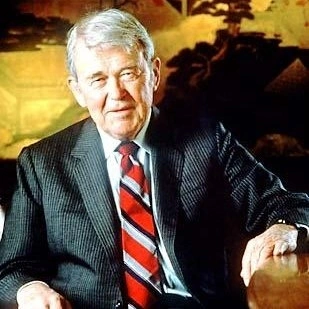
| 3 Quotes | |
| Occup. | Businessman |
| From | USA |
| Born | May 20, 1913 Ann Arbor, Michigan |
| Died | January 12, 2001 Palo Alto, California |
| Aged | 87 years |
| Cite | |
Citation Formats
APA Style (7th ed.)
William redington hewlett biography, facts and quotes. (2026, February 19). FixQuotes. https://fixquotes.com/authors/william-redington-hewlett/
Chicago Style
"William Redington Hewlett biography, facts and quotes." FixQuotes. February 19, 2026. https://fixquotes.com/authors/william-redington-hewlett/.
MLA Style (9th ed.)
"William Redington Hewlett biography, facts and quotes." FixQuotes, 19 Feb. 2026, https://fixquotes.com/authors/william-redington-hewlett/. Accessed 28 Mar. 2026.
Early Life and Background
William Redington Hewlett was born on May 20, 1913, in Ann Arbor, Michigan, into an academic household shaped by the Progressive Era faith in expertise and public-minded professionalism. His father, Albion Walter Hewlett, was a physician and an early figure in medical radiology, and the family moved west while Bill was young, part of the broader migration that made California a magnet for engineers, researchers, and entrepreneurs. He grew up in a world where laboratories and institutions carried moral weight - places where knowledge was supposed to improve lives.That environment also gave him a particular temperament: quiet, observant, and oriented toward problem-solving rather than display. The United States he came of age in - the crash of 1929, the Depression, then wartime mobilization - rewarded technical competence and collaborative discipline. Hewlett internalized those lessons early, becoming the kind of builder who preferred systems to slogans and long horizons to quick wins.
Education and Formative Influences
Hewlett studied electrical engineering at Stanford University, a campus then evolving from a regional school into a West Coast engine of applied science, and he absorbed Frederick Terman's conviction that industry and university research could grow together. He pursued graduate work at MIT, where the culture of measurement, instrumentation, and wartime-ready engineering reinforced his preference for rigorous testing and practical design. Equally formative was the peer network he built at Stanford - especially Dave Packard - and the idea that a company could be an extension of an engineering ethos rather than a mere vehicle for finance.Career, Major Works, and Turning Points
In 1939, Hewlett and Packard launched Hewlett-Packard in a Palo Alto garage, a modest start that became emblematic of what would later be called Silicon Valley. Their first widely noted product, the HP 200A audio oscillator, won credibility by being both precise and affordable; Walt Disney Studios used variations of it in sound work for Fantasia. World War II and the postwar electronics boom accelerated demand for reliable instruments, and HP expanded from oscillators into signal generators, counters, spectrum analysis, and the broader test-and-measurement suite that underpinned aerospace, telecommunications, and computing. A central turning point was cultural rather than technical: the deliberate construction of a decentralized, engineering-led management model - later branded the "HP Way" - in which Hewlett served as a stabilizing counterpart to Packard's outward-facing leadership. Over decades, Hewlett guided strategy, governance, and R&D priorities as HP grew from a local firm into a global standard-bearer for instrumentation and, eventually, computing and printing.Philosophy, Style, and Themes
Hewlett's inner life, as it surfaces through his decisions, reads like a sustained argument against both authoritarian management and heroic-founder mythology. He believed people were intrinsically motivated by craft and responsibility, and he treated the workplace as an environment to be engineered: “Men and women want to do a good job, and if they are provided the proper environment, they will do so”. In practice this meant unusually candid internal communication for the era, respect for technical judgment, and a bias toward trust - not as sentiment, but as a productivity tool that reduced friction and improved quality.At the same time, Hewlett was not naive about markets. His caution was strategic, almost probabilistic, rooted in an engineer's suspicion of overconfident narratives: “All business proceeds on beliefs, or judgments of probabilities, and not on certainties”. That outlook helped explain HP's preference for measured expansion, attention to reputation, and avoidance of reckless battles. Even his humor carried a theory of competition: “Never try to take a fortified hill, especially if the army on top is bigger than you are”. Behind the aphorism is a portrait of a man who disliked waste - of money, talent, and time - and who treated corporate ambition as something to be justified by evidence and capability, not ego.
Legacy and Influence
Hewlett died on January 12, 2001, after seeing his company become one of the defining enterprises of late-20th-century technology. His enduring influence is twofold: the practical infrastructure HP helped build for modern electronics, and the management philosophy that made the firm a template for humane, performance-minded capitalism in the postwar United States. The "HP Way" did not remain intact through every later corporate transformation, but its core idea - that organizational design and respect for engineers can be competitive advantages - radiated across Silicon Valley. Through the Hewlett Foundation and a lifetime of civic-minded giving, he also translated private success into public capacity, extending his early lesson that institutions matter, and that the most consequential builders are often the least theatrical.Our collection contains 3 quotes written by William, under the main topics: Witty One-Liners - Vision & Strategy - Management.
Source / external links