
William Shakespeare Biography Quotes 173 Report mistakes
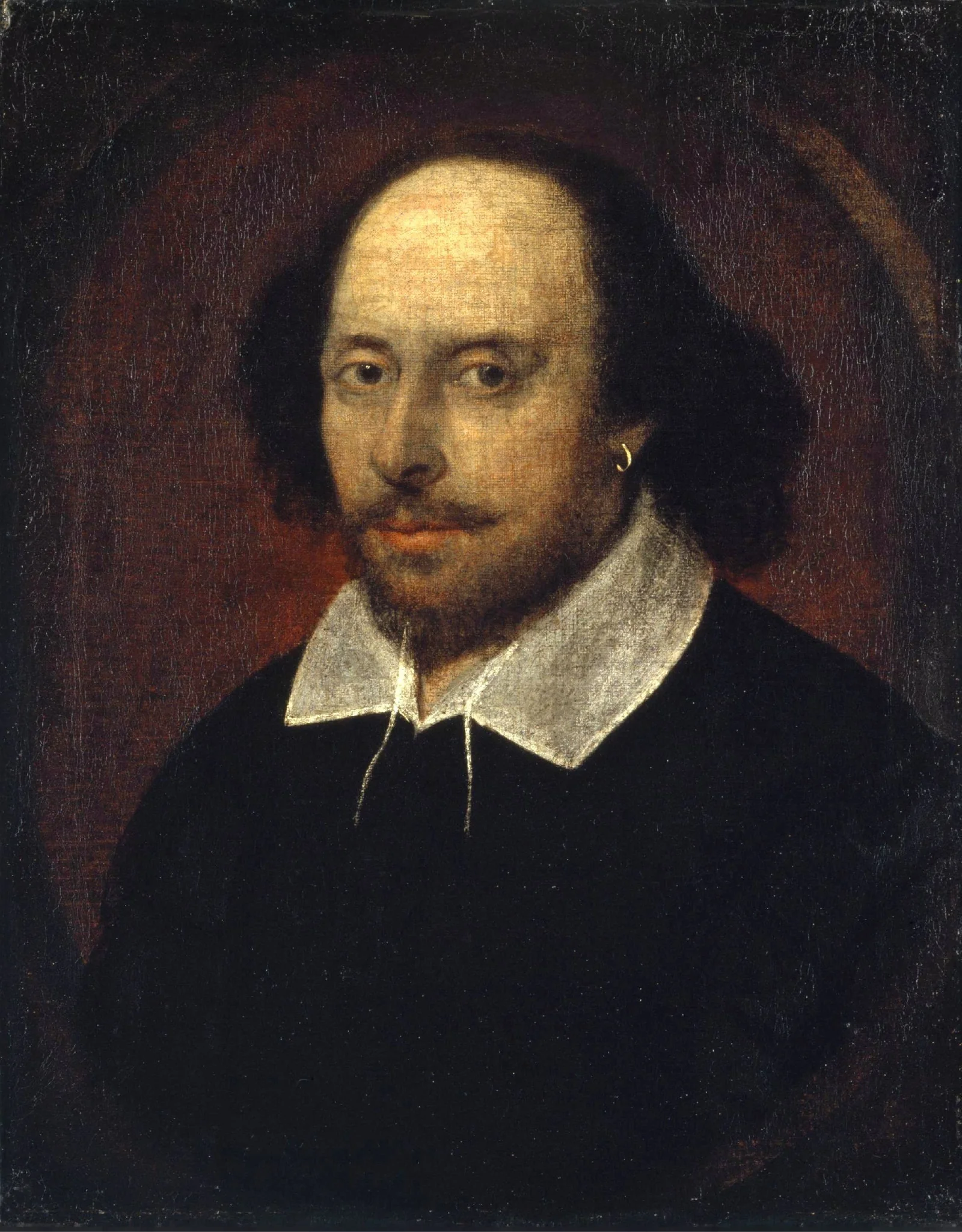
| 173 Quotes | |
| Occup. | Dramatist |
| From | England |
| Born | April 26, 1564 Stratford-upon-Avon, England |
| Died | April 23, 1616 Stratford-upon-Avon, England |
| Aged | 51 years |
| Cite | |
Citation Formats
APA Style (7th ed.)
William shakespeare biography, facts and quotes. (2026, February 2). FixQuotes. https://fixquotes.com/authors/william-shakespeare/
Chicago Style
"William Shakespeare biography, facts and quotes." FixQuotes. February 2, 2026. https://fixquotes.com/authors/william-shakespeare/.
MLA Style (9th ed.)
"William Shakespeare biography, facts and quotes." FixQuotes, 2 Feb. 2026, https://fixquotes.com/authors/william-shakespeare/. Accessed 6 Mar. 2026.
Early Life and Background
William Shakespeare was baptized on 26 April 1564 at Holy Trinity Church, Stratford-upon-Avon, Warwickshire, in the first year of a fierce plague cycle that shadowed Elizabethan childhood. He was the third surviving child of John Shakespeare, a glover and civic official who rose to be bailiff (mayor) of Stratford, and Mary Arden, from a landed family of the nearby Arden country. That mixture of trade, town government, and rural lineage mattered: Shakespeare grew up hearing the bargaining language of markets and lawsuits, but also the seasonal rhythms and folklore of the Midlands that later surface in his woods, fields, and taverns.The family fortunes appear to have tightened in the late 1570s as John Shakespeare faced debts and a retreat from public life; those pressures, paired with the era's religious unease, likely trained the young playwright in caution, double meanings, and the art of speaking so as to be heard by several audiences at once. Stratford was a small town, yet it sat within a kingdom remade by the Reformation and threatened by foreign war; a boy could watch processions, bear-baiting, and traveling players, and at the same time absorb the new national story Elizabeth I wanted England to tell about itself.
Education and Formative Influences
Shakespeare probably attended the King's New School in Stratford, where a grammar curriculum drilled boys in Latin authors (Ovid, Virgil, Seneca, Cicero) through translation, rhetoric, and declamation - a training that later becomes his ease with argument, parody, and set-piece persuasion. He did not go to university, and that outsider status in a London culture proud of its degrees may have sharpened his competitive instincts and his attentiveness to popular taste. In 1582 he married Anne Hathaway of Shottery; their daughter Susanna was born in 1583, and twins Hamnet and Judith in 1585. Hamnet's death in 1596 left a private wound that seems to echo, transmuted rather than confessed, through later meditations on fathers, sons, and names.Career, Major Works, and Turning Points
By the early 1590s Shakespeare was in London as an actor and writer; plague closures pushed him toward narrative poems (Venus and Adonis, 1593; The Rape of Lucrece, 1594) dedicated to Henry Wriothesley, Earl of Southampton, before he became a principal playwright for the Lord Chamberlain's Men. The company, later the King's Men under James I, offered stability, elite patronage, and a sharable commercial risk, culminating in the Globe Theatre (1599) and later the indoor Blackfriars. Across roughly two decades he moved from the exuberant architecture of early histories and comedies (Richard III, A Midsummer Night's Dream) to the mature tragedies (Hamlet, Othello, King Lear, Macbeth) and late romances (The Winter's Tale, The Tempest), while also investing in Stratford property and securing a gentleman's coat of arms for his family. He retired largely to Stratford by the early 1610s and died on 23 April 1616, leaving a will that maps a businessman as much as a poet.Philosophy, Style, and Themes
Shakespeare's inner life is best read as a discipline of imaginative empathy under pressure: he repeatedly builds characters who can argue themselves into new selves, then shows what that flexibility costs. His world is political and bodily - succession anxieties, enclosure and poverty, plague, war, and the surveillance of belief - yet he refuses a single moral key. Instead he stages conscience as a shifting courtroom, where wit, desire, fear, and duty cross-examine one another. When he writes, “When words are scarce they are seldom spent in vain”. he is not praising silence as virtue so much as diagnosing a psychology of scarcity: speech becomes valuable when it is risky, and language turns into a currency spent only when the stakes are high.The plays are full of social bargains - marriage, patronage, inheritance - and his comedy can be merciless about what society calls "love". “Maids want nothing but husbands, and when they have them, they want everything”. The line exposes a mind fascinated by appetite and projection: lovers dream in abstractions, then discover the daily negotiations behind the dream, and Shakespeare makes that discovery funny because it is also frightening. In the tragedies, the frightening becomes explicit: “Hell is empty and all the devils are here”. That sentence captures his mature bleakness about human agency - evil is not only an external force but a communal production, a storm made of ordinary choices. Stylistically, his blank verse evolves from symmetrical rhetoric to a more broken, intimate music - enjambment, interruptions, and the pressure of thought mid-breath - so that psychology feels audible, not explained.
Legacy and Influence
Shakespeare's enduring influence is both literary and infrastructural: he helped define what commercial theater could do in English, and his company model - actor-shareholders, repertory practice, and a playhouse built for language - shaped stage culture for centuries. The First Folio (1623), assembled by colleagues John Heminges and Henry Condell, stabilized his canon and made him a portable national author at the moment England was becoming an empire. Since then, his work has been endlessly adapted across languages, politics, and media because it treats power, intimacy, and self-knowledge as theaters in their own right; each age finds its own anxieties already dramatized, and its own private vocabulary for them waiting in his lines.Our collection contains 173 quotes written by William, under the main topics: Witty One-Liners - Motivational - Ethics & Morality - Wisdom - Truth.
Other people related to William: Anthony Holden (Journalist), Jane Smiley (Writer), Robert Greene (Playwright), Thomas Nash (Writer), Ignatius Donnelly (Politician), Anne Hathaway (Actress), Thomas Middleton (Poet), William Davenant (Poet), Thomas Lodge (Dramatist), Cyril Tourneur (Dramatist)