
William Temple Biography Quotes 2 Report mistakes
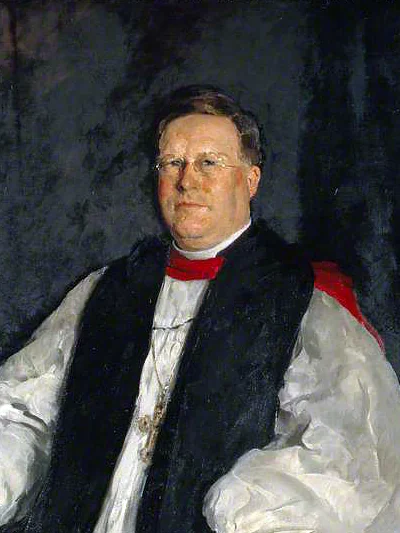
| 2 Quotes | |
| Born as | William Temple |
| Known as | Archbishop William Temple |
| Occup. | Priest |
| From | United Kingdom |
| Born | October 15, 1881 Exeter, Devon, England, United Kingdom |
| Died | October 26, 1944 Westminster, London, England, United Kingdom |
| Cause | Gout and arteriosclerosis |
| Aged | 63 years |
| Cite | |
Citation Formats
APA Style (7th ed.)
William temple biography, facts and quotes. (2026, February 11). FixQuotes. https://fixquotes.com/authors/william-temple/
Chicago Style
"William Temple biography, facts and quotes." FixQuotes. February 11, 2026. https://fixquotes.com/authors/william-temple/.
MLA Style (9th ed.)
"William Temple biography, facts and quotes." FixQuotes, 11 Feb. 2026, https://fixquotes.com/authors/william-temple/. Accessed 6 Mar. 2026.
Early Life and Background
William Temple was born on October 15, 1881, in Exeter, England, into an Anglican family already embedded in public life: his father, Frederick Temple, was a formidable churchman and educator who would become Archbishop of Canterbury in 1896. The household moved in step with the senior Temple's appointments, from schoolmastering to episcopal administration, giving William an early sense that the Church of England was not merely a spiritual community but a national institution intertwined with class, education, and governance.That advantage came with a defining interior pressure. Temple grew up in the long shadow of a celebrated father and in an England that expected moral seriousness from its leaders. Chronic ill health, including severe gout that afflicted him from youth, pushed him toward an inward discipline and a theology that treated suffering as more than private misfortune. He learned to regard bodily limitation as a summons to concentrate his will and to organize his time ruthlessly, habits that later enabled a punishing workload and an unusually direct engagement with politics and social policy.
Education and Formative Influences
Temple was educated at Rugby School and Balliol College, Oxford, where he became President of the Oxford Union and absorbed the liberal Anglican tradition as it met the philosophical currents of idealism and the emerging social conscience of the early 20th century. Oxford gave him a language for reconciling faith with reason and a taste for public argument; the Christian Social Union and related movements impressed on him that economic structures could be objects of Christian critique. The era of labor unrest, expanding suffrage, and debate about national efficiency also shaped him: Temple concluded early that the Church would be judged not by its respectability but by whether it could speak credibly to industrial life.Career, Major Works, and Turning Points
Ordained in 1910, Temple became headmaster of Repton School in 1914, a wartime post that sharpened his concern for the moral formation of citizens rather than merely the cultivation of elites. He served as Bishop of Manchester (1921-1929), where the realities of industrial depression pressed him toward concrete social proposals; he then became Archbishop of York (1929-1942) and finally Archbishop of Canterbury (1942-1944), leading during the darkest and most mobilized years of World War II. His public theology reached a wide audience through books such as "Christianity and Social Order" (1942) and "Citizen and Churchman" (1941), and through his role in the wartime discussions that fed into postwar reconstruction. A pivotal turning point was his insistence that Christian teaching must help design institutions, not merely counsel individuals - a stance that made him a key Anglican voice behind a moral case for welfare reform even as his failing health made every appearance a physical ordeal.Philosophy, Style, and Themes
Temple's thought fused sacramental Anglicanism with an urgent social ethic. He argued that the Incarnation binds spiritual claims to material conditions: wages, housing, education, and labor rights were not secondary "political" topics but arenas where love of neighbor becomes measurable. He treated society as a moral ecology, and the Church as responsible for the health of that ecology without pretending to be a party machine. His most quoted line captures his psychological posture - outward-facing, suspicious of spiritual self-protection: “The Church is the only society that exists for the benefit of those who are not its members”. The sentence is both program and confession: Temple feared a Church content to serve its own anxieties, and he organized his leadership around the opposite instinct, a disciplined deflection of attention away from clerical self-regard and toward the vulnerable.His style combined philosophical clarity with a practical administrator's appetite for committees, reports, and negotiated consensus. Beneath that was a personal austerity: illness, inherited expectation, and wartime emergency trained him to speak with compressed force and to accept compromise without cynicism. He consistently resisted a privatized Christianity that would leave structural injustice untouched, but he also resisted utopianism; he believed the Church's task was to judge ends and animate conscience while leaving technical means to democratic competence. The inner tension of his work - between contemplation and action, doctrine and policy - produced a theology of public responsibility: prayer was not retreat but reorientation, and political engagement was not power-seeking but a form of intercession translated into institutions.
Legacy and Influence
Temple died on October 26, 1944, months before victory in Europe, but his imprint lay across the moral imagination of postwar Britain: he helped normalize the idea that a national Church could support an expanded welfare state without surrendering its spiritual vocation. Anglican social thought after him, from industrial mission to debates about inequality, repeatedly returned to his conviction that Christian faith must be legible in public goods. He remains influential not as a partisan but as a model of episcopal leadership that joined intellectual seriousness, civic courage, and a chastened awareness of human limits - a leader shaped by pain yet oriented toward the common life.Our collection contains 2 quotes written by William, under the main topics: Faith - Prayer.
Other people related to William: William Beveridge (Economist), Charles II (Royalty), Kenneth Scott Latourette (Historian), Geoffrey Fisher (Clergyman)
William Temple Famous Works
- 1942 Christianity and Social Order (Book)
- 1934 Nature, Man and God (Book)
Source / external links