
William Warburton Biography Quotes 3 Report mistakes
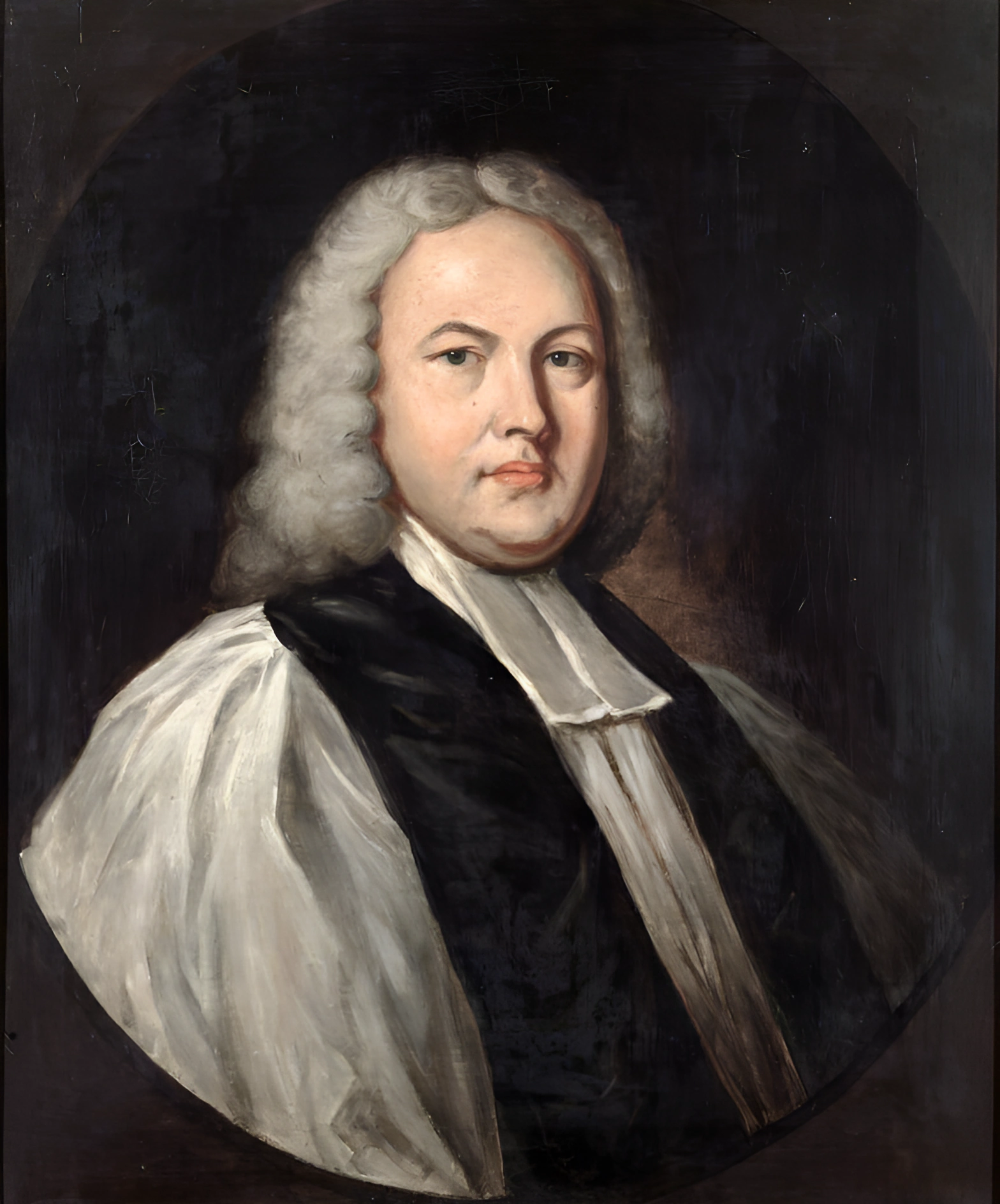
Attr: Edward Kilvert
| 3 Quotes | |
| Occup. | Critic |
| From | England |
| Born | December 24, 1698 |
| Died | June 7, 1779 |
| Aged | 80 years |
| Cite | |
Citation Formats
APA Style (7th ed.)
William warburton biography, facts and quotes. (2026, February 11). FixQuotes. https://fixquotes.com/authors/william-warburton/
Chicago Style
"William Warburton biography, facts and quotes." FixQuotes. February 11, 2026. https://fixquotes.com/authors/william-warburton/.
MLA Style (9th ed.)
"William Warburton biography, facts and quotes." FixQuotes, 11 Feb. 2026, https://fixquotes.com/authors/william-warburton/. Accessed 12 Feb. 2026.
Early Life and Education
William Warburton was born in 1698 at Newark-on-Trent in Nottinghamshire. His early path ran through the law: he was trained for the profession and clerked in an attorney's office. That apprenticeship sharpened a taste for close argument and textual scrutiny, even as it left him largely self-educated in the classical and theological reading that would define his later career. He pored over antiquity, the Church Fathers, poets, and philosophers, acquiring a fierce, combative style and a conviction that scholarship could be deployed to public ends.Ordination and First Publications
Abandoning the law, he took holy orders in the Church of England in the 1720s. Parish work gave him time for study, and he soon emerged in print. Early writings displayed the blend that would become his signature: a legal cast of mind, a polemical edge, and a willingness to range across history, philology, and theology. He wrote on church polity and the relation of civil and ecclesiastical authority, contending that the English establishment safeguarded both true religion and civic stability. A country rectory at Brant Broughton in Lincolnshire became his base for reading, writing, and correspondence.The Divine Legation and the Defense of Revelation
Warburton's reputation rested above all on The Divine Legation of Moses Demonstrated, issued in parts from the late 1730s. The work set forth an audacious thesis: because the Mosaic law omits an explicit doctrine of future rewards and punishments, and yet successfully sustained a theocratic polity, its authority must be divine rather than merely human. The paradoxical argument brought immediate notoriety. He used vast arrays of classical and rabbinical learning to meet deist and freethinking critiques of revelation. Conyers Middleton, notable for his skepticism about miracles and patristic authority, disputed him; Warburton replied with scathing notes and appendices. Robert Lowth, the scholar of Hebrew poetry, also challenged his interpretations; the exchanges between Lowth and Warburton became a landmark of eighteenth-century learned controversy. Their disputes were as much about tone and method as about doctrine, with Warburton's footnotes often as aggressive as his text.Alliance with Alexander Pope
In London's literary world Warburton formed a decisive alliance with Alexander Pope. He interpreted and defended Pope's Essay on Man against readings derived from Henry St John, Viscount Bolingbroke, arguing that the poem could be reconciled with Christian orthodoxy. Pope, for his part, welcomed Warburton's ferocious advocacy and editorial care. Warburton contributed notes to editions of Pope's poems, helped annotate The Dunciad, and after Pope's death took a leading role in editing his works. This partnership brought Warburton into contact with the poet's circle and propelled him from provincial clergyman to national man of letters.Editing Shakespeare and Critical Battles
Warburton also turned to Shakespeare. His edition offered bold emendations and sweeping claims to restore the text. It was learned and imaginative, but it invited a hail of rebuttals. Thomas Edwards lampooned his methods in The Canons of Criticism, line-by-line exposing what he saw as arbitrary conjectures. Other scholars, including Benjamin Heath and John Upton, pressed detailed objections. The skirmishes helped set the terms for later editorial standards, and even those who rejected Warburton's readings acknowledged his stimulus to debate. His pages, laden with combative notes, exemplified a new, interventionist editor-critic.Patronage, Marriage, and Prior Park
Warburton's fortunes were transformed by the friendship of Ralph Allen, the Bath magnate and philanthropist. Allen admired his talents and offered hospitality at Prior Park, a great house that became a center of literary sociability. Warburton married Allen's niece, Gertrude, a match that deepened the connection and gave him a secure domestic and social base. Prior Park's library and visitors encouraged his intellectual ambitions, and the alliance strengthened his standing in church and state. Among the friends who frequented or corresponded in this circle was Richard Hurd, a younger scholar who became Warburton's devoted ally.Episcopal Career and Later Works
With growing fame and powerful backing, Warburton advanced in the Church and was appointed Bishop of Gloucester in 1760. From that seat he continued to write and to oversee diocesan life. His Doctrine of Grace took aim at what he viewed as excesses in contemporary enthusiasm, especially among Methodists, insisting on a sober account of the Spirit's operation consonant with Anglican order. He also supported public defenses of Christianity in the face of deist critique, encouraging systematic lectures devoted to prophecy and the evidences of religion. His prefaces and charges from this period, though ecclesiastical in occasion, retained the voice of the polemicist.Networks, Proteges, and Opponents
Warburton cultivated allies and trained disciples. Richard Hurd, eventually a bishop himself, absorbed Warburton's methods and helped to present and defend them in print; after Warburton's death, Hurd became a principal steward of his reputation and papers. On the other side stood a succession of adversaries. Conyers Middleton and Robert Lowth remained the most formidable in learned theology and criticism. In belles-lettres, Thomas Edwards's satire bit deeply, and arguments about Shakespeare's text foreshadowed the more measured editorial practice of later figures. Warburton also crossed pens with admirers of Bolingbroke's philosophy, publishing a pointed refutation that sought to shield English poetry and public theology from fashionable unbelief.Style, Character, and Method
Warburton wrote like an advocate in a crowded court. He marshaled authorities, heaped precedent upon precedent, and relished the aside that cut an opponent down to size. His erudition was real, but his confidence could be overbearing; he preferred decisive gestures to cautious qualifications. Yet he also possessed a constructive sense of how literature, history, and theology intersect. In Pope he saw a moralist-poet; in Shakespeare a national classic who required a learned restorer; in Moses a lawgiver whose polity contained proofs of revelation. This unifying vision explains both his influence and the resistance he provoked.Final Years and Legacy
Warburton remained Bishop of Gloucester until his death in 1779. He left behind a cathedral city shaped by his tenure, a shelf of controversial volumes, and a network of correspondents who continued to argue with and about him. His reputation has varied: some remember the overbold editor and the volcanic footnotes; others the defender of Christianity who forced skeptics to address the historical and institutional strength of religion in society. Through his partnership with Alexander Pope, his friendship with Ralph Allen, the loyalty of Richard Hurd, and his contests with figures such as Conyers Middleton, Robert Lowth, and Thomas Edwards, Warburton stood at the center of the eighteenth century's entanglement of learning, literature, and public faith. Even where his solutions failed to persuade, he defined questions that scholars and critics continued to ask long after his time.Our collection contains 3 quotes written by William, under the main topics: Wisdom - Puns & Wordplay - Reason & Logic.
Source / external links