
William Wordsworth Biography Quotes 33 Report mistakes
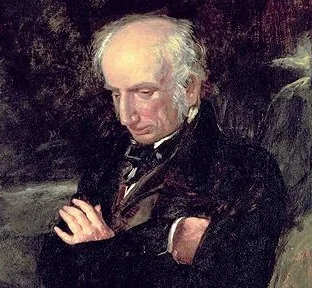
| 33 Quotes | |
| Occup. | Poet |
| From | England |
| Born | April 7, 1770 Cockermouth, Cumberland, England |
| Died | April 23, 1850 Rydal Mount, Westmorland, England |
| Cause | Natural Causes |
| Aged | 80 years |
| Cite | |
Citation Formats
APA Style (7th ed.)
William wordsworth biography, facts and quotes. (2026, February 2). FixQuotes. https://fixquotes.com/authors/william-wordsworth/
Chicago Style
"William Wordsworth biography, facts and quotes." FixQuotes. February 2, 2026. https://fixquotes.com/authors/william-wordsworth/.
MLA Style (9th ed.)
"William Wordsworth biography, facts and quotes." FixQuotes, 2 Feb. 2026, https://fixquotes.com/authors/william-wordsworth/. Accessed 26 Mar. 2026.
Early Life and Background
William Wordsworth was born on April 7, 1770, in Cockermouth, Cumberland, in England's mountainous northwest, a landscape that would become both his sanctuary and his chief argument about what makes a mind whole. His father, John Wordsworth, was an attorney and agent for the powerful Lowther family; his mother, Ann Cookson Wordsworth, died when he was eight. Early bereavement and the emotional dislocations that followed - including a childhood split among relatives - left him with a lifelong sense that belonging had to be rebuilt inwardly, through memory, place, and chosen bonds rather than inherited security.The Lake District offered him a counterweight to loss: long solitary walks, rivers and fells, and a young person's sense that attention itself could be an ethical act. Yet this rural world was not sealed from the pressures of class and patronage; the Lowthers' refusal to settle money owed to his father complicated the family's prospects for years. Wordsworth learned early that dependence could be humiliating and that independence would require not only talent but a moral stance - a resolve to make a life from principles when institutions proved fickle.
Education and Formative Influences
He attended Hawkshead Grammar School, then St John's College, Cambridge, taking his degree in 1791, though he found university life less instructive than the mental freedom of travel and reading. A walking tour of the Alps in 1790 impressed on him the sublime as lived experience, not a fashionable pose. In the early 1790s he went to Revolutionary France, absorbed its promises, and fathered a daughter, Caroline, with Annette Vallon; returning to England amid war and political reaction, he endured years of anxiety, guilt, and ideological whiplash that pressed him toward a more inward, psychologically exacting poetry. The decisive friendship with Samuel Taylor Coleridge from 1797 sharpened his craft and emboldened his conviction that common life, rendered in honest language, could bear the highest seriousness.Career, Major Works, and Turning Points
Settling in the West Country and then in the Lakes, Wordsworth and Coleridge published Lyrical Ballads (1798), a landmark that recast poetry toward ordinary speech, rural subjects, and the drama of perception; its 1800 Preface became a manifesto for feeling disciplined by thought. Wordsworth moved to Dove Cottage, Grasmere, with his sister Dorothy, whose journals fed his observational precision; he married Mary Hutchinson in 1802. Personal grief - including the deaths of two children in 1812 - intensified his meditations on endurance and memory. He labored for decades on his autobiographical epic The Prelude (published posthumously in 1850), while also producing poems such as "Tintern Abbey", the "Lucy" poems, the "Immortality Ode", and later works that coincided with his shift toward social conservatism. He served as Distributor of Stamps for Westmorland from 1813, gaining financial stability, and in 1843 became Poet Laureate, an institutional recognition that sat uneasily beside his early anti-establishment aura. He died on April 23, 1850, at Rydal Mount near Ambleside.Philosophy, Style, and Themes
Wordsworth built a psychology of recovery: the self wounded by history, poverty, and bereavement can be restored by disciplined recollection and sustained contact with the natural world. His famous faith that “Nature never did betray the heart that loved her”. is not naive pastoralism but a claim about moral education - that regular, humble attentiveness trains the emotions away from vanity and toward steadiness. This is why his landscapes often feel like classrooms: the river or hillside is less scenery than a tutor, shaping conscience through repeated encounters that outlast political intoxications.At the same time, he worried that modern life would damage the very faculty his poetry depends on - sustained, discriminating attention. His warning that “A multitude of causes unknown to former times are now acting with a combined force to blunt the discriminating powers of the mind, and unfitting it for all voluntary exertion to reduce it to a state of almost savage torpor”. reads as a diagnosis of overstimulation and moral fatigue, not merely a complaint about taste. Against that numbness, he prized the small and easily overlooked as the true measure of character: “The best portion of a good man's life is his little, nameless, unremembered acts of kindness and of love”. In his poems, grandeur is earned by humility; the inward life is made credible through particular people, ordinary work, and the quiet heroism of endurance.
Legacy and Influence
Wordsworth helped found English Romanticism's central premise: that the mind is not a passive receiver of experience but an active maker of meaning, and that poetry can restore damaged attention and feeling. His experiments in diction and subject widened the range of who could appear in serious verse, while The Prelude established a template for autobiographical modernity - the life as an evolving consciousness shaped by place, memory, and moral trial. Later readers have debated his political turn and late style, yet his core achievement endures in environmental imagination, theories of childhood and education, and the continuing belief that language, rightly used, can reconnect private grief to shared human dignity.Our collection contains 33 quotes written by William, under the main topics: Witty One-Liners - Ethics & Morality - Wisdom - Art - Nature.
Other people related to William: Benjamin Haydon (Artist), John Wilson (Writer), Anne Seward (Poet)
William Wordsworth Famous Works
- 1850 The Prelude (Book)
- 1815 The White Doe of Rylstone (Book)
- 1814 The Excursion (Book)
- 1807 Poems in Two Volumes (Book)
- 1798 Lyrical Ballads (Book)
Source / external links