
Willie Mays Biography Quotes 32 Report mistakes
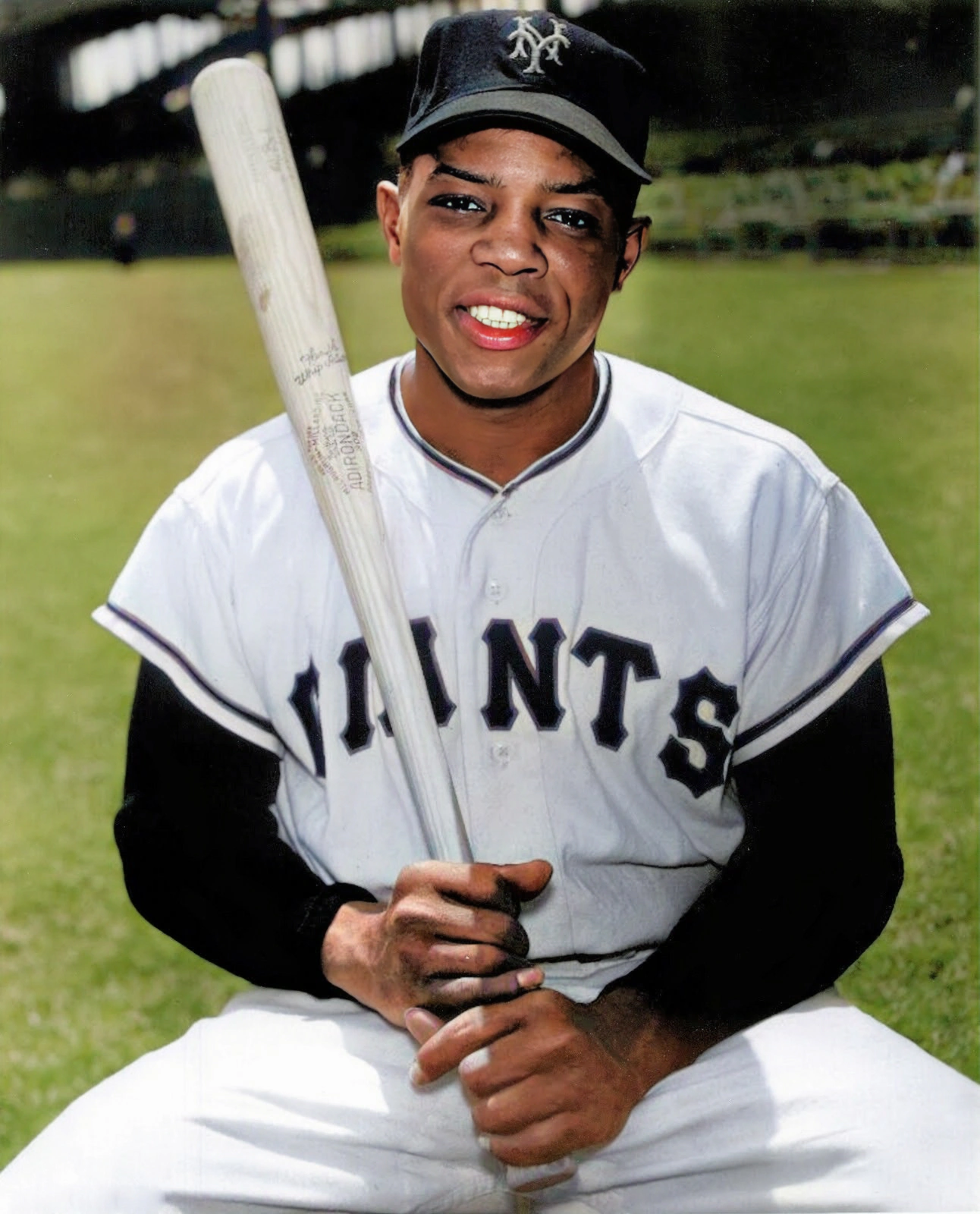
| 32 Quotes | |
| Born as | Willie Howard Mays, Jr. |
| Occup. | Athlete |
| From | USA |
| Born | March 6, 1931 Westfield, Alabama |
| Age | 95 years |
| Cite | |
Citation Formats
APA Style (7th ed.)
Willie mays biography, facts and quotes. (2026, February 11). FixQuotes. https://fixquotes.com/authors/willie-mays/
Chicago Style
"Willie Mays biography, facts and quotes." FixQuotes. February 11, 2026. https://fixquotes.com/authors/willie-mays/.
MLA Style (9th ed.)
"Willie Mays biography, facts and quotes." FixQuotes, 11 Feb. 2026, https://fixquotes.com/authors/willie-mays/. Accessed 27 Mar. 2026.
Early Life and Background
Willie Howard Mays, Jr. was born March 6, 1931, in Westfield, Alabama, an industrial mill town outside Birmingham where work, church, and ballfields structured daily life. His father, Willie Howard Mays Sr., was a talented semipro player, and his mother, Annie Satterwhite Mays, was a track athlete - a household that treated sport as both pleasure and discipline. In the Jim Crow South, excellence could be admired on the field yet constrained everywhere else, and the young Mays learned early to read rooms, measure risks, and let performance speak.Birmingham offered constant reminders of racial boundaries, but it also offered a dense Black sports culture: sandlots, company teams, and barnstorming clubs that made the game a communal language. Mays became a local phenomenon as a teenager, combining quick-twitch speed with an unusually calm sense of where a ball would land. That composure - competitive but not performative - became a lifelong signature: a player who radiated joy while refusing to be naive about the world that watched him.
Education and Formative Influences
Mays starred at Fairfield Industrial High School, where his athletic range extended beyond baseball into football and basketball, sharpening the coordination that would define his play in center field. He signed with the Birmingham Black Barons in the Negro American League while still in high school, absorbing an older professional culture that demanded self-reliance: long travel, uneven pay, and constant adaptation. The Barons also placed him in the immediate wake of Jackie Robinson's breakthrough, when the Negro leagues were both a proving ground and a closing chapter, and when every gifted teenager faced the question of how to cross into a changing major leagues.Career, Major Works, and Turning Points
Mays entered the New York Giants organization in 1950, debuted in the majors in 1951, and after early struggles became National League Rookie of the Year - a first pivot from promise to inevitability. Military service interrupted him in 1952-53, but he returned in 1954 to anchor one of baseball's defining seasons: MVP honors, a Giants championship, and "The Catch" in the World Series, a running, over-the-shoulder grab at the Polo Grounds that fused instinct with fearlessness. Traded to the San Francisco Giants in 1958, he became the franchise's West Coast identity, winning a second MVP in 1965 and accumulating 660 home runs with elite defense and base running. By the time he finished with the New York Mets in 1972-73, he had become not merely a star but a standard - 24 All-Star selections, multiple Gold Gloves, and a career built on daily completeness.Philosophy, Style, and Themes
Mays played as if baseball were both a craft and a playground: explosive first steps, daring routes, and a relaxed smile that masked obsessive preparation. His genius was integrative - he did not specialize so much as totalize, turning every inning into an opportunity to add value. At his best he made the difficult look routine, then insisted the routine was the real test: “It isn't hard to be good from time to time in sports. What's tough is being good every day”. The line reveals a psychology centered on maintenance - the private grind behind public spectacle - and helps explain why his prime lasted through changes in parks, travel, and league pitching.His relationship to race was equally revealing: less speechifying than steadfast example, shaped by a Southern childhood and a major-league adulthood conducted under constant scrutiny. He admired Robinson not as an icon but as a man absorbing punishment so others could work: "Robinson was important to all blacks. To make it into the majors and to take all the name calling, he had to be something special. He had to take all this for years, not just for Jackie Robinson, but for the nation" . Yet Mays also resisted being cast as anyone's moral instructor, preferring lived normalcy to symbolic performance: “I always enjoyed playing ball, and it didn't matter to me whether I played with white kids or black. I never understood why an issue was made of who I played with, and I never felt comfortable, when I grew up, telling other people how to act”. In that tension - pride without sermon, joy without denial - sits the inner life of a man who processed pressure by turning it into play.
Legacy and Influence
Willie Mays endures as the prototype of the five-tool superstar and, for many, the most complete all-around player in baseball history - a bridge between the Negro-league world that formed him and the integrated majors that commodified and celebrated him. His influence runs through generations of center fielders taught to treat defense as artistry and base running as intelligence, not decoration. More quietly, his career models a form of American dignity: excellence sustained in public while keeping private authority over identity, anger, and joy, leaving a legacy not only of numbers and highlights but of what it looked like to be free - for a few hours a day - inside a game.Our collection contains 32 quotes written by Willie, under the main topics: Witty One-Liners - Sports - Equality - Health - Training & Practice.
Other people related to Willie: Mickey Mantle (Athlete), Billy Martin (Athlete), Dave Anderson (Writer), Gaylord Perry (Athlete), Juan Marichal (Athlete), Don Drysdale (Athlete), Barry Bonds (Athlete), Alvin Dark (Athlete)
Source / external links