
Wilson Mizner Biography Quotes 30 Report mistakes
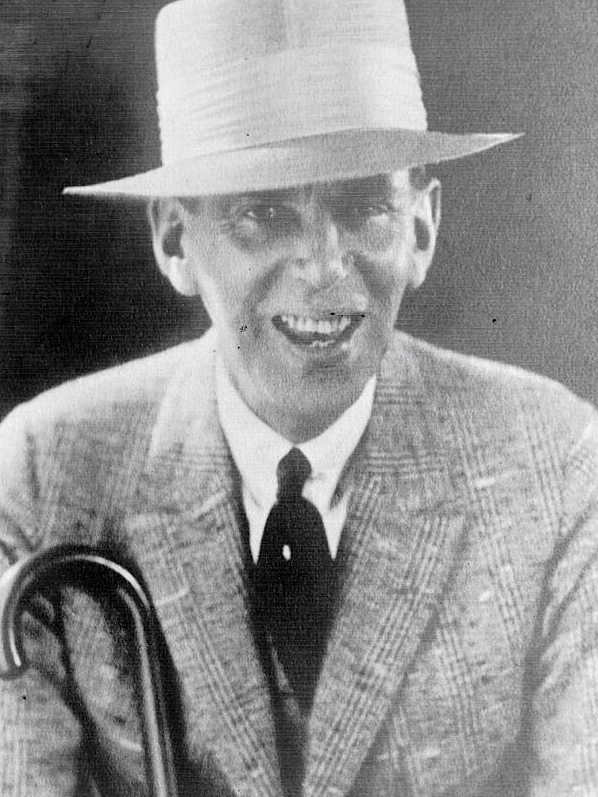
Attr: avenuemagazine.com
| 30 Quotes | |
| Occup. | Dramatist |
| From | USA |
| Born | May 19, 1876 Benicia, California, USA |
| Died | April 3, 1933 Los Angeles, California, USA |
| Aged | 56 years |
| Cite | |
Citation Formats
APA Style (7th ed.)
Wilson mizner biography, facts and quotes. (2026, February 11). FixQuotes. https://fixquotes.com/authors/wilson-mizner/
Chicago Style
"Wilson Mizner biography, facts and quotes." FixQuotes. February 11, 2026. https://fixquotes.com/authors/wilson-mizner/.
MLA Style (9th ed.)
"Wilson Mizner biography, facts and quotes." FixQuotes, 11 Feb. 2026, https://fixquotes.com/authors/wilson-mizner/. Accessed 31 Mar. 2026.
Early Life and Background
Wilson Mizner was born May 19, 1876, in Benicia, California, into a peripatetic American family whose fortunes rose and fell with the late-19th-century West. His father, an attorney and diplomat, pulled the household through frontier boomtowns and into the outer edges of U.S. influence, giving Wilson early exposure to the gap between respectable titles and improvisational reality. His brother Addison Mizner would later become the celebrated architect of Palm Beach; Wilson became the family bard and stray spark - quick, reckless, and irresistibly quotable.The young Mizner absorbed the Gold Rush afterglow not as history but as atmosphere: a culture of speculation, confidence tricks, and sudden reinvention. He learned early that charm could be currency and that failure, in America, was often only a costume change. That appetite for the hustler's freedom - and the hustler's penalties - formed the emotional spine of his adulthood: a craving for belonging paired with an instinct to stay unpinnable, living as if permanence were a trap.
Education and Formative Influences
Mizner's education was largely episodic, more apprenticeship than schooling, shaped by travel and by the informal curricula of saloons, ships, and backrooms. He worked and wandered through the American West and abroad, spending time in Alaska during the gold-rush era and later drifting through Central America and Mexico, where games of chance, dubious ventures, and the theater of social rank offered him material. What he lacked in formal discipline he replaced with observation - the ear of a dramatist tuned to how people perform themselves when money, vanity, or fear is on the line.Career, Major Works, and Turning Points
By the 1910s and 1920s Mizner had become a Broadway presence less as a steady craftsman than as a prized specialist in dialogue, punch-ups, and the kind of hard, polished cynicism that made audiences feel worldly. His best-known writing credit is the hit comedy "The Deep Purple" (1919), co-written with Paul Armstrong, a caper-tinged piece of stagecraft that matched the era's taste for crooks with good manners and good timing. He moved through New York theatrical circles as a raconteur, script doctor, and professional friend, his reputation growing as much from stories and aphorisms as from playbills. Yet his chronic gambling, debts, and legal trouble repeatedly derailed him; the turning point was not a single fall but the accumulating weight of a life lived on advances, favors, and the next hand of cards.Philosophy, Style, and Themes
Mizner's philosophy was a survival ethic dressed as wit: skepticism about virtue, alertness to hypocrisy, and an insistence that human behavior is best understood as performance. His famous line about borrowing is not simply a joke about literary ethics but a confession of method - “If you steal from one author it's plagiarism; if you steal from many it's research”. He treated culture as a deck to be cut and re-dealt, and his dialogue often works like that: shards of manners, slang, and bravado shuffled into a new rhythm. Under the humor sits a psychological defense - if everything is quotation, then nothing can quite be held against you, including your own past.His themes orbit money, appetite, and the social comedy of judgment. The gambler in Mizner understood the metaphysics of risk, and he captured its bleak theology in a sentence: “Gambling: The sure way of getting nothing for something”. That is not moralism so much as self-diagnosis - the recognition that he was drawn to shortcuts even when he knew they were mirages. Equally revealing is his social radar: “I can usually judge a fellow by what he laughs at”. In his world, laughter is the tell, the moment when character escapes the mask. This explains why his best lines have the snap of courtroom cross-examination and the timing of vaudeville; he wrote to expose what people inadvertently admit when they try to be charming.
Legacy and Influence
Mizner died April 3, 1933, as the Great Depression hardened the very truths he had treated as comedy, but his afterlife proved unusually durable. He endures less as a canonized dramatist than as an American type - the brilliant improviser who cannot quite submit to ordinary stability - and as a supplier of quotations that still map the psychology of ambition, fraud, and self-knowledge. His credited work, especially "The Deep Purple", shows the mechanics of commercial theater in the Jazz Age, but his larger influence is tonal: the wisecrack as moral instrument, the epigram as autobiography in disguise, and the idea that the sharpest comedy is often the most intimate confession.Our collection contains 30 quotes written by Wilson, under the main topics: Witty One-Liners - Wisdom - Art - Friendship - Learning.