
Woody Allen Biography Quotes 63 Report mistakes
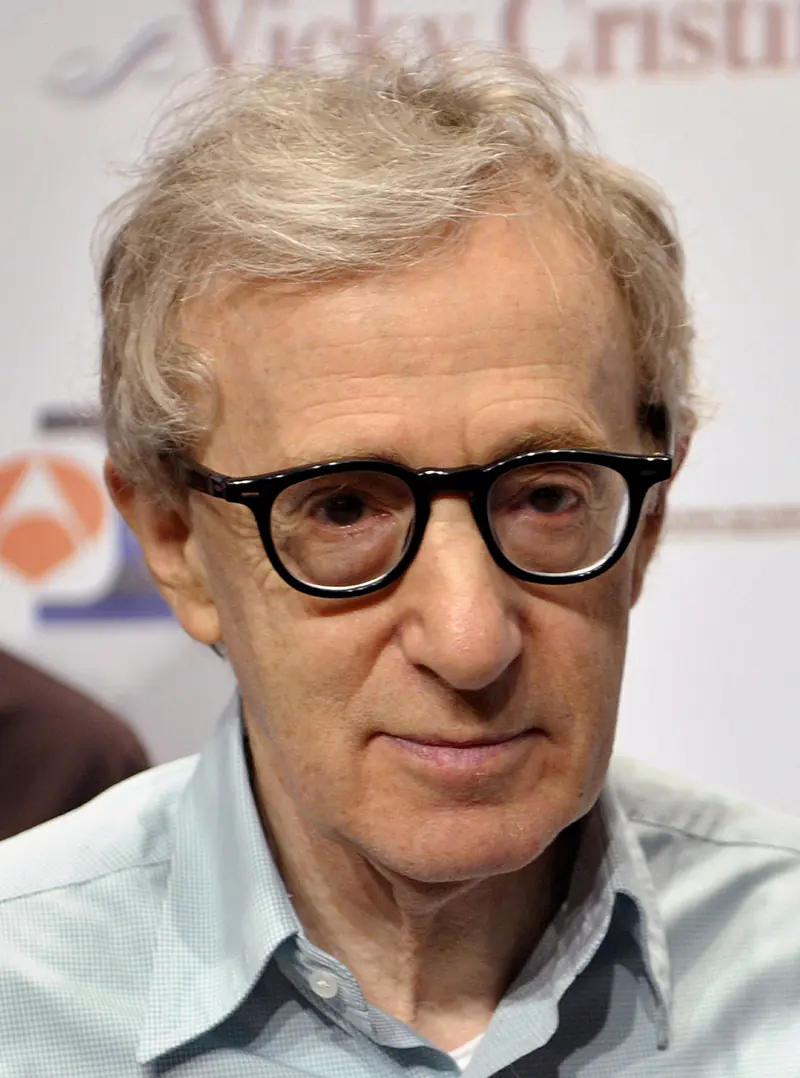
| 63 Quotes | |
| Born as | Heywood Allen Stewart |
| Occup. | Director |
| From | USA |
| Born | December 1, 1935 Brooklyn, New York, USA |
| Age | 90 years |
Woody Allen was born Allan Stewart Konigsberg on December 1, 1935, in Brooklyn, New York, to Nettie Cherry and Martin Konigsberg, a jewelry engraver and waiter. He grew up in Midwood, shaped by the Depression-afterglow frugality of Jewish New York and by the boroughs' dense mix of immigrant striving, neighborhood cynicism, and show-business aspiration. The city offered him both a stage and an alibi: you could be anonymous, anxious, and ambitious all at once.
As a boy he immersed himself in radio comedy, movies, and magic tricks, learning early how performance could transmute insecurity into control. That inner logic - the idea that jokes can manage fear - became a lifelong engine. The public would come to know him as Woody Allen, but the sensibility was forged earlier: a Brooklyn kid hearing adult talk about money, marriage, and mortality, and turning it into timing.
Education and Formative Influences
Allen attended New York University briefly and later took film classes at City College of New York without settling into a degree path; his real education was the mid-century entertainment pipeline of New York: writing gags, studying comedians like Bob Hope, Jack Benny, and Groucho Marx, and absorbing the urbane neuroses of writers who treated the one-liner as a moral instrument. Jazz also mattered as an identity and a refuge - traditional New Orleans-style clarinet became a private discipline that counterbalanced the volatility of his public persona.
Career, Major Works, and Turning Points
He started professionally as a teenage joke writer, selling material to columnists and performers, then wrote for television variety in the 1950s and early 1960s before moving into stand-up, where his nervous, intellectual stage character felt radically unheroic and therefore modern. Film followed: he wrote, directed, and starred in comedies that evolved from broad farce to personal cinema, with early successes including Take the Money and Run (1969) and Bananas (1971). The major turning point was Annie Hall (1977), which reframed romantic comedy as memory, analysis, and regret; Manhattan (1979) and Stardust Memories (1980) deepened the mix of confession and critique. Across the 1980s and 1990s he alternated between lighter entertainments and darker dramas like Crimes and Misdemeanors (1989) and Match Point (2005), while his personal life became increasingly scrutinized, particularly after the early-1990s split with Mia Farrow and the subsequent, bitter allegations and court disputes that left his reputation permanently contested. In later years he worked frequently in Europe, directing films such as Vicky Cristina Barcelona (2008) and Midnight in Paris (2011), even as American distribution and cultural acceptance grew more fraught.
Philosophy, Style, and Themes
Allen's art is built on the tension between control and chaos: fastidious structure (precise comic beats, carefully curated music, and a New York visual grammar) confronting a universe that refuses to supply reassurance. His characters talk to postpone dread, as if language itself could serve as a sedative. The famous gag about mortality is not a throwaway but a thesis: "I don't want to achieve immortality through my work. I want to achieve it through not dying". The joke exposes a psychology that distrusts consolation - art may outlive the artist, but the artist still has to face the void.
That existential tremor runs beneath his romantic plots and intellectual name-dropping. He repeatedly returns to the fear that identity is an accident, and that selfhood is less a home than a costume: "My one regret in life is that I am not someone else". In Allen's best films, the wisecrack is a diagnostic tool, revealing envy, self-disgust, and longing for reinvention. Even his pragmatism carries metaphysical bite - "If you want to make God laugh, tell him about your plans". - a line that matches the narrative pattern of his work, where desire meets contingency and the story's pivot is often a small, unplanned fracture: an overheard remark, a chance encounter, a moral shortcut taken too easily.
Legacy and Influence
Allen helped redefine American screen comedy by merging stand-up cadence, literary dialogue, and European art-film ambition into a recognizable authorial voice, inspiring generations of filmmakers and television writers who treat neurosis, romance, and ethics as comic material. His influence is visible in the modern confessional comedy and in the template of the talkative, self-interrogating urban protagonist. Yet his legacy remains split: praised for formal consistency, musical and cinematic taste, and landmark works that shaped late-20th-century filmmaking, and simultaneously shadowed by unresolved public debate about his private life that has altered how audiences, institutions, and collaborators assess the work. The result is an enduring, uneasy prominence - an artist whose films continue to circulate as cultural reference points even as the terms of admiration have become contested.
Our collection contains 63 quotes who is written by Woody, under the main topics: Witty One-Liners - Puns & Wordplay - Funny - Dark Humor - Free Will & Fate.
Other people realated to Woody: Marshall McLuhan (Sociologist), Michael Caine (Actor), Max von Sydow (Actor), Natalie Portman (Actress), Albert Shanker (Educator), Shelley Duvall (Actress), Christopher Walken (Actor), Dick Cavett (Entertainer), Radha Mitchell (Actress), Justin Timberlake (Musician)
Source / external links