
Woody Hayes Biography Quotes 28 Report mistakes
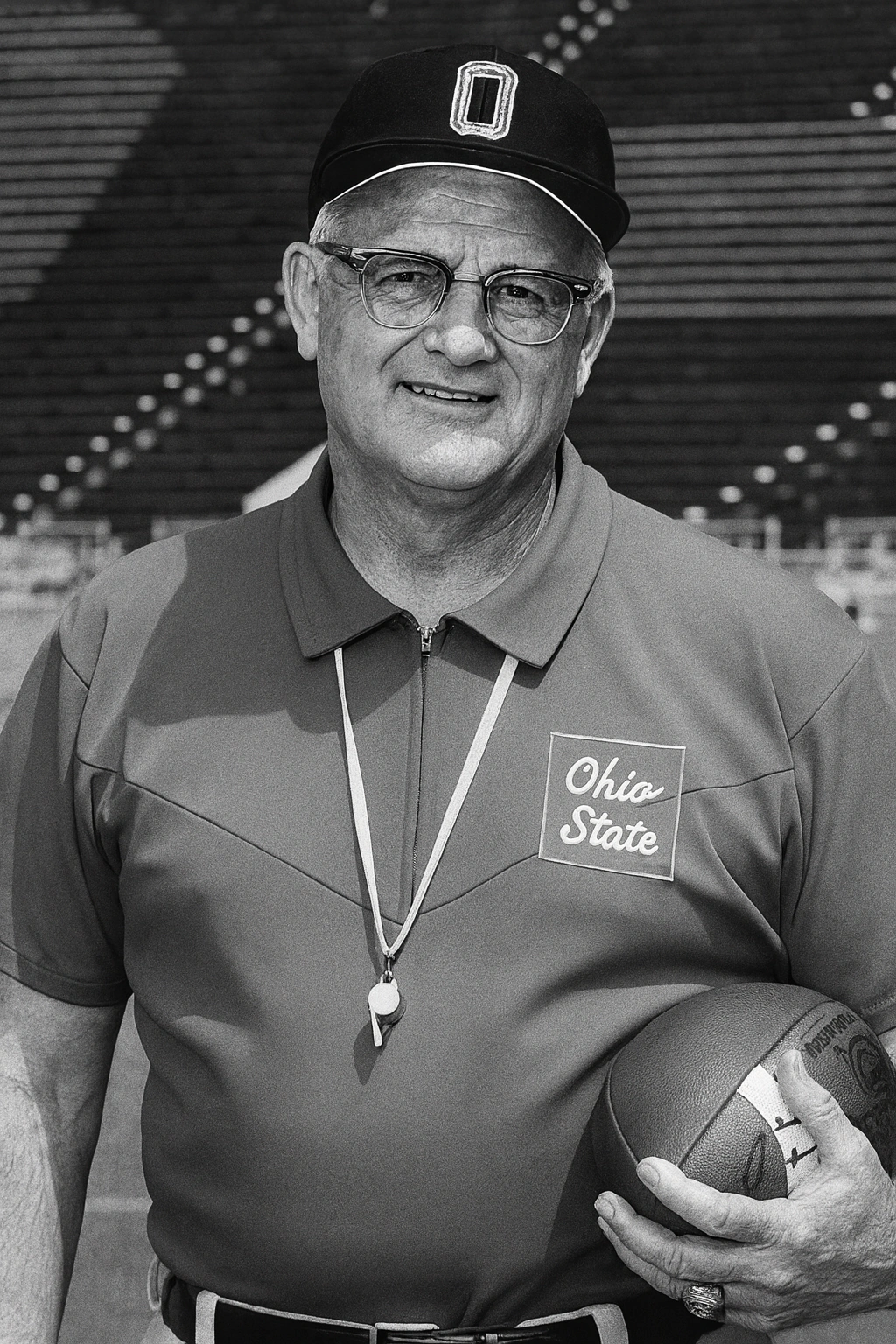
| 28 Quotes | |
| Born as | Wayne Woodrow Hayes |
| Occup. | Coach |
| From | USA |
| Born | February 4, 1913 Clifton, Ohio |
| Died | March 12, 1987 Columbus, Ohio |
| Cause | heart attack |
| Aged | 74 years |
| Cite | |
Citation Formats
APA Style (7th ed.)
Woody hayes biography, facts and quotes. (2026, February 11). FixQuotes. https://fixquotes.com/authors/woody-hayes/
Chicago Style
"Woody Hayes biography, facts and quotes." FixQuotes. February 11, 2026. https://fixquotes.com/authors/woody-hayes/.
MLA Style (9th ed.)
"Woody Hayes biography, facts and quotes." FixQuotes, 11 Feb. 2026, https://fixquotes.com/authors/woody-hayes/. Accessed 6 Mar. 2026.
Early Life and Background
Wayne Woodrow "Woody" Hayes was born on February 4, 1913, in Clifton, Ohio, a small town shaped by church life, farms, and the tight expectations of Midwestern respectability. His parents, Earl and Effie Hayes, raised him in a world where work was proof of character and where a boy learned early that talk was cheap. He grew up during the First World War's shadow and came of age as the Great Depression hardened ordinary ambitions into daily endurance.Hayes' inner life was forged in that era's blunt arithmetic: security was fragile, reputation mattered, and self-command was the nearest thing to power. Friends and later players remembered a young man with a quick mind, a readiness to argue, and a fierce sensitivity to slights - the raw material of a coach who would demand control not only of games but of emotions, language, and ritual. The adult Hayes would become a public symbol of Ohio toughness, but the engine behind it was private anxiety about waste, weakness, and lost opportunity.
Education and Formative Influences
Hayes attended Denison University in Granville, Ohio, playing football and graduating in the mid-1930s, then pursued further study at Ohio State University while beginning the itinerant work of a young coach. The intellectual atmosphere of interwar Ohio - part classical education, part modern bureaucracy - suited him: he read history, loved argument, and approached football as both moral theater and logistical problem. The Depression and then World War II - during which he served in the U.S. Navy - deepened his belief in hierarchy, preparation, and the idea that a team, like a nation, survives by discipline when comfort disappears.Career, Major Works, and Turning Points
After early posts in Ohio high schools and assistant work in college football, Hayes became a head coach at Miami University (Ohio) and then, in 1951, returned to Ohio State as head coach, the job that made him an American archetype. Over 28 seasons in Columbus (1951-1978) he won multiple Big Ten titles and five national championships, producing a stream of players who carried his methods into coaching and public life; his rivalry with Michigan became a civic drama, and his "three yards and a cloud of dust" identity turned into a philosophy of order. The defining rupture came on December 29, 1978, in the Gator Bowl against Clemson, when Hayes struck an opposing player after an interception; Ohio State dismissed him the next day. The firing did not merely end a career - it exposed the cost of a persona built on controlled aggression, and it recast his life as a cautionary legend about pride and restraint.Philosophy, Style, and Themes
Hayes coached as if football were a civic institution and a test of moral stamina. His practices were famously demanding, his language blunt, and his system conservative by design: win the line, protect the ball, value field position, and force the opponent to break first. He distrusted glamour and treated effort as the only dependable currency. “I've had smarter people around me all my life, but I haven't run into one yet that can outwork me. And if they can't outwork you, then smarts aren't going to do them much good”. That sentence reveals the core of his psychology: intelligence mattered, but only as a servant to will; the deeper fear was being outlasted, out-prepared, exposed as ordinary.The famous fourth-and-short call that became shorthand for him was not merely stubbornness; it was a worldview about risk and responsibility. “Because I couldn't go for three”. Hayes made such choices to keep control of the game's moral balance - if you fail, fail while imposing your terms. Underneath the severity was a belief in redemption through hardship, as if pain scrubbed away excuses and revealed the self. “There's nothing that cleanses your soul like getting the hell kicked out of you”. In Hayes' universe, defeat was not tragedy but tuition, and the point of football was to teach men to pay it, rise, and pay again without complaint.
Legacy and Influence
Hayes died on March 12, 1987, in Columbus, still a towering and contested figure: revered as Ohio State's builder of modern dominance and criticized as an emblem of excessive control and combustible temper. His influence persists in Big Ten culture - the elevation of defense, field position, and physical authority - and in coaching lineages that absorbed his insistence on preparation and psychological edge. Yet his deepest legacy may be the paradox he embodied: a man who preached discipline as salvation, then lost his post in a moment of undisciplined violence, leaving American sports to debate where competitive ferocity ends and moral failure begins.Our collection contains 28 quotes written by Woody, under the main topics: Witty One-Liners - Motivational - Puns & Wordplay - Never Give Up - Freedom.
Frequently Asked Questions
- Woody Hayes OSU: At Ohio State, Woody Hayes coached from 1951 to 1978, winning five national championships, 13 Big Ten titles, and becoming one of the program’s most iconic coaches.
- Woody Hayes record: Woody Hayes’s career college coaching record was 238–72–10, including 205–61–10 at Ohio State.
- Woody Hayes coaching career: Woody Hayes was a college football coach best known for leading Ohio State (1951–1978), winning five national titles and 13 Big Ten championships after earlier coaching at Denison and Miami (Ohio).
- Woody Hayes wife: Woody Hayes was married to Anne Gross, whom he wed in 1942; they remained married until his death.
- Woody Hayes height: Woody Hayes was reported to be about 5 feet 10 inches (178 cm) tall.
- Woody Hayes tackles player: Woody Hayes famously punched Clemson player Charlie Bauman during the 1978 Gator Bowl, an incident that led to his firing from Ohio State.
- Woody Hayes cause of death: Woody Hayes died of a heart attack on March 12, 1987, in Upper Arlington, Ohio.
- How old was Woody Hayes? He became 74 years old
Source / external links