
Xenophanes Biography Quotes 5 Report mistakes
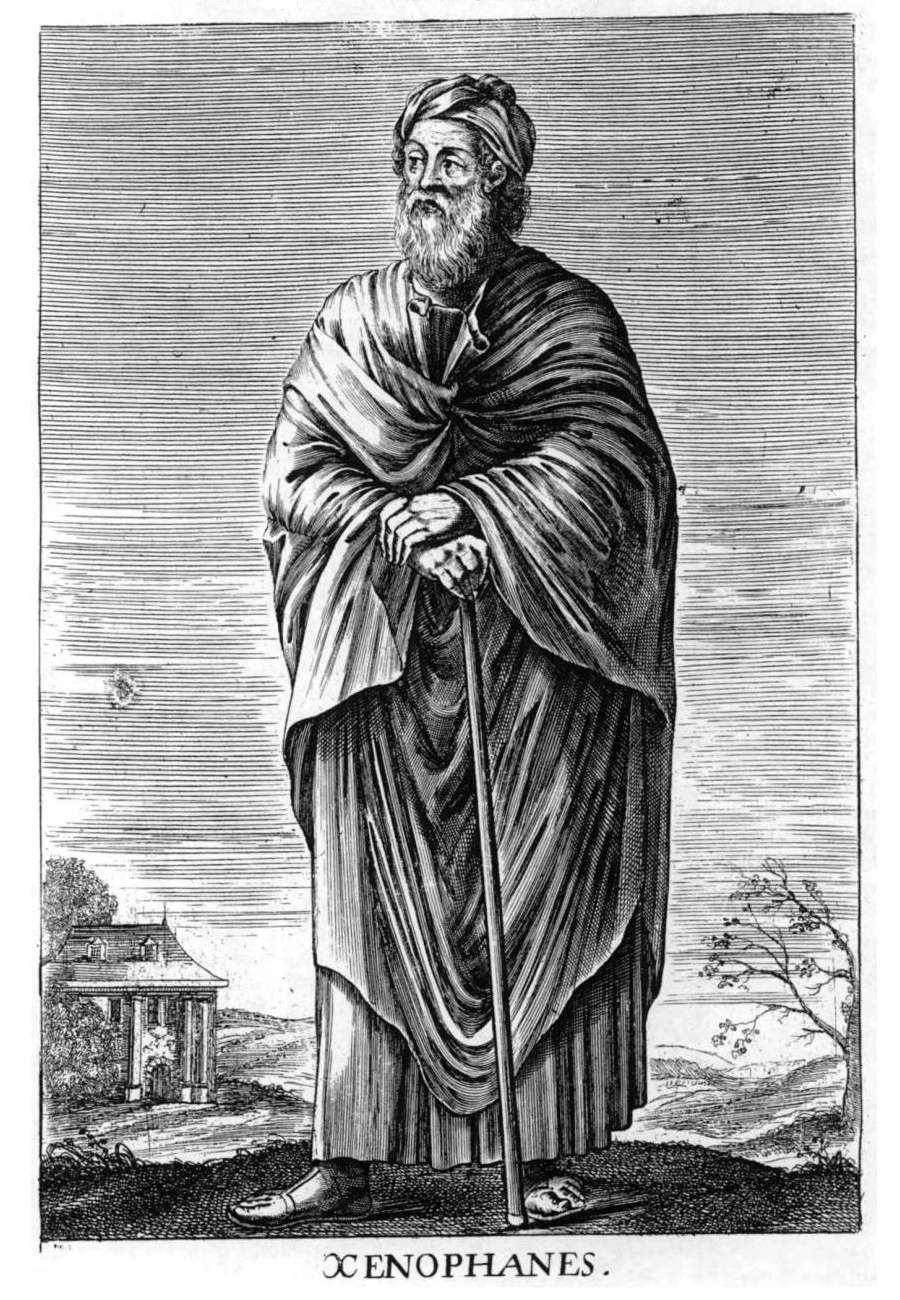
| 5 Quotes | |
| Known as | Xenophanes of Colophon |
| Occup. | Philosopher |
| From | Greece |
| Born | 570 BC Colophon, Ionian League (now İzmir, Turkey) |
| Died | 480 BC Greece |
| Cause | Natural Causes |
| Cite | |
Citation Formats
APA Style (7th ed.)
Xenophanes biography, facts and quotes. (2026, February 11). FixQuotes. https://fixquotes.com/authors/xenophanes/
Chicago Style
"Xenophanes biography, facts and quotes." FixQuotes. February 11, 2026. https://fixquotes.com/authors/xenophanes/.
MLA Style (9th ed.)
"Xenophanes biography, facts and quotes." FixQuotes, 11 Feb. 2026, https://fixquotes.com/authors/xenophanes/. Accessed 5 Mar. 2026.
Early Life and Background
Xenophanes was born around 570 BCE in Colophon, an Ionian Greek city on the coast of Asia Minor, a region shaped by maritime trade, aristocratic rivalries, and the first wave of natural philosophy. He came of age as older epic certainties were being questioned by poets and investigators from nearby Miletus, while the wider Greek world was expanding westward through colonies that linked Ionia to Sicily and southern Italy.Ancient testimony presents him as an exile-wanderer. In his own verse he speaks of decades spent traveling, likely after Persian pressure and Ionian upheavals made life precarious for many Greeks in Asia Minor. His long itinerancy carried him across the Aegean and into the western Greek cities; later tradition associates him particularly with Elea in Italy, where his presence helped seed an intellectual lineage that would culminate in Parmenides.
Education and Formative Influences
Xenophanes was formed less by a school than by the competitive public culture of archaic Greece: rhapsodic performance, symposium debate, and the authority of Homer and Hesiod. He absorbed epic diction and moral vocabulary, then turned them against their sources, treating poetry as an arena for inquiry rather than mere inheritance. The Ionian habit of asking what things are made of, and how claims can be justified, left its mark on his fragments - even as he kept the poet's tools: hexameter, elegy, and pointed satire.Career, Major Works, and Turning Points
He earned his living as a performer and composer, circulating poems that ranged from social critique to theology and natural explanation. Because his works survive only in quotations by later authors, titles are uncertain, but ancient sources speak of elegies, a satirical poem (Silloi), and didactic verses that treated the gods, the proper conduct of symposia, and observations about nature (including clouds, rainbows, and the sea). A central turning point was his sustained polemic against the dominant religious imagination of his day: instead of accepting the Olympian narratives as civic glue, he subjected them to moral and rational scrutiny, extending critique from myth to the human tendency to mistake custom for truth.Philosophy, Style, and Themes
Xenophanes wrote like a man who had watched many cities and learned to distrust local certainty. His style mixes reverence and demolition: he can sound pious while stripping piety of its most familiar images. The famous attack on anthropomorphic projection is both psychological and political, exposing how communities sanctify themselves by sanctifying their likeness. “But if cattle and horses or lions had hands, or were able to draw with their hands and do the work that men can do, horses would draw the forms of the gods like horses, and cattle like cattle, and they would make their bodies such as they each had themselves”. The joke is sharp, but its target is serious: the imagination does not merely picture divinity, it manufactures it from the materials of tribe, class, and species, making theology a mirror for collective ego.From that critique he moves to a stripped-down theism, not an abolition of the divine but a redefinition meant to withstand ridicule and moral outrage. “God is one, greatest of gods and men, not like mortals in body or thought”. The sentence carries the stamp of a wanderer seeking a universal beyond city cults - a god not confined to Homeric quarrels or local statues, and therefore less available for partisan capture. Yet Xenophanes also disciplines the mind that would claim certainty about such matters, turning skepticism into an ethical posture. “No human being will ever know the Truth, for even if they happen to say it by chance, they would not even known they had done so”. This is not despair so much as intellectual humility: human beings must live by inquiry, provisional judgment, and the hard labor of bettering opinion without mistaking it for final revelation.
Legacy and Influence
Xenophanes became a hinge figure between poet and philosopher. Later writers treated him as a precursor to Eleatic thought, a critic who helped make room for arguments about unity, being, and the limits of appearance; whether or not he directly taught Parmenides, his austere talk of one god and his suspicion of sense-based certainty resonated in that tradition. He also stands at the beginning of a recognizable history of religious criticism in the West: the move from repeating myth to analyzing why humans invent it. His fragments endured because they name permanent temptations - to project ourselves onto the cosmos, to confuse social authority with truth, and to forget that inquiry is a moral discipline as well as an intellectual one.Our collection contains 5 quotes written by Xenophanes, under the main topics: Wisdom - Truth - Reason & Logic - God.
Source / external links