
Xu Zhimo Biography Quotes 1 Report mistakes
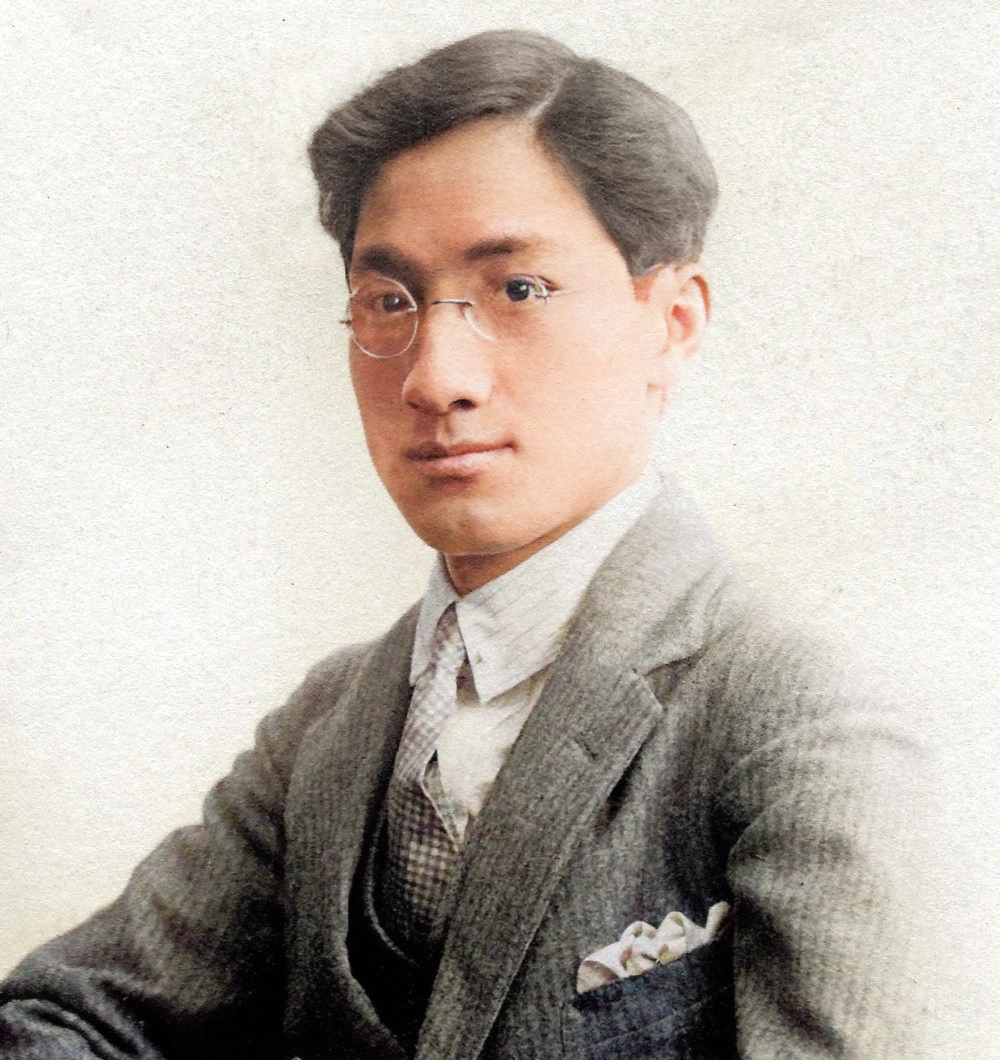
| 1 Quotes | |
| Occup. | Poet |
| From | China |
| Born | January 15, 1893 Rome, Italy |
| Died | November 19, 1931 Hangzhou, China |
| Aged | 38 years |
| Cite | |
Citation Formats
APA Style (7th ed.)
Xu zhimo biography, facts and quotes. (2026, February 11). FixQuotes. https://fixquotes.com/authors/xu-zhimo/
Chicago Style
"Xu Zhimo biography, facts and quotes." FixQuotes. February 11, 2026. https://fixquotes.com/authors/xu-zhimo/.
MLA Style (9th ed.)
"Xu Zhimo biography, facts and quotes." FixQuotes, 11 Feb. 2026, https://fixquotes.com/authors/xu-zhimo/. Accessed 25 Mar. 2026.
Early Life and Education
Xu Zhimo (1897-1931) was born in Haining, Zhejiang, into a prosperous merchant family and received a traditional classical education before entering the modern schools that were rising with the New Culture Movement. In Beijing he encountered the call for vernacular writing and intellectual openness, and the advocacy of Hu Shi helped shape his sense that modern Chinese literature could embrace clarity, individuality, and emotional directness. Still young, he revealed strong linguistic talent and an instinct for music in language, qualities that would later define his verse.Studies Abroad and Formation of Aesthetic Vision
Like many of his generation, Xu left China to study in the West. He spent time in the United States, where exposure to liberal thought and to the atmosphere of American universities broadened his horizons beyond classical scholarship. He then moved to the United Kingdom and studied at Kings College, Cambridge. There he encountered the English Romantics and the English lyric tradition at close range. Immersion in the poetry of Keats and Shelley refined his sense of cadence and image, while the settings of Cambridge, with the River Cam and college courts, became emotional landmarks in his imagination. The journey transformed him from an eager student into a committed poet determined to renew Chinese verse.Return to China and the Crescent Moon Circle
Back in China in the early 1920s, Xu became a central figure in the cosmopolitan wing of the literary scene. He lectured and taught at universities in Beijing and Shanghai and wrote tirelessly for newspapers and journals. With Hu Shi, Wen Yiduo, and Liang Shiqiu, he helped form and promote the Crescent Moon circle (often associated with the journal Xinyue), advocating artistic refinement, individual feeling, and the careful craft of free verse in the modern vernacular. He argued for poetry as an autonomous art, sometimes in sharp debate with left-leaning writers, including Lu Xun and others who pressed for socially militant literature. Xu's standpoint did not deny social conscience, but he insisted that beauty, sincerity, and musicality were themselves urgent values for a culture in rapid transition.Poetic Achievements and Cultural Mediation
Xu Zhimo's poems are known for crystalline diction, flowing rhythms, and a sensibility that blends Chinese lyric inheritance with Western modernity. He refined the short lyric into a vehicle for memory, desire, and transience. His visits to Cambridge became the occasion for one of his most famous poems of parting, whose imagery of quiet waters and soft light entered the shared imagination of readers across languages. He also wrote reflective essays, travel pieces, and literary criticism, helping to introduce Western writers to Chinese audiences.Cultural exchange was not abstract for Xu. When Rabindranath Tagore traveled in China, Xu served as an escort and translator, admiring Tagore's universal humanism. The visit stirred controversy among radical students, but Xu defended the value of spiritual and aesthetic perspectives in modern life. In this role of mediator, he sought to show that a modern Chinese identity could absorb global influences without losing its own voice.
Personal Life and Relationships
Xu's personal life unfolded in step with the upheavals of his cultural moment. He entered an arranged marriage with Zhang Youyi when he was very young, a union that gradually proved incompatible with his evolving ideals and ambitions. The marriage ended in divorce, a rare and publicly discussed event at the time, and the separation left a lasting impression on both parties as well as on Xu's poetry of longing and self-scrutiny.He later married Lu Xiaoman, a talented and spirited figure in the Shanghai cultural world. Their relationship faced intense public scrutiny, financial pressures, and the strains of modern urban life, yet it also fueled some of his most ardent lyrical work. Xu also developed a close intellectual friendship with Lin Huiyin, whose architectural and literary gifts he admired; her husband, Liang Sicheng, was a rising architect and scholar. The emotional complexities of these friendships and loves reverberate in the texture of Xu's poems, where tenderness, restraint, and sudden flashes of passion coexist.
Teaching, Editing, and Public Voice
Beyond poetry, Xu worked as an editor and organizer, turning journals into platforms for translation, criticism, and new writing. He championed younger voices and fostered high standards of craft. In lecture halls he advocated close reading and an ear for sound, urging students to hear language as music and to trust the immediacy of experience. He moved easily between Beijing's campus culture and Shanghai's publishing world, linking the two hubs at a time when print culture was rapidly expanding.Final Years and Untimely Death
In the late 1920s and early 1930s, Xu's stature as a poet and public intellectual was secure. He continued to travel, to write prose sketches and poems, and to speak for the autonomy of literature. In November 1931, while flying north for academic and literary engagements, his plane crashed in Shandong, near Jinan. He died at the age of thirty-four. The shock of his death rippled through the literary community: friends such as Wen Yiduo and Liang Shiqiu mourned a voice that had seemed destined for further growth, while readers recognized how decisively he had opened a new path for modern Chinese lyricism.Legacy
Xu Zhimo's achievement lies in the fusion of elegance and intimacy, in his belief that the vernacular could carry subtle music and precise feeling. He helped naturalize free verse in Chinese while preserving the discipline of image and sound. The Crescent Moon circle, shaped alongside Hu Shi and others, offered a cosmopolitan alternative within the May Fourth era's reforms, and Xu stood at its lyrical center. His connections with figures such as Rabindranath Tagore, Lin Huiyin, Liang Sicheng, Wen Yiduo, and Liang Shiqiu situate him within a network of thinkers who sought to modernize China's arts without abandoning grace.Cambridge remains associated with his memory, a symbol of his transnational imagination, while in China his poems continue to be read for their poise, their quiet radiance, and their capacity to turn parting, chance, and remembered light into enduring song.
Our collection contains 1 quotes written by Xu, under the main topics: Faith.
Xu Zhimo Famous Works
- 1990 Collected Poems of Xu Zhimo (Book)
- 1985 Xu Zhimo Prose Collection (Book)
- 1928 Farewell to Cambridge (Poem)
Source / external links