
Yann Arthus-Bertrand Biography Quotes 2 Report mistakes
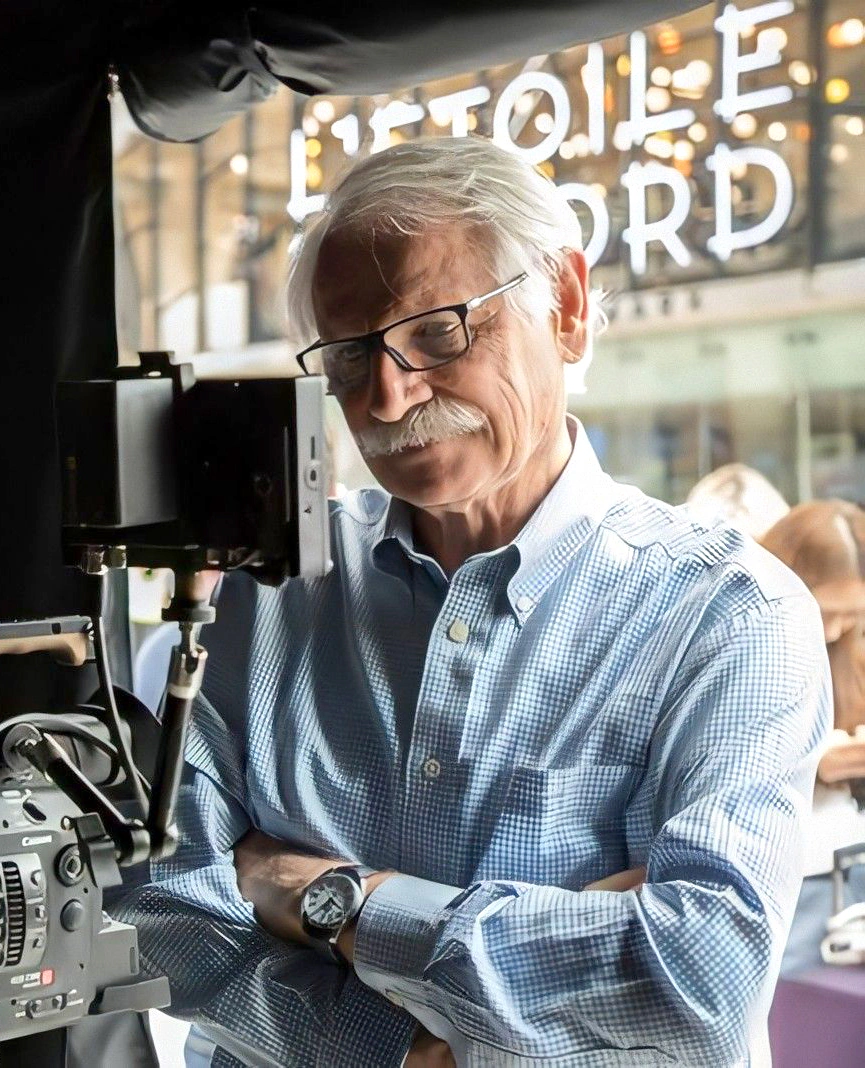
| 2 Quotes | |
| Occup. | Photographer |
| From | France |
| Spouse | Anne-Laure Liégeois |
| Born | March 13, 1946 Paris, France |
| Age | 79 years |
| Cite | |
Citation Formats
APA Style (7th ed.)
Yann arthus-bertrand biography, facts and quotes. (2026, February 11). FixQuotes. https://fixquotes.com/authors/yann-arthus-bertrand/
Chicago Style
"Yann Arthus-Bertrand biography, facts and quotes." FixQuotes. February 11, 2026. https://fixquotes.com/authors/yann-arthus-bertrand/.
MLA Style (9th ed.)
"Yann Arthus-Bertrand biography, facts and quotes." FixQuotes, 11 Feb. 2026, https://fixquotes.com/authors/yann-arthus-bertrand/. Accessed 12 Feb. 2026.
Early Life and Background
Yann Arthus-Bertrand was born on March 13, 1946, in Paris, France, into a postwar nation rebuilding its cities and its moral imagination. The France of his childhood was moving from ration-book memory toward consumer modernity, and the contrast between scarred landscapes and accelerated growth would later echo in his images of a planet transformed by human appetite. Before he became a public environmental voice, he was a restless observer drawn to animals, open air, and the kind of work that required patience more than rhetoric.In his teens he gravitated to the practical world of horses, apprenticing in equestrian circles that taught him to read bodies, weather, and terrain. That early intimacy with animal behavior - quiet hours, repetitive routines, and the discipline of care - helped shape a temperament suited to long projects and fieldwork. It also seeded a lifelong attraction to the meeting point between nature and human economy: grazing land, villages, and the subtle ways livelihoods leave marks on the earth.
Education and Formative Influences
Arthus-Bertrand did not emerge from a conventional fine-arts pipeline so much as from experience and self-directed learning, developing his photographic eye through travel, reportage, and the practical demands of documenting living systems. A decisive formative period came in the 1970s when he undertook field research on lions in Kenya with his then-wife Anne, producing a book and learning to translate scientific observation into visual narrative. The era mattered: color photography was becoming more widely legible in magazines, ecology was entering public debate, and aerial perspectives - once military or cartographic - were starting to feel like a new kind of civic mirror.Career, Major Works, and Turning Points
From the 1980s onward he built a career that fused photography, popular education, and advocacy, founding the environmental NGO GoodPlanet and using mass media with unusual ambition for a photographer. His breakthrough project Earth from Above (La Terre vue du ciel) became an international publishing and exhibition phenomenon in the late 1990s and early 2000s, presenting large-format aerial images paired with accessible environmental commentary; it made the helicopter and low-altitude aircraft not just tools but stages for a new public language about land use, deforestation, irrigation geometry, and urban sprawl. He later expanded into documentary filmmaking with Home (2009), designed for global distribution and free access in many territories, and continued with projects such as Human (2015) and Woman (2019), widening from ecosystems to human testimony while keeping the planetary frame - the idea that beauty, data, and emotion could be made to coexist in one persuasive statement.Philosophy, Style, and Themes
Arthus-Bertrand's style is built on elevation and compression: the aerial viewpoint turns farms, deltas, highways, and mines into patterns that are at once ravishing and indicting. He is drawn to the paradox that the same image can seduce the eye and unsettle the conscience, a strategy that relies on viewers staying with their discomfort long enough to recognize complicity. The calm geometry of salt flats or monoculture fields becomes a psychological trap - you admire first, then realize what you are admiring. This is where his work departs from pure landscape tradition and enters moral reportage, using beauty as a gateway rather than an alibi.His recurring subject is not catastrophe alone but denial - the mental habit of postponing the consequences of what we already understand. "You know the problem, we don't want to believe what we know". That sentence is less a slogan than a diagnosis of modern attention: knowledge without acceptance, acceptance without action. When he speaks about oceans and food systems - "One fifth of human kind depend on fish to live. Today now 70 percent of the fish stock are over-exploited. According to FAO if we don't change our system of fishing the main sea resources will be gone in 2050. We don't want to believe what we know". - he is revealing his method: connect the intimate (eating, work, survival) to the planetary, and then return to the stubborn psychology that blocks change. The moral pressure in his images comes from this loop between scale and responsibility.
Legacy and Influence
Arthus-Bertrand helped mainstream the idea that environmental communication could be both aesthetically exalted and widely accessible, influencing photographers, NGOs, museum exhibitions, and the visual grammar of climate discourse. Earth from Above demonstrated that large public displays and popular books could function like civic infrastructure for ecological literacy, while Home showed how a filmmaker-photographer could pursue mass reach without abandoning authorship. His legacy is inseparable from debate - about advocacy, spectacle, and simplification - yet his enduring contribution is clear: he made the planet legible as a shared home and made denial itself a central subject, insisting that seeing is only the beginning of responsibility.Our collection contains 2 quotes written by Yann, under the main topics: Truth - Ocean & Sea.
Yann Arthus-Bertrand Famous Works
- 2009 6 Billion Others: Portraits of Humanity from Around the World (Book)
- 2009 Home: A Hymn to the Planet and Humanity (Book)
- 1994 The Earth from the Air (Book)
Source / external links