
Yannick Noah Biography Quotes 19 Report mistakes
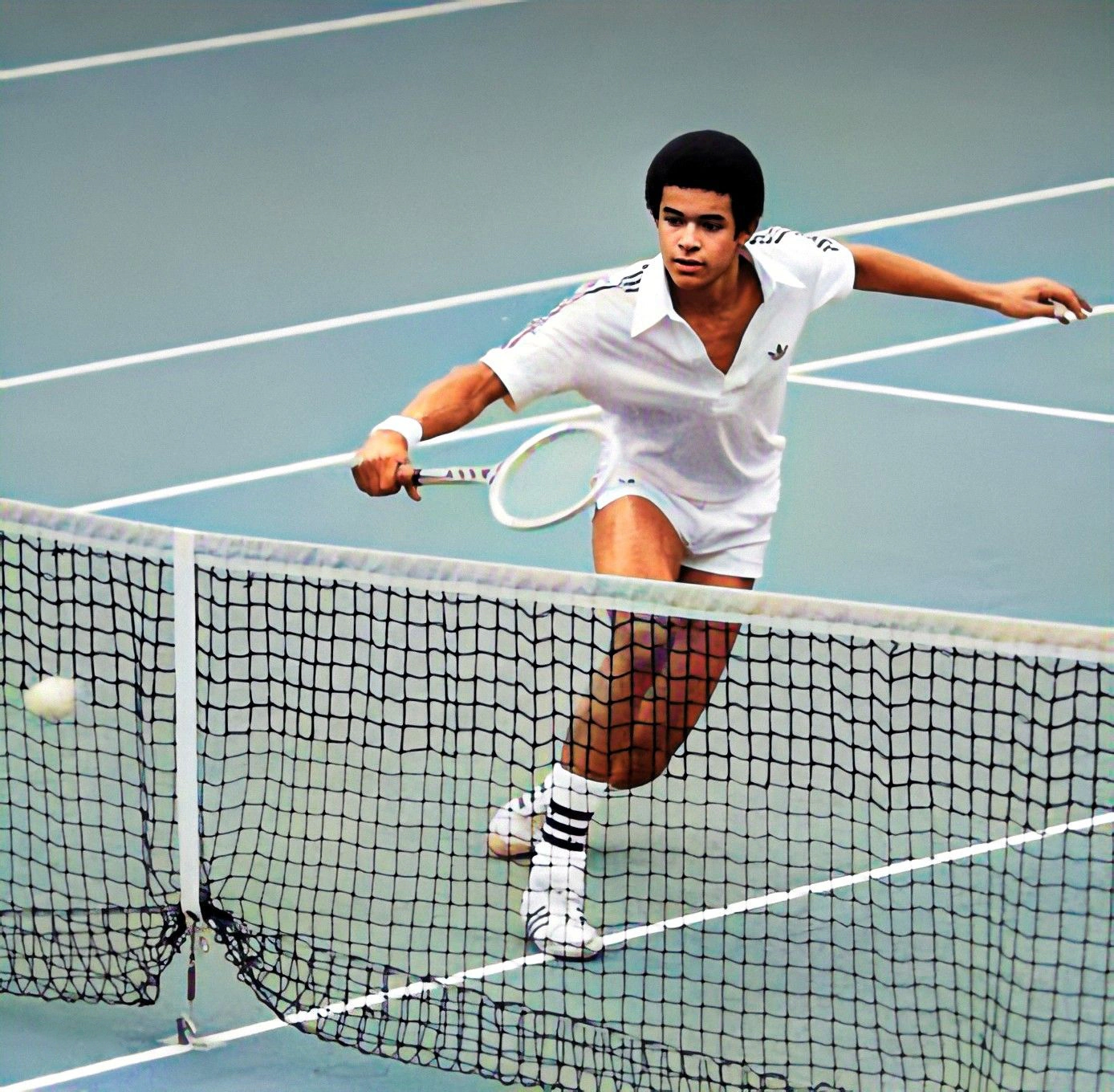
| 19 Quotes | |
| Occup. | Athlete |
| From | France |
| Born | May 18, 1960 |
| Age | 65 years |
| Cite | |
Citation Formats
APA Style (7th ed.)
Yannick noah biography, facts and quotes. (2026, February 11). FixQuotes. https://fixquotes.com/authors/yannick-noah/
Chicago Style
"Yannick Noah biography, facts and quotes." FixQuotes. February 11, 2026. https://fixquotes.com/authors/yannick-noah/.
MLA Style (9th ed.)
"Yannick Noah biography, facts and quotes." FixQuotes, 11 Feb. 2026, https://fixquotes.com/authors/yannick-noah/. Accessed 27 Mar. 2026.
Early Life and Background
Yannick Noah was born on May 18, 1960, in Sedan, in Frances Ardennes, to a Cameroonian father, Zacharie Noah, a celebrated footballer, and a French mother, Marie-Claire. His earliest identity was already crosshatched by movement and mixed belonging: France of paperwork and schooling, Cameroon of family gravity and early physical freedom. That tension - between rootedness and mobility, between being seen and being searched for - would later shape both his public charisma and his private restlessness.He spent formative childhood years in Yaounde, where sport was not a specialization but a language, a way to earn place and respect. The household carried the discipline of elite athletics, yet the boy also absorbed the looser social warmth of Cameroon. When he returned to France as a preteen, he entered a society that admired his talent while quietly marking his difference - a duality he would learn to convert into performance, and later, into a broad idea of community.
Education and Formative Influences
Noahs education was split between conventional schooling and the hard, itinerant curriculum of training: coaches, tournaments, and the early professionalization of youth. A pivotal force was the French tennis system that spotted him young and moved him through elite pathways, including the academies and national training structures that produced international contenders. His imagination was also formed by the politics of sport in the 1970s - the emergence of Black visibility in global tennis, the moral example of Arthur Ashe, and the expectation that a champion might be asked to stand for more than wins.Career, Major Works, and Turning Points
Turning professional in the late 1970s, Noah rose quickly on the ATP tour, marrying explosive athleticism with improvisational flair and a rare rapport with crowds. His defining competitive achievement came in 1983, when he won the French Open, becoming the last Frenchman to claim the Roland-Garros singles title for decades - a victory that turned him into a national symbol and, for many, a proof of a more plural France. Injuries and the grind of touring eventually narrowed his singles window, yet he remained a major figure: winning doubles titles, representing France in Davis Cup, and later captaining the team to Davis Cup victory (1991) and Fed Cup victory (1997). A second reinvention followed as he built a parallel career in music and public life, using fame not as a museum for past glory but as a platform for ongoing belonging.Philosophy, Style, and Themes
Noahs tennis style was a biography in motion: serve-and-volley instincts, elastic defense, and the willingness to risk momentum for a higher-voltage point. He played with the body first - leaping, sliding, gesturing - and the mind just behind it, reading the crowd like another opponent. That outward ease often covered an inward sensitivity: an athlete attuned to atmosphere, to whether a place soothed or inflamed him. “You arrive at a village, and in this calm environment, one starts to hear echo”. The line reads like a travel note, but it doubles as self-diagnosis - in quiet, he hears himself, and the echo can be both restorative and unsettling.His themes, in sport and later in song, circle around movement, fraternity, and selective refusal. “I always traveled. I left Cameroon when I was 11 years old. I lived in the USA, in Switzerland”. Travel for Noah is not tourism; it is identity-work, a way to manage the friction of being claimed by multiple places while never fully contained by any one of them. At the same time, he returns repeatedly to the necessity of a collective - the locker room, the band, the family, the team as emotional shelter from celebrity. “The important thing is staying together if you want to do something special”. That credo explains why his post-peak influence in French tennis often came less from technical instruction than from morale, presence, and the hard art of keeping a group human under pressure.
Legacy and Influence
Noah endures as more than the man who won Roland-Garros in 1983: he is a template for the modern French sporting celebrity who can be joyful without being superficial, political without turning didactic, and famous while still searching. For French tennis, he remains a reference point for athletic freedom and Davis Cup leadership; for a multicultural France, he became an early, highly visible emblem of Black Frenchness that insisted on complexity rather than assimilation. His long second act in music and philanthropy, and his continued ability to animate stadiums and living rooms, reflect a deeper legacy - the belief that performance, at its best, is a form of gathering people together.Our collection contains 19 quotes written by Yannick, under the main topics: Witty One-Liners - Wisdom - Justice - Music - Nature.
Source / external links