
Yevgeny Yevtushenko Biography Quotes 15 Report mistakes
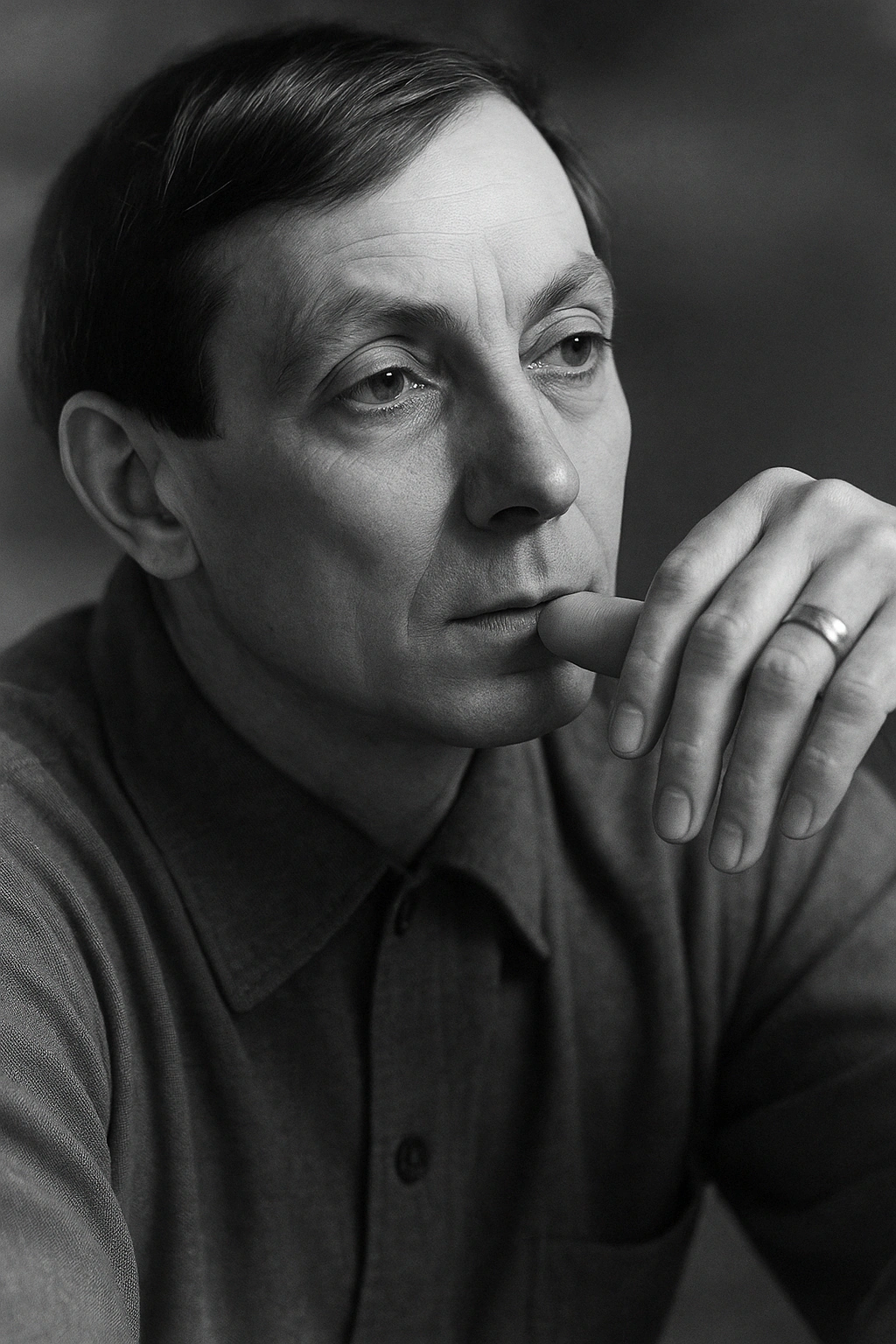
| 15 Quotes | |
| Born as | Yevgeny Aleksandrovich Yevtushenko |
| Known as | Evgeny Yevtushenko |
| Occup. | Poet |
| From | Russia |
| Born | July 18, 1933 Zima, Irkutsk Oblast, Soviet Union |
| Died | April 1, 2017 Tulsa, Oklahoma, United States |
| Cause | heart attack |
| Aged | 83 years |
| Cite | |
Citation Formats
APA Style (7th ed.)
Yevgeny yevtushenko biography, facts and quotes. (2026, February 11). FixQuotes. https://fixquotes.com/authors/yevgeny-yevtushenko/
Chicago Style
"Yevgeny Yevtushenko biography, facts and quotes." FixQuotes. February 11, 2026. https://fixquotes.com/authors/yevgeny-yevtushenko/.
MLA Style (9th ed.)
"Yevgeny Yevtushenko biography, facts and quotes." FixQuotes, 11 Feb. 2026, https://fixquotes.com/authors/yevgeny-yevtushenko/. Accessed 22 Mar. 2026.
Early Life and Background
Yevgeny Aleksandrovich Yevtushenko was born on July 18, 1933, in the Siberian town of Zima, in what was then the Russian Soviet Federative Socialist Republic. His childhood belonged to the late-Stalinist decade when hunger, denunciation, and patriotic myth coexisted in everyday speech. Family memory placed poetry close to survival: his mother, Zinaida Yevtushenko (nee Ermolayeva), encouraged his early verse, while his father, Aleksandr Gangnus, came from a Baltic-German line and worked as a geologist. The boy later took his mothers surname - a choice that also simplified life in an era when origin stories could become liabilities.War and displacement formed his emotional baseline. During World War II he experienced evacuation and the brittle solidarity of communal life, learning early how private tenderness and public slogans could occupy the same room. Siberia gave him distance from the capitals but not from the states reach; he grew up hearing how quickly a wrong word could harden into a charge. That tension - between the urge to speak plainly and the instinct to survive - became the engine of his later public persona.
Education and Formative Influences
As a teenager he moved toward Moscow and the literary institutions that acted as both gateway and gatekeeper. He studied at the Gorky Literary Institute, absorbing the craft tradition of Russian verse while also encountering the post-Stalin thaw that followed 1953. The young poet came of age alongside a generation hungry for truth after years of enforced unanimity; Mayakovsky and Esenin offered models of lyric bravado, while the moral example of writers who suffered under censorship taught him that a poets biography is often written by the state as much as by the self.Career, Major Works, and Turning Points
Yevtushenko rose with the Khrushchev Thaw, publishing early collections in the 1950s and becoming a national sensation in the 1960s through stadium readings that turned poetry into a mass civic ritual. His defining turning point came in 1961 with "Babi Yar", a poem that confronted Soviet silence about the Nazi massacre of Jews near Kyiv and the persistence of antisemitism; it helped spark international attention and later resonated with Dmitri Shostakovichs Symphony No. 13. He remained a prominent, disputed conscience through the Brezhnev era, traveling widely, writing poems, essays, and memoirs, and cultivating a role as mediator between Soviet culture and the West. After the Soviet collapse he continued publishing and teaching, spending significant years in the United States (notably at the University of Tulsa), while still returning to Russia in his imagination and themes. He died on April 1, 2017, in Tulsa, Oklahoma, and was buried at Peredelkino near Moscow, among writers whose fates had defined his own sense of calling.Philosophy, Style, and Themes
At his core Yevtushenko was a poet of the public square who never stopped thinking like a vulnerable private citizen. He treated literature as an ethical instrument aimed at power, insisting that “Literature has to serve as a moral control of politics”. That sentence is less a slogan than a self-portrait: he believed poetry should shame cruelty, puncture lies, and keep compassion from being bureaucratized. The risk, which he often courted, was turning the lyric into performance; yet his best work uses performance as a way to smuggle conscience into the largest possible room.His style mixed declamatory rhythms with intimate confession, a voice that could sound prophetic one moment and wounded the next. He wrote as if borders were both real and illegitimate, saying, “Poetry is like a bird, it ignores all frontiers”. That belief powered his internationalism and his constant movement between languages, audiences, and ideologies, even as it exposed him to accusations of opportunism. Yevtushenko also understood that a Soviet poets first antagonist was not simply a censor but the entire psychology of fear, hence his bleak, historically grounded maxim: “In Russia all tyrants believe poets to be their worst enemies”. The line hints at his own inner conflict - the longing to be useful to truth while knowing that usefulness could make him a target, and that survival could look like compromise.
Legacy and Influence
Yevtushenko endures as a signature voice of the Thaw and as a case study in the possibilities and limits of cultural dissent inside an authoritarian system. "Babi Yar" remains his most permanent monument, a work that forced moral recognition when official history demanded amnesia, and it continues to shape conversations about memory, antisemitism, and civic courage. More broadly he helped revive poetry as a mass event, influencing later Russian performers and singer-poets, while his global readings made him one of the USSRs most recognizable literary ambassadors. Debates about his proximity to power have never ceased, but that argument is part of his meaning: he lived where art meets politics, and he insisted - sometimes at great cost, sometimes with visible calculation - that the poet must not surrender the right to speak in a time that trains citizens to whisper.Our collection contains 15 quotes written by Yevgeny, under the main topics: Ethics & Morality - Wisdom - Justice - Writing - Freedom.
Frequently Asked Questions
- Yevgeny Yevtushenko: books: A Precocious Autobiography; Wild Berries; Don't Die Before You're Dead; Selected Poems
- Yevgeny Yevtushenko spouse: Bella Akhmadulina; Galina Sokol-Lukonina; Jan Butler; Maria Novikova
- Yevgeny Yevtushenko children: Five sons
- Yevgeny Yevtushenko career: Soviet/Russian poet of the Khrushchev Thaw; star of mass poetry readings; later novelist and film director; taught at the University of Tulsa
- Yevgeny Yevtushenko famous Poems: Babi Yar; Heirs of Stalin; Zima Junction; The City of Yes and the City of No; I Would Like
- How old was Yevgeny Yevtushenko? He became 83 years old
Yevgeny Yevtushenko Famous Works
- 1961 Babi Yar (Poetry)
Source / external links