
Yoko Ono Biography Quotes 31 Report mistakes
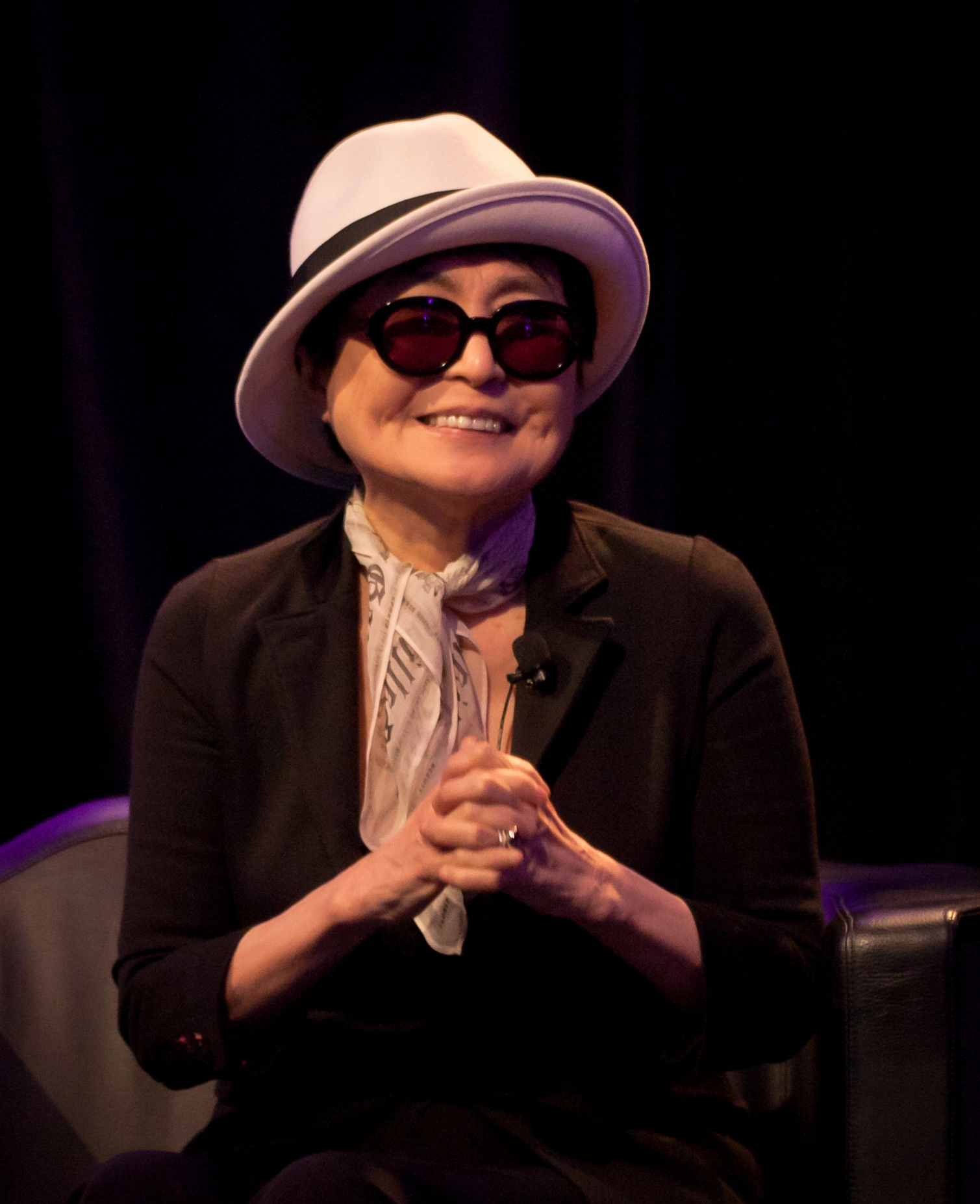
Attr: Earl McGehee, CC BY 2.0
| 31 Quotes | |
| Occup. | Artist |
| From | USA |
| Born | February 18, 1933 Tokyo, Japan |
| Age | 93 years |
| Cite | |
Citation Formats
APA Style (7th ed.)
Yoko ono biography, facts and quotes. (2026, February 11). FixQuotes. https://fixquotes.com/authors/yoko-ono/
Chicago Style
"Yoko Ono biography, facts and quotes." FixQuotes. February 11, 2026. https://fixquotes.com/authors/yoko-ono/.
MLA Style (9th ed.)
"Yoko Ono biography, facts and quotes." FixQuotes, 11 Feb. 2026, https://fixquotes.com/authors/yoko-ono/. Accessed 2 Apr. 2026.
Early Life and Background
Yoko Ono was born February 18, 1933, in Tokyo, Japan, into a privileged banking family whose fortunes rose and fell with the turbulence of empire and war. Her father, Eisuke Ono, worked for the Yokohama Specie Bank, and his postings and separations from the household made early life feel both cosmopolitan and unmoored. Ono grew up between moneyed refinement and the sharp knowledge that security can vanish overnight.World War II marked her inner landscape. During the firebombing of Tokyo, the family fled and endured hunger and dislocation, experiences that later surfaced in her insistence on peace as a daily practice rather than a slogan. The young Ono learned to watch crowds, listen for danger, and build private worlds in the mind - habits that would later become the engine of her conceptual art, where instruction and imagination could substitute for material resources.
Education and Formative Influences
After the war she attended Gakushuin, an elite school, and began studying philosophy before leaving Japan for the United States. She briefly attended Sarah Lawrence College in New York, but the more decisive education came from downtown Manhattan: the postwar avant-garde where John Cage's chance operations, Fluxus playfulness, Zen-inflected minimalism, and the emerging performance scene treated art as an event and an attitude. In that milieu Ono learned that an artist could write a sentence and change the air in a room.Career, Major Works, and Turning Points
In the early 1960s she became a key figure in New York's experimental network, hosting loft concerts and happenings and publishing instruction-based works that culminated in Grapefruit (1964), a landmark of conceptual art. That same year she performed Cut Piece, inviting an audience to cut away her clothing, turning spectatorship into an ethical test. Moving between New York, London, and Tokyo, she aligned with Fluxus and expanded into film and sound. Her meeting with John Lennon in 1966 at London's Indica Gallery became a public turning point: their partnership fused art and mass culture, from the Bed-Ins and "War Is Over!" campaign to music made together, including the raw, confrontational Plastic Ono Band (1970) and Ono's own boundary-pushing albums. After Lennon was murdered in 1980, she became steward of his legacy while continuing her own, from the 1990s reappraisal of her music and art to large-scale installations, retrospectives, and peace projects.Philosophy, Style, and Themes
Ono's art treats the mind as both medium and stage. She works with instructions, repetition, and pared-down forms that recruit the viewer as co-author, insisting that attention can be a social act. Her performances and objects often feel deceptively simple, but they are built to expose power: who looks, who touches, who is allowed to speak, and what violence hides inside ordinary curiosity. The vulnerability in Cut Piece or the quiet audacity of Grapefruit is not confessional for its own sake; it is a method for making the public responsible.Her psychology as an artist is inseparable from repair. She rejects the romantic isolation of genius while admitting the cost of being ahead of the room, and her work keeps returning to collective intention as a technology of change. “A dream you dream alone is only a dream. A dream you dream together is reality”. That belief drives her participatory pieces and her activism, where the artwork is the shared decision to imagine differently. The pacifist strain is equally direct: “War is over if you want it”. Even when critics dismissed her as naive, she treated slogan-making as conceptual practice - a way to test whether mass audiences could be invited into moral agency. Underneath is a granular ethic of accumulation: “Every drop in the ocean counts”. It is the credo of a survivor who learned early that history changes through countless small choices, not one perfect gesture.
Legacy and Influence
Ono's enduring influence lies in how thoroughly she collapsed boundaries: between fine art and pop, private grief and public ritual, feminist critique and playful instruction, activism and aesthetics. Once caricatured by misogyny and Beatles mythology, she has been steadily re-centered as a foundational conceptual and performance artist whose ideas anticipated participatory art, relational practices, and the politics of spectatorship. Her music's screams, drones, and fearless minimalism echo in punk, no wave, and experimental pop; her installations and peace works persist as invitations to act - modestly, repeatedly, together.Our collection contains 31 quotes written by Yoko, under the main topics: Motivational - Wisdom - Art - Music - Freedom.
Other people related to Yoko: Annie Leibovitz (Photographer), Sean Lennon (Musician), Fred Schneider (Musician), La Monte Young (Composer), Tony Levin (Musician)
Source / external links