
Yuan Shikai Biography Quotes 1 Report mistakes
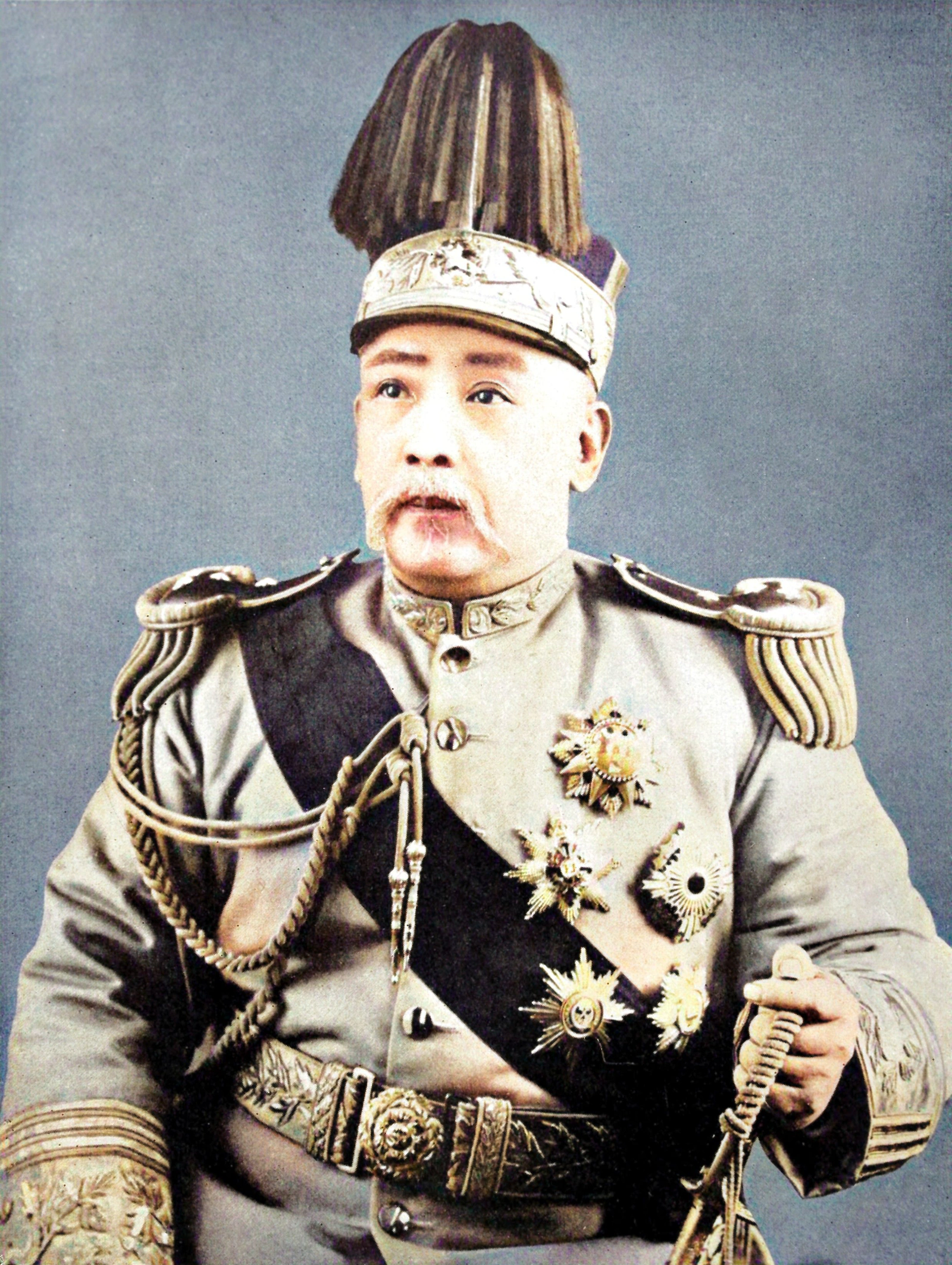
| 1 Quotes | |
| Occup. | Soldier |
| From | China |
| Born | September 16, 1859 Xiangcheng, Henan, Qing Empire |
| Died | June 6, 1916 Beijing, Republic of China |
| Aged | 56 years |
| Cite | |
Citation Formats
APA Style (7th ed.)
Yuan shikai biography, facts and quotes. (2026, February 11). FixQuotes. https://fixquotes.com/authors/yuan-shikai/
Chicago Style
"Yuan Shikai biography, facts and quotes." FixQuotes. February 11, 2026. https://fixquotes.com/authors/yuan-shikai/.
MLA Style (9th ed.)
"Yuan Shikai biography, facts and quotes." FixQuotes, 11 Feb. 2026, https://fixquotes.com/authors/yuan-shikai/. Accessed 22 Mar. 2026.
Early Life and Background
Yuan Shikai was born on 1859-09-16 in Xiangcheng, Henan, into a gentry-military household that embodied late Qing contradictions: rooted in classical status yet anxious about a world reordered by foreign gunboats and unequal treaties. His early environment was one of local militia tradition, clan obligation, and the hard prestige of command, a social ecology that rewarded practical authority more than literati refinement. The Taiping aftermath and recurring regional unrest made security a daily language, shaping a temperament that trusted organization, payroll, and discipline over moral exhortation.He grew up as the Qing state struggled to modernize without surrendering sovereignty, and those tensions became his lifelong medium. Yuan was not formed as an idealist revolutionary but as a manager of crises, learning early that survival in a collapsing order required flexibility, personal networks, and a willingness to serve successive centers of power. That psychology - cautious, instrumental, and intensely attuned to institutional leverage - would later make him indispensable and feared.
Education and Formative Influences
Yuan attempted the civil service examinations but did not become a degree-holder; the failure pushed him toward the only ladder that matched his talents: the new military-bureaucratic world. He entered the orbit of Li Hongzhang and the Huai Army network, where Western-style drilling, modern weapons procurement, and patronage politics were inseparable. A defining formative experience came in the early 1880s when he served in Korea as a Qing official and military organizer, navigating court intrigue in Seoul while watching Japan expand influence after the Imo and Gapsin disturbances. Korea taught him that East Asian power was shifting from ritual hierarchy to industrial mobilization - and that prestige without force invited humiliation.Career, Major Works, and Turning Points
Yuan rose as a builder of modern coercive capacity: after the Sino-Japanese War (1894-1895) exposed Qing weakness, he helped create and command the Beiyang Army, the most modern force in China, trained with foreign assistance and loyal as much to its commander as to the throne. In 1898 he played a decisive role in the failure of the Hundred Days Reform, distancing himself from Guangxu-aligned reformers and aligning with conservative power, a choice that burnished his reputation for ruthless prudence. As viceroy of Zhili and a leading architect of late Qing reforms, he expanded police, schools, and administrative modernization, yet his base remained the Beiyang officer corps. After the 1911 Revolution he negotiated the abdication of the Qing and became provisional president of the Republic of China in 1912, then moved to concentrate power: dissolving parliament, suppressing opponents, and ruling through provincial military governors. His greatest turning point - and fatal overreach - was the 1915-1916 attempt to found a new monarchy with himself as emperor, which triggered widespread opposition, provincial secession, and the erosion of Beiyang unity; he died on 1916-06-06, leaving a fractured polity.Philosophy, Style, and Themes
Yuan's inner life is best read in the gap between his modernizing instincts and his fear of uncontrolled politics. He believed national strength required time, order, and fiscal capacity before ideals could safely bloom, a view shaped by the Qing's humiliations and by his own experience building institutions from barracks outward. His policy imagination was technocratic and postponement-oriented, treating liberty as a luxury and stability as the precondition of sovereignty. That calculus appeared starkly in his strategic patience toward external threats: “China should bury head to work diligently for 10 years and then raise head to face Japan”. The sentence reveals a mind that prized deferred confrontation, domestic consolidation, and the state as an engine of disciplined labor.His governing style followed the logic of the command post. Yuan preferred appointment over elections, negotiation backed by force, and the creation of loyal structures - army units, police, financial controls - that could outlast any single crisis. Yet the same habits that made him effective at state-building also narrowed his empathy for pluralism: he interpreted factional politics as sabotage and treated opposition as an administrative problem. Psychologically, he sought legitimacy less from shared ideals than from performance and hierarchy; when republican legitimacy proved unruly, he reached for imperial symbolism as an antidote to fragmentation. The monarchy bid was not only ambition but also a confession of anxiety - a belief that China could not be governed through persuasion alone.
Legacy and Influence
Yuan Shikai remains one of modern China's most consequential and contested figures: a founder of effective modern military power, a broker who ended two centuries of Qing rule, and a leader whose centralization strategies helped normalize militarized politics. His death did not end the Beiyang system; it unmoored it, accelerating the warlord era as commanders inherited his tools without his authority. In memory he is both modernizer and usurper, a case study in how institution-building can coexist with political repression, and how a state strengthened by armies and administration can still collapse when legitimacy is treated as interchangeable with control.Our collection contains 1 quotes written by Yuan, under the main topics: Work Ethic.
Source / external links