
Zalmay Khalilzad Biography Quotes 5 Report mistakes
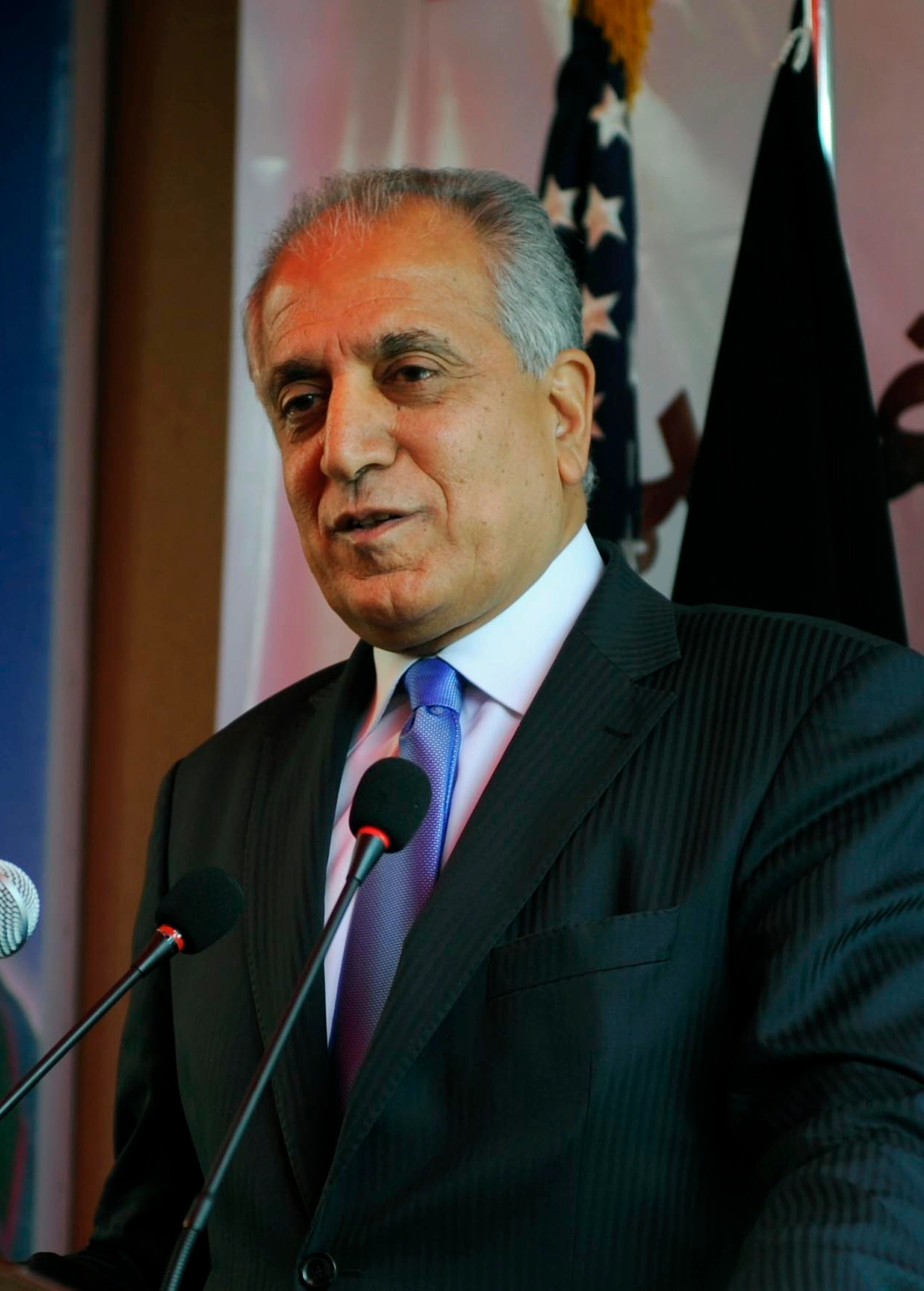
| 5 Quotes | |
| Born as | Zalmay Mamozy Khalilzad |
| Occup. | Diplomat |
| From | Afghanistan |
| Born | November 22, 1951 Mazar-i-Sharif, Afghanistan |
| Age | 74 years |
| Cite | |
Citation Formats
APA Style (7th ed.)
Zalmay khalilzad biography, facts and quotes. (2026, February 11). FixQuotes. https://fixquotes.com/authors/zalmay-khalilzad/
Chicago Style
"Zalmay Khalilzad biography, facts and quotes." FixQuotes. February 11, 2026. https://fixquotes.com/authors/zalmay-khalilzad/.
MLA Style (9th ed.)
"Zalmay Khalilzad biography, facts and quotes." FixQuotes, 11 Feb. 2026, https://fixquotes.com/authors/zalmay-khalilzad/. Accessed 12 Feb. 2026.
Early Life and Education
Zalmay Mamozy Khalilzad was born on March 22, 1951, in Mazar-i-Sharif, Afghanistan. He grew up in a period of rapid political change in his homeland and developed an early interest in international affairs. After completing his early schooling in Afghanistan, he studied abroad and went on to earn undergraduate and master's degrees at the American University of Beirut, an institution that exposed him to a wide spectrum of political ideas and to the complexities of regional politics. He later pursued doctoral study in political science at the University of Chicago, where he worked under the influence of strategic thinker Albert Wohlstetter. That training grounded him in rigorous strategic analysis and would shape his approach to U.S. foreign policy for decades.Entering U.S. Policy Circles
After completing his Ph.D., Khalilzad embarked on a career that bridged academia, policy analysis, and government service. He held academic appointments and soon became involved in Washington policy debates, contributing research on strategy and regional security. During the 1980s, as the Soviet-Afghan war dominated U.S. attention in South and Central Asia, he served in advisory roles at the U.S. Department of State, working on Afghanistan policy in a period when Washington calibrated support for Afghan resistance forces. This placed him in regular contact with senior officials and analysts dealing with the broader Cold War competition and with figures shaping U.S. policy in the Middle East and South Asia.
Defense Policy and the Post-Cold War Transition
In the administration of President George H. W. Bush, Khalilzad served in the Pentagon under Secretary of Defense Dick Cheney, contributing to long-range policy planning alongside policy leaders such as Paul Wolfowitz. That experience coincided with the end of the Cold War and the effort to define America's global role in a transformed strategic landscape. Between and after government tours, he held senior roles at the RAND Corporation, where he worked on strategy and regional studies, continuing his association with the community of scholars influenced by Albert and Roberta Wohlstetter. His writing and analysis from this period argued for active U.S. engagement and careful management of regional balances of power.Diplomacy after 9/11
Following the September 11, 2001 attacks, Khalilzad joined the George W. Bush administration's National Security Council staff as a senior director and served as the President's envoy for Afghanistan. He worked closely with Secretary of State Colin Powell and, later, Secretary of State Condoleezza Rice, as well as with Secretary of Defense Donald Rumsfeld and U.S. military commanders, during the initial stabilization of Afghanistan. In close coordination with Afghan leaders such as Hamid Karzai and with UN officials including Lakhdar Brahimi, he supported political arrangements emerging from the Bonn process and early efforts to build Afghan governing institutions. In 2003, he became U.S. Ambassador to Afghanistan, a post from which he cultivated relationships with Afghan political figures and regional stakeholders while pressing for security sector reform and international support.Ambassador to Iraq
In 2005, Khalilzad was appointed U.S. Ambassador to Iraq at a pivotal moment. He engaged Iraqi leaders such as President Jalal Talabani, Kurdish leader Masoud Barzani, and prime ministers Ibrahim al-Jaafari, Nouri al-Maliki, and Ayad Allawi as Iraq navigated constitutional drafting, elections, and sectarian violence. Working alongside senior U.S. officials and military leaders including Generals George Casey and, later, David Petraeus, he sought to broker compromises among Iraq's communities and to align political progress with evolving security strategies. His diplomatic approach blended intensive shuttle-style consultations with a focus on the architecture of governance, seeking durable arrangements that could outlast immediate crises.Ambassador to the United Nations
In 2007, Khalilzad became the United States Permanent Representative to the United Nations, succeeding John Bolton. At the UN, he engaged with Secretary-General Ban Ki-moon and counterparts on issues ranging from sanctions and peacekeeping to nonproliferation and the Middle East. The assignment required balancing U.S. priorities with multilateral negotiations and navigating Security Council dynamics on Iran, North Korea, Sudan, and the situations in Iraq and Afghanistan. He served until early 2009, when the change of U.S. administrations brought Susan Rice to the post.Negotiator for Afghanistan Reconciliation
In 2018, under President Donald Trump, Secretary of State Mike Pompeo appointed Khalilzad as Special Representative for Afghanistan Reconciliation. His mandate was to pursue a negotiated settlement to the war in Afghanistan. He led talks in Doha with the Taliban's political leadership, including Mullah Abdul Ghani Baradar, while consulting with the Afghan government led by President Ashraf Ghani and other Afghan political figures such as Abdullah Abdullah. The negotiations produced the February 29, 2020 agreement between the United States and the Taliban, which set timetables and conditions for U.S. troop withdrawal and outlined commitments on counterterrorism. Khalilzad continued in the role into the early months of the Biden administration, working with Secretary of State Antony Blinken, before stepping down in October 2021 after the collapse of the Afghan republic and the U.S. withdrawal. Supporters argued that his efforts created a path to end the longest U.S. war; critics contended that the framework constrained Afghan partners and failed to secure enforcement mechanisms against Taliban violations.Writings, Thought, and Private Sector Work
Across his career, Khalilzad wrote frequently on U.S. strategy, regional balances, and the requirements of American statecraft. He contributed to policy debates through think-tank work and published a memoir, The Envoy, reflecting on his journey from Afghanistan to senior U.S. diplomatic posts. In the private sector, he established an international advisory firm, working with companies and institutions engaged in complex political environments. He remained active in policy circles, speaking and writing on the strategic implications of great-power competition, regional conflicts, and the lessons of state-building efforts in Afghanistan and Iraq.Personal Background and Identity
An Afghan-born American, Khalilzad's career has consistently connected personal heritage and public service. His background gave him language skills, cultural familiarity, and networks that proved valuable in negotiations and diplomatic outreach. He married Cheryl Benard, a scholar and author in her own right, whose research intersected with subjects ranging from political transitions to civil society. Their partnership reflected the blend of academic inquiry and policy practice that characterized his public life.Assessment and Legacy
Zalmay Khalilzad's legacy is inseparable from the major U.S. foreign policy undertakings of the early twenty-first century: the interventions in Afghanistan and Iraq, and the contested effort to end the war in Afghanistan through negotiation. He worked with, and at times between, powerful figures and institutions: presidents George W. Bush, Donald Trump, and Joe Biden; secretaries of state Colin Powell, Condoleezza Rice, Mike Pompeo, and Antony Blinken; defense leaders including Dick Cheney when he served at the Pentagon; and international actors from Hamid Karzai and Ashraf Ghani to Ban Ki-moon and Mullah Baradar. Admirers highlight his persistence in complex negotiations, his fluency in regional politics, and his readiness to take on the most difficult diplomatic assignments. Detractors point to the limits and unintended consequences of policies pursued in Iraq and Afghanistan, arguing that structural problems outstripped what envoy-led diplomacy could solve. Taken together, his record illustrates both the possibilities and the constraints of American power, and the central role that skilled intermediaries can play in shaping outcomes during periods of upheaval.Our collection contains 5 quotes written by Zalmay, under the main topics: Justice - Peace - War - Money.
Source / external links