
Zelda Fitzgerald Biography Quotes 7 Report mistakes
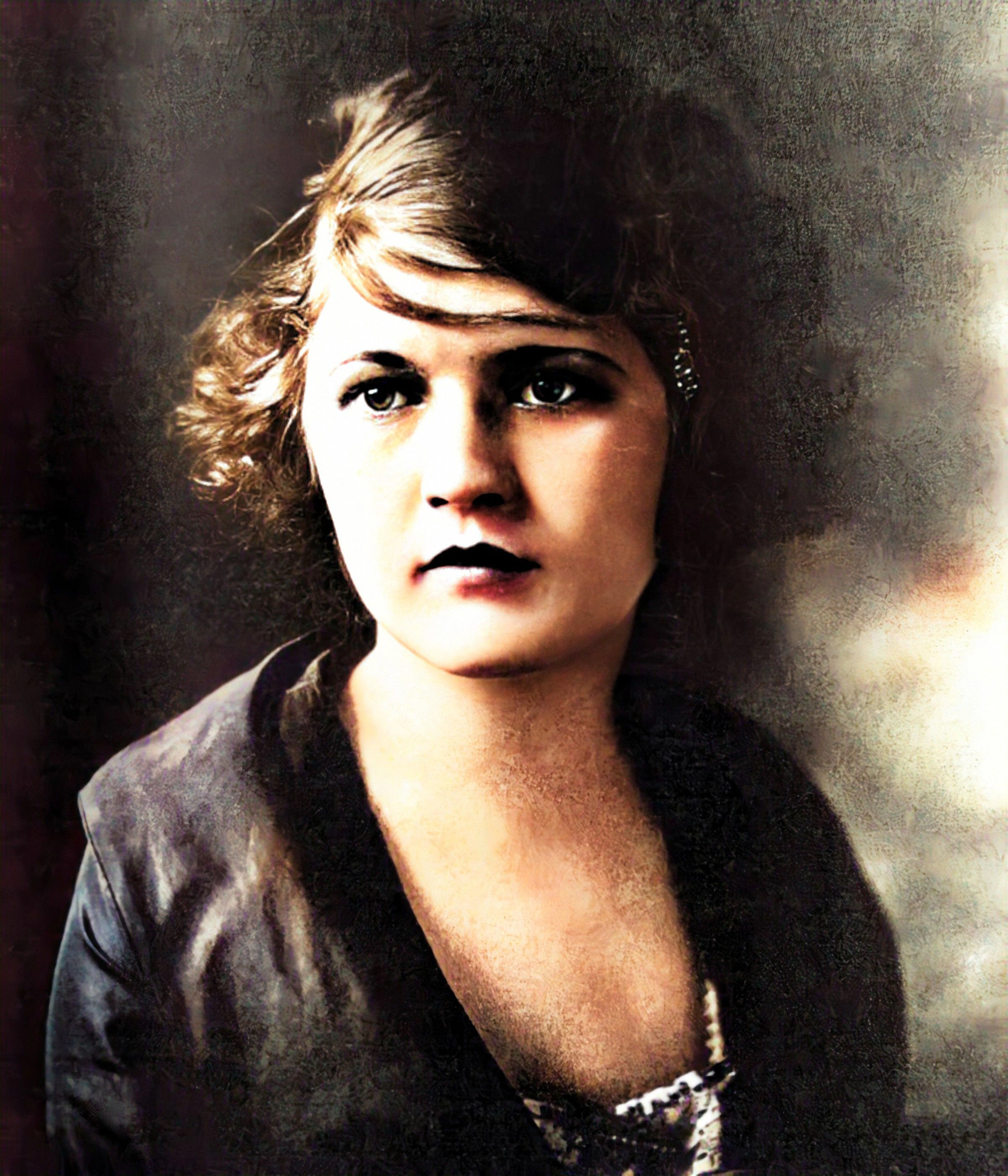
Attr: Studio photographer
| 7 Quotes | |
| Born as | Zelda Sayre |
| Occup. | Writer |
| From | USA |
| Born | July 24, 1900 Montgomery, Alabama, USA |
| Died | March 10, 1948 Highland Hospital, Asheville, North Carolina, USA |
| Cause | Fire in a hospital room |
| Aged | 47 years |
| Cite | |
Citation Formats
APA Style (7th ed.)
Zelda fitzgerald biography, facts and quotes. (2026, February 11). FixQuotes. https://fixquotes.com/authors/zelda-fitzgerald/
Chicago Style
"Zelda Fitzgerald biography, facts and quotes." FixQuotes. February 11, 2026. https://fixquotes.com/authors/zelda-fitzgerald/.
MLA Style (9th ed.)
"Zelda Fitzgerald biography, facts and quotes." FixQuotes, 11 Feb. 2026, https://fixquotes.com/authors/zelda-fitzgerald/. Accessed 6 Mar. 2026.
Early Life and Background
Zelda Sayre was born on July 24, 1900, in Montgomery, Alabama, the youngest daughter in a prominent, rule-bound household headed by Judge Anthony Dickinson Sayre, a stern figure in Alabama law and politics, and Minnie Buckner Sayre, who encouraged performance and polish. Montgomery at the turn of the century was a town of parades, propriety, and racial hierarchy, and Zelda grew up fluent in the codes of Southern respectability even as she tested them - dancing, flirting, and making herself the center of rooms that expected young women to be ornamental but quiet.Her adolescence coincided with the new American tempo: ragtime into jazz, women pushing against Victorian constraints, and a mass culture that offered images of glamour to anyone willing to perform it. Zelda developed an early sense that identity could be composed like a routine - costume, gesture, story - and that attention could be both currency and cage. That early split, between the desire to be seen and the fear of being contained, would later echo through her art and illness.
Education and Formative Influences
She attended Sidney Lanier High School in Montgomery and took classes at Alabama's Margaret Booth School (often described as a brief college experience), but her most decisive education came from the social theater of dances and military-camp parties during World War I. In 1918 she met Lieutenant F. Scott Fitzgerald at a country club; their courtship unfolded in letters and reunions, propelled by his ambition and her appetite for life beyond Montgomery. When his first novel succeeded, she agreed to marry him, and on April 3, 1920, they married in New York, stepping into the national spotlight as a couple who seemed to personify the Jazz Age.Career, Major Works, and Turning Points
Zelda Fitzgerald became both subject and maker of modern American myth. In the early 1920s she published stories and essays in magazines, sometimes under her own name, sometimes amid disputes over authorship with Scott - tensions sharpened by the way his fiction mined their shared scenes. Their only child, Frances "Scottie" Fitzgerald, was born in 1921. The couple lived in New York, then in France during the expatriate years, moving through the same circles as Ernest Hemingway and Gertrude Stein while their marriage strained under alcohol, infidelity, and money pressure. Zelda threw herself into ballet in her late twenties with a near-punishing discipline, then turned to painting and writing as her mental health destabilized. In 1930 she suffered a breakdown and entered psychiatric care in Switzerland, beginning years of diagnoses then termed schizophrenia and repeated hospitalizations in Europe and the United States. In 1932, while at Johns Hopkins Hospital's Phipps Clinic in Baltimore, she wrote her novel Save Me the Waltz, a thinly veiled chronicle of marriage, ambition, and bodily cost. The book's publication intensified conflict with Scott, who was drafting Tender Is the Night and feared overlap. Zelda spent much of the late 1930s and 1940s in and out of institutions, writing, painting, and corresponding, while Scott died in 1940. Zelda died on March 10, 1948, in a fire at Highland Hospital in Asheville, North Carolina.Philosophy, Style, and Themes
Zelda's interior life was defined by speed - the hunger to live faster than the scripts available to her. Her work returns to appetite, performance, and the body as both instrument and battleground, especially in Save Me the Waltz, where artistry is pursued with the same intensity that marriage and motherhood demand surrender. She understood how American modernity sold desire back to itself; her observations cut through the era's shimmer and expose how fantasies are manufactured, absorbed, and then lived at personal cost.Her sentences are glittering and serrated, moving by metaphor the way a dancer moves by muscle memory: impulsive, exacting, sometimes dizzy with self-awareness. She could make loneliness sound like sociology - “Youth doesn't need friends - it only needs crowds”. - and in that insight is her own biography of parties as anesthesia. Love, for her, is not a domestic virtue but a radical priority, a refusal to be reduced to survival: “I don't want to live. I want to love first, and live incidentally”. Yet she was equally haunted by determinism and the feeling that choices are decided before one can name them: “By the time a person has achieved years adequate for choosing a direction, the die is cast and the moment has long since passed which determined the future”. Taken together, these lines map a psyche oscillating between defiance and fatalism, an artist trying to outpace the roles that were already tightening around her.
Legacy and Influence
Zelda Fitzgerald's legacy has shifted from cautionary legend - the "mad" muse of a famous husband - to a contested, increasingly autonomous place in American letters and women's cultural history. Save Me the Waltz is now read not as a footnote to Scott Fitzgerald but as a parallel text: an account of how marriage, celebrity, and gendered authorship can compress a life until creativity becomes both escape and evidence. Her paintings and fragments, her letters, and the archival record of her institutionalization have made her central to debates about mental illness, artistic ownership, and the extraction of women's experience as literary material. In the long afterlife of the Jazz Age, she remains its most intimate witness: not only its glitter, but the price of living as an image.Our collection contains 7 quotes written by Zelda, under the main topics: Witty One-Liners - Wisdom - Love - Romantic - Free Will & Fate.
Other people related to Zelda: F. Scott Fitzgerald (Author)
Zelda Fitzgerald Famous Works
- 1991 Collected Writings (Essay)
- 1960 Bits of Paradise (Short Stories)
- 1933 Scandalabra (Play)
- 1932 Save Me the Waltz (Novel)
Source / external links