
Zhu Rongji Biography Quotes 13 Report mistakes
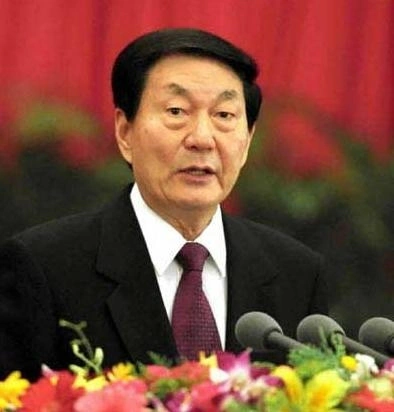
| 13 Quotes | |
| Occup. | Statesman |
| From | China |
| Born | October 1, 1928 |
| Age | 97 years |
| Cite | |
Citation Formats
APA Style (7th ed.)
Zhu rongji biography, facts and quotes. (2026, February 11). FixQuotes. https://fixquotes.com/authors/zhu-rongji/
Chicago Style
"Zhu Rongji biography, facts and quotes." FixQuotes. February 11, 2026. https://fixquotes.com/authors/zhu-rongji/.
MLA Style (9th ed.)
"Zhu Rongji biography, facts and quotes." FixQuotes, 11 Feb. 2026, https://fixquotes.com/authors/zhu-rongji/. Accessed 30 Mar. 2026.
Early Life and Background
Zhu Rongji was born on 1928-10-01 in Changsha, Hunan, into a China still fractured by warlord politics, Japanese invasion, and civil conflict. His early years were marked by scarcity and dislocation, and by the moral gravity of a generation forced to treat national survival as a personal obligation. The social world that formed him was provincial but politically charged: Hunan produced both revolutionary fervor and hardheaded pragmatism, a combination that later colored his public persona as equal parts disciplinarian and modernizer.He came of age as the Communist revolution triumphed in 1949 and the new state set out to rebuild institutions at breakneck speed. In those years, technical competence became a political virtue, and Zhu internalized the idea that administration was not merely policy but national rescue. The same early experience that made many officials risk-averse pushed him toward an opposite temperament: an impatience with improvisation and a belief that only rules, accounting, and enforcement could keep ideology from curdling into waste and graft.
Education and Formative Influences
Zhu studied engineering and economics-inflected management thinking in the early PRC period, receiving rigorous training that valued measurement, systems, and supply chains over rhetoric. The Great Leap Forward and its aftermath, and then the Cultural Revolution, exposed him to the catastrophic costs of political campaigns that ignored constraints; he was criticized and sidelined during political upheavals, experiences that sharpened his suspicion of empty slogans and his respect for institutional checks. When reform-era leaders later demanded a cadre who could read a balance sheet and still speak the language of Party authority, Zhu had both the technical confidence and the hard-earned emotional armor.Career, Major Works, and Turning Points
Zhu rose through industrial and municipal leadership, most notably as mayor of Shanghai in the late 1980s and early 1990s, where he became known for forceful management and for pushing market mechanisms within Party control. Elevated to vice premier and then premier (1998-2003), he presided over a defining phase of reform: restructuring state-owned enterprises, strengthening tax collection through a modern fiscal system, cleaning up the financial sector, and consolidating the central bank's authority. His tenure navigated the Asian financial crisis with capital controls and tight macro policy, while positioning China for WTO accession in 2001 - a turning point that deepened export-led growth and bound domestic reform to global rules. The costs were real: layoffs, regional inequality, and social strain, yet the state also gained new capacity to regulate, tax, and stabilize an economy that was moving faster than its institutions.Philosophy, Style, and Themes
Zhu's governing philosophy fused engineer-like problem solving with a moralized view of authority. He treated reform as a hazardous construction site: necessary, dangerous, and requiring discipline. That inner posture is captured in his declaration, “Even if a minefield or the abyss should lie before me, I will march straight ahead without looking back”. It reads not as bravado but as self-command - a way of tamping down fear and hesitation in a system that punished failure and rewarded political caution. His own speeches often acknowledged reform's unpredictability, not to excuse setbacks but to insist on adaptive management: “In the course of the reform, some new circumstances that we had not anticipated have appeared”. Psychologically, this is the voice of a man who believed that reality would not bend to slogans, and that leaders had to learn in public without losing control.His style was famously sharp, even theatrical: a premier who used anger as a managerial instrument and as a signal to the bureaucracy that evasion would be costly. “I have never intimidated the masses... I only intimidate corrupt officials”. The line frames his temper as ethical theater - not simply personal severity, but a claim to protective guardianship over ordinary people against predation inside the state. Underneath was an anxious awareness of legitimacy: corruption, financial fragility, and unemployed workers could unravel the Party's promise of order. Zhu pursued credibility through audits, enforcement, and international commitments, betting that transparent rules - however painful - could create a sturdier social contract than charismatic mobilization.
Legacy and Influence
Zhu Rongji left office with a reputation as the reform-era enforcer: the premier who centralized fiscal power, pushed painful SOE restructuring, strengthened banking discipline, and shepherded China into the WTO, thereby accelerating integration with global markets and supply chains. His legacy is debated because his successes - macro stability, faster growth, a more capable central state - were entangled with dislocations that later leaders had to manage: inequality, indebted localities, and the social costs of layoffs. Yet his influence endures in the template he set for technocratic governance in China: crisis management grounded in numbers, institutional redesign, and a personal ethic of responsibility that treated statecraft as both engineering and moral combat.Our collection contains 13 quotes written by Zhu, under the main topics: Truth - Justice - Never Give Up - Leadership - Freedom.
Other people related to Zhu: Wu Yi (Politician)
Source / external links