
Zhuang Zi Biography Quotes 7 Report mistakes
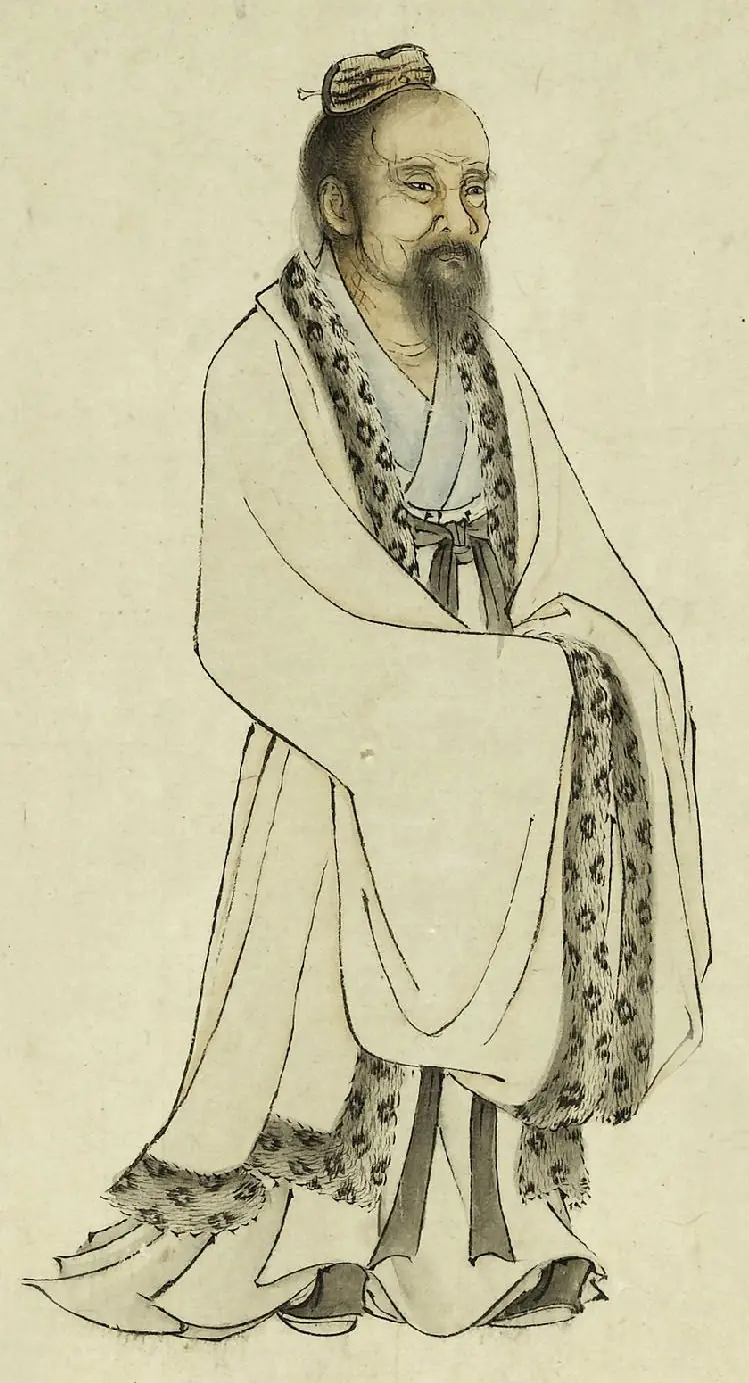
Attr: Attr
| 7 Quotes | |
| Born as | Zhuang Zhou |
| Occup. | Philosopher |
| From | China |
| Born | 369 BC China |
| Died | 286 BC China |
| Cause | Natural Causes |
Zhuang Zi, born as Zhuang Zhou, is placed by traditional sources in the Warring States period, with approximate dates around 369 to 286 BCE. He is widely regarded as a major figure of classical Chinese thought, although much about his life remains uncertain. His voice is associated with what later came to be called Daoism, alongside the older figure of Laozi, yet his surviving writings and the stories clustered around his name present a distinctive, playful, and probing sensibility.
Origins and early life
According to Sima Qian's Records of the Grand Historian, Zhuang Zhou came from Meng in the state of Song, in what is now eastern China. The same source reports that he once served as a minor official in a lacquer garden, a modest post that fits the image of a person wary of entanglement in public office. The biography offers few verified details beyond this, and subsequent tradition filled the gaps with anecdotes that illustrate his values rather than provide a conventional chronicle.
Public life and refusal of office
One of the best-known stories attributes to the king of Chu an attempt to recruit Zhuang Zhou as a high minister. Zhuang Zhou is said to have declined with the parable of the sacred tortoise: would the tortoise prefer to be honored in death on an altar, or alive dragging its tail in the mud? The tale, preserved and retold in many sources, captures his aversion to prestige that compromises freedom and his conviction that uncomplicated life may be better than eminent constraint. Other narratives place him in conversation with rulers, but these scenes serve largely as teaching devices rather than firm historical testimony.
People around him
Among figures closest to him in time and debate was Hui Shi (Huizi), a leading thinker of the School of Names. The Zhuangzi repeatedly stages their exchanges, including the famous walk on a bridge over the Hao River where they dispute how one can know the joy of fish. These passages portray intellectual friendship shot through with rivalry and mutual needling, and they illuminate Zhuang Zhou's interest in the limits of argument. He also engages, in praise and critique, with the ideas of Confucius (Kongzi) and the Mohists. Confucius and his disciple Yan Hui appear as characters in dialogues that are literary constructions rather than historical meetings, yet their presence shows the range of concerns Zhuang Zhou addressed. Laozi is often placed alongside him as a foundational Daoist figure; while there is no reliable evidence they met, the pairing shaped later understanding of his thought.
Writings and attribution
The text known by his name, Zhuangzi, survives in a received edition of 33 chapters: the Inner Chapters (1, 7), often treated as the most authentic core; the Outer Chapters (8, 22); and the Miscellaneous Chapters (23, 33). The compilation bears traces of multiple hands across generations; many scholars attribute only portions of the Inner Chapters directly to Zhuang Zhou. In late antiquity, the commentator Guo Xiang prepared the influential redaction and commentary through which the work was transmitted. The result is a layered book in which a historical voice resonates through later elaborations, with parables, fables, dialogues, and flights of fantasy interwoven.
Themes and methods
Zhuang Zhou's writing explores the flux of transformation (hua), the relativity of distinctions, and the difficulty of fixing meanings with rigid names. He shows skepticism toward dogmatic claims, whether they arise from ritualist certainty or utilitarian calculation. Rather than prescribe a program, he evokes attunement to the spontaneous (ziran) and effortless action (often associated with wuwei), suggesting that skill and vitality emerge when one ceases to fight the grain of things. He is not indifferent to ethics; rather, he questions whether moral rectitude imposed from without can match a responsiveness that grows from deep clarity.
Stories and images
Several vignettes have become emblematic. The dream of the butterfly asks whether Zhuang Zhou dreamed he was a butterfly or a butterfly now dreams it is Zhuang Zhou, suspending identity and waking certainty. The dialogue over the joy of the fish returns to how we know other minds, while quietly suggesting that shared situations can yield understanding. Stories of skilled workers, Cook Ding carving an ox, Wheelwright Bian shaping a wheel, the woodcarver whose art ripens after fasting and stillness, illustrate a knowledge that surpasses rule and calculation. The giant bird Peng and the useless tree mock narrow standards of utility, inviting broader measures of flourishing.
Engagement with other schools
He read the debates of his time against the backdrop of the Hundred Schools. Against Mohist activism he raised doubts about imposing uniform benefit; against Confucian insistence on ritual and rectification of names he probed the instability of names and the costs of compulsion. With Hui Shi he confronted logical conundrums and paradox, but he turned them toward freeing the mind from fixation. The dialogues featuring Confucius and Yan Hui are especially telling: they recast Confucius as a teacher of fasting the mind (xinzhai) and sitting in forgetfulness (zuowang), techniques of emptying that lead beyond the very doctrines associated with his historical school.
Style and voice
Zhuang Zhou's pages oscillate between deadpan humor, satire, and serene vision. He offers critiques without rancor and counsel without coercion, preferring indirectness: jokes, masks, metamorphoses. He allows multiple voices to collide, fostering a theater of perspectives in which authority is never settled. This stylistic pluralism is not mere ornament; it performs his view that fixed stances cannot encompass the changeable world.
Historical uncertainty and death
The dates around 369 to 286 BCE serve as a conventional frame for his life, but concrete incidents are scarce. Beyond the post in the lacquer garden and the anecdote about declining Chu's summons, little is certain. He likely spent his life in the eastern states, moving among intellectual circles that included figures like Hui Shi and readers concerned with Mohist and Confucian claims. The manner and place of his death are unknown; what remains is the body of tales and reflections that bear his name.
Legacy
Zhuang Zhou's influence has been vast. His work shaped later Daoist thought and furnished imagery and attitudes that nourished literature, painting, and Chan (Zen) Buddhism. Generations of commentators, from early transmitters to thinkers like Guo Xiang, made him newly legible to their times. Modern readers find in him not a system builder but a companion in questioning: a thinker who treats uncertainty as a path to freedom, who finds room for play within seriousness, and who, amid the contest of schools, recommends a wandering that keeps faith with life's changing flow.
Our collection contains 7 quotes who is written by Zhuang, under the main topics: Wisdom - Chinese Proverbs - Teaching.
Zhuang Zi Famous Works
- -369 Zhuangzi (Book)
Source / external links