
Zola Budd Biography Quotes 8 Report mistakes
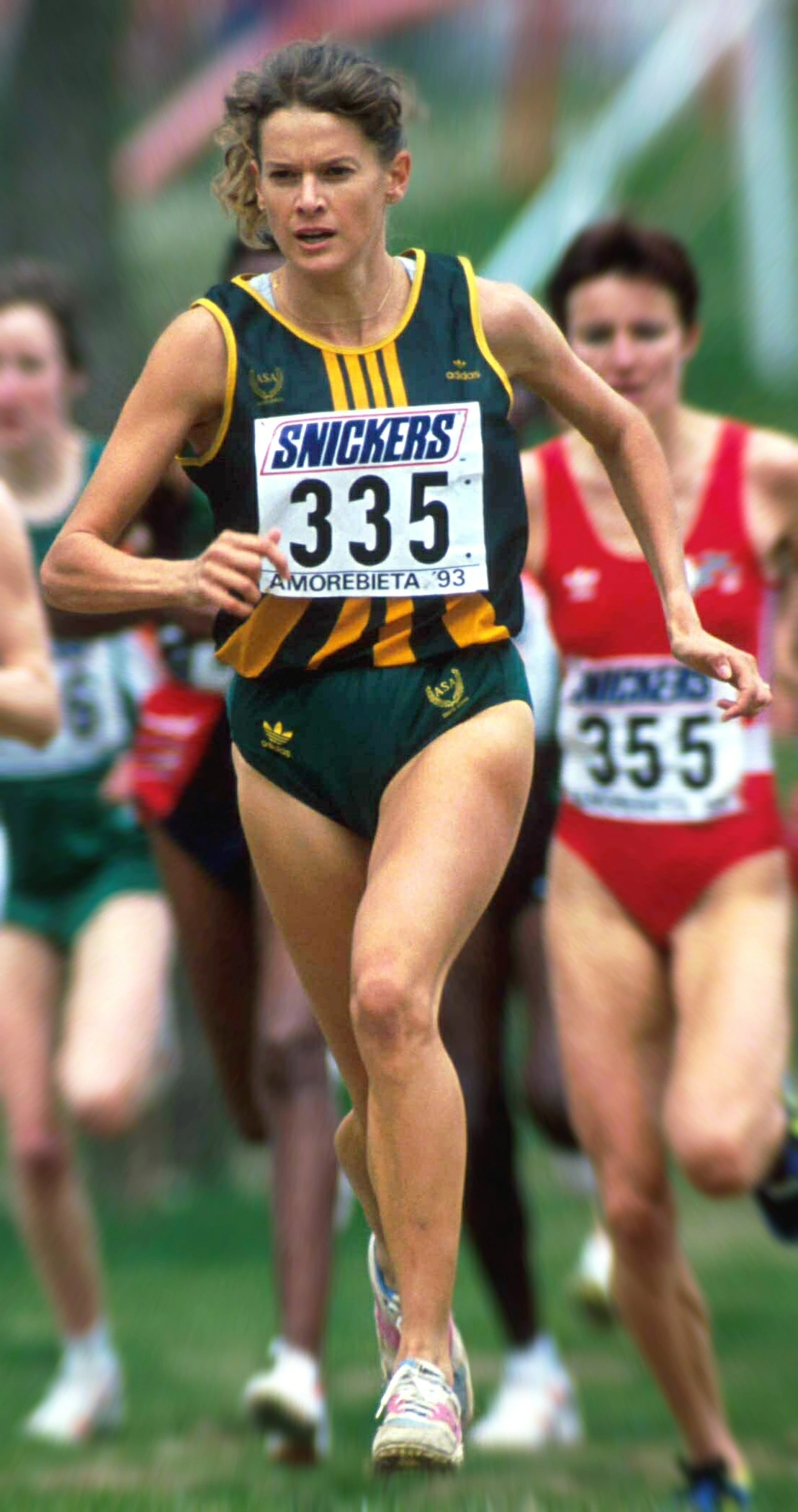
| 8 Quotes | |
| Born as | Zola Pieterse |
| Occup. | Athlete |
| From | South Africa |
| Born | May 26, 1966 Bloemfontein, Orange Free State, South Africa |
| Age | 59 years |
| Cite | |
Citation Formats
APA Style (7th ed.)
Zola budd biography, facts and quotes. (2026, February 11). FixQuotes. https://fixquotes.com/authors/zola-budd/
Chicago Style
"Zola Budd biography, facts and quotes." FixQuotes. February 11, 2026. https://fixquotes.com/authors/zola-budd/.
MLA Style (9th ed.)
"Zola Budd biography, facts and quotes." FixQuotes, 11 Feb. 2026, https://fixquotes.com/authors/zola-budd/. Accessed 27 Mar. 2026.
Early Life and Background
Zola Budd was born Zola Pieterse on May 26, 1966, in Bloemfontein, in South Africa's Orange Free State, and grew up in the nearby farming town of Bethlehem. Her childhood was shaped by rural routines and wide open space - a landscape that trained the body almost without noticing. The ordinariness of physical endurance in farm life, coupled with the isolation of apartheid-era South Africa, formed a temperament that was both toughened and inward: she learned to solve problems privately, to keep going, and to mistrust spectacle.From an early age she ran for pleasure and practicality, often barefoot, a habit that would later become a global emblem. In the early 1980s, as television turned elite sport into international theater, Budd emerged from a place that had limited sporting contact with the outside world due to boycotts and sanctions. That collision - a quiet teenage runner and a loud geopolitical stage - would define her public life: the more her feet and times spoke, the more others demanded political speech.
Education and Formative Influences
Budd was not formed in a famous academy or metropolitan club system; her foundation was school sport, local competition, and the self-directed discipline of a runner who discovered that her unusual biomechanics and tolerance for pain could be honed into results. Influenced by family support and coaches who recognized her raw efficiency, she developed as a high-mileage athlete at a time when women's distance running was still fighting for full legitimacy, and when South African athletes were often forced to seek unconventional routes to the world stage.Career, Major Works, and Turning Points
Budd became a prodigy over 1500 meters and cross country, setting world records as a teenager (notably the women's 5000 meters in 1984, in the era before the event entered the Olympic program). The major turning point came in 1984 when, amid apartheid-era isolation, she obtained British citizenship on an accelerated track so she could compete internationally, a decision that made her both famous and polarizing. At the Los Angeles Olympics she reached the 3000-meter final, where a collision with American star Mary Decker became one of the most replayed moments in Olympic history - Budd finishing seventh as Decker fell, and the race turning into a referendum on politics, nationality, and blame. She later returned to represent South Africa after the country's sporting reintegration, competed at the 1992 Barcelona Olympics in the 3000 meters, and remained a formidable cross-country runner, including success at the IAAF World Cross Country Championships. Her career arc is inseparable from the era's moral pressure: she was always running in two races at once, one on the track and one in public opinion.Philosophy, Style, and Themes
Budd's running style was intimate and sensory: economical stride, high cadence, and a willingness to embrace discomfort as information rather than threat. Barefoot running was not a gimmick but a lived preference tied to upbringing and perception. “Coming from a farming background, I saw nothing out of the ordinary in running barefoot, although it seemed to startle the rest of the athletics world”. That sentence reveals her core psychology: she experienced her own choices as plain and functional, while the world treated them as symbols. The dissonance between her private normal and the public myth became a persistent theme - she often sounded bewildered by the narratives attached to her body.Her relationship to politics was similarly private, and the insistence that she become a spokesperson hardened her instinct to retreat into the language of performance and personal boundaries. “I have strong views about South African politics and I still don't feel I need to make public statements”. The line is less evasive than protective: it signals a person who distinguishes moral conviction from public performance, and who resists being drafted into roles she did not choose. With time, her retrospective tone turned toward minimization as a coping strategy, a way to place trauma and controversy back into proportion. “Looking back... it's hard to understand what all the fuss was about as things changed in just a few years. When you look at all the things that have happened in the world, it seems very small”. In that framing, the athlete is reclaiming narrative control - not denying intensity, but refusing to let it remain the organizing principle of her identity.
Legacy and Influence
Zola Budd endures as both a sporting innovator and a case study in how athletes can be swallowed by the politics of their time. She helped push women's distance running into wider visibility, influenced later conversations about minimalist footwear and biomechanics, and remains central to any history of the 1984 Olympics as a reminder that a single moment can eclipse an entire career. Her deeper legacy is more human: a portrait of extraordinary talent placed in an era that demanded declarations as much as results, and a life spent negotiating the boundary between what she could control - pace, pain, focus - and what she could not: the meanings others insisted on attaching to her run.Our collection contains 8 quotes written by Zola, under the main topics: Freedom - Sports - Training & Practice - Human Rights - Letting Go.
Other people related to Zola: Mary Decker (Athlete)
Source / external links