
Zora Neale Hurston Biography Quotes 38 Report mistakes
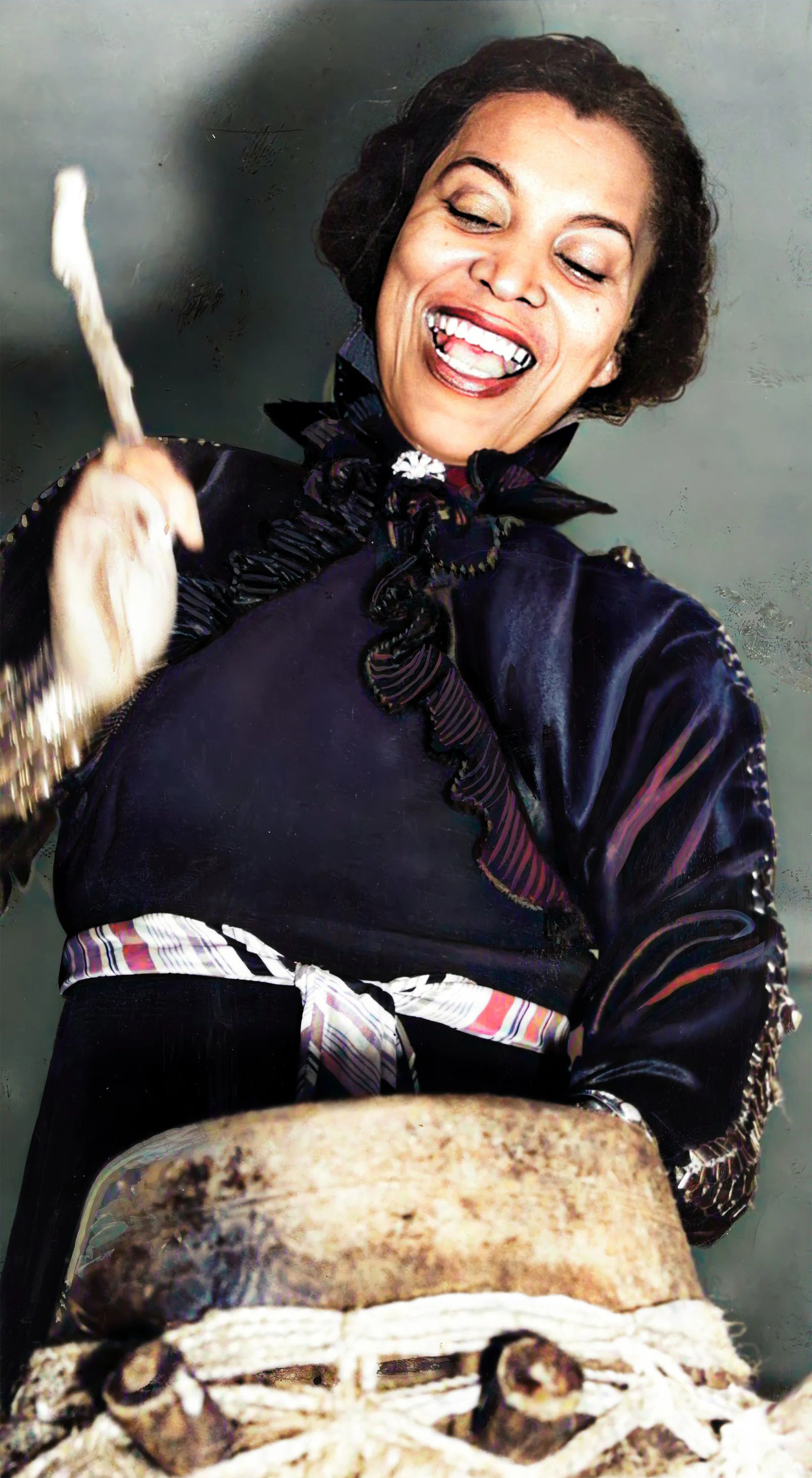
| 38 Quotes | |
| Occup. | Dramatist |
| From | USA |
| Born | January 7, 1891 |
| Died | January 28, 1960 |
| Aged | 69 years |
| Cite | |
Citation Formats
APA Style (7th ed.)
Zora neale hurston biography, facts and quotes. (2026, February 2). FixQuotes. https://fixquotes.com/authors/zora-neale-hurston/
Chicago Style
"Zora Neale Hurston biography, facts and quotes." FixQuotes. February 2, 2026. https://fixquotes.com/authors/zora-neale-hurston/.
MLA Style (9th ed.)
"Zora Neale Hurston biography, facts and quotes." FixQuotes, 2 Feb. 2026, https://fixquotes.com/authors/zora-neale-hurston/. Accessed 25 Mar. 2026.
Early Life and Background
Zora Neale Hurston was born on January 7, 1891, in Notasulga, Alabama, and grew up chiefly in Eatonville, Florida, one of the first incorporated all-Black towns in the United States. The child of Lucy Ann Potts and John Hurston, a Baptist preacher who also served as mayor, she absorbed a civic atmosphere in which Black authority was ordinary, not exceptional. That early experience would become the bedrock of her writing: she did not have to invent Black self-government or Black talk as aspiration - she had lived it as daily weather.Her adolescence was disrupted by her mothers death in 1904 and the instability that followed, including periods of work and itinerancy before she forced a second start by shaving years off her age to reenter school. The losses and improvisations of those years sharpened her sense of performance as survival: the ability to tell a story, to stage oneself, to make language do practical labor. Even when later fame arrived, it often arrived braided with precarity, and her life retained the tension between public brilliance and private scrambling.
Education and Formative Influences
After preparatory study at Morgan Academy in Baltimore, Hurston entered Howard University, where she began publishing fiction and helped found a campus literary circle that fed the emerging New Negro movement; she then won a scholarship to Barnard College, becoming its first Black graduate in 1928. At Barnard she studied anthropology with Franz Boas and worked with Ruth Benedict and Gladys Reichard, training that gave her a method for listening - rigorous, comparative, and skeptical of racial pseudoscience - while her friendships and rivalries within the Harlem Renaissance placed her in a crucible of debate about art, uplift, and the uses of folk culture.Career, Major Works, and Turning Points
In the late 1920s and 1930s Hurston fused fieldwork with literature, collecting Black folklore and spiritual practices across Florida, Louisiana, and the Caribbean, including Haiti and Jamaica, while writing plays, stories, and essays that treated vernacular speech as a high instrument. She published Jonah's Gourd Vine (1934), the landmark folklore collection Mules and Men (1935), and Their Eyes Were Watching God (1937), followed by Moses, Man of the Mountain (1939), the autobiography Dust Tracks on a Road (1942), and later Seraph on the Suwanee (1948). Her career pivoted repeatedly: patronage from Charlotte Osgood Mason expanded her research but constrained her autonomy; New Deal-era opportunities and Broadway ambitions never stabilized into lasting institutional support; and controversies - including sensational accusations in 1948 that were ultimately dismissed - hardened the drift into professional isolation. By the 1950s she was working sporadically, living in Florida, and died on January 28, 1960, in Fort Pierce, buried in an unmarked grave until her rediscovery.Philosophy, Style, and Themes
Hurston wrote as a dramatist even when composing novels: scenes hinge on talk, timing, and the social choreography of porches, jook joints, churches, and kitchens. Her anthropological eye never cooled her delight; it disciplined it. She insisted that folk expression was not raw material to be refined by elites but a complete aesthetic system, carrying history, ethics, humor, and metaphysics in cadence and gesture. “Research is formalized curiosity. It is poking and prying with a purpose”. That line is not just a credo of method - it exposes her inner drive to turn longing into procedure, to convert the ache of displacement into an organized way of returning, notebook in hand, to the places where language still knew how to sing.Her themes revolve around freedom as a lived craft rather than a slogan: the making of a self under pressure, the cost of desire, and the unromantic economics of love and labor. The lyric ferocity of her protagonists arises from a psyche that had tasted both deprivation and ecstasy without surrendering to either: “I have been in Sorrow's kitchen and licked out all the pots. Then I have stood on the peaky mountain wrapped in rainbows, with a harp and sword in my hands”. That doubleness animates Their Eyes Were Watching God, where Janie Crawford seeks a voice capacious enough to hold laughter, violence, and weather. Hurston also treated belief as a human artifact - flexible, local, and revealing - a view shaped by her studies of hoodoo and her impatience with pieties that masked power. “Gods always behave like the people who make them”. It is a line that reads like anthropology but functions like drama: it strips the mask off authority and forces characters to answer for the gods they invoke.
Legacy and Influence
After her death, Hurston was rescued from obscurity by the Black Arts Movement and by writers and scholars, notably Alice Walker, who helped restore her place in the canon and marked her grave. Today she stands as a foundational voice in American letters and theater-adjacent prose: a writer who made Black vernacular a literary engine, a fieldworker who treated everyday speech as philosophy, and a modernist who refused to mistake tragedy for profundity. Her influence runs through contemporary fiction, ethnography, performance studies, and debates over cultural ownership, because she modeled a rare synthesis - art that listens closely enough to preserve community texture, yet bold enough to turn that texture into enduring form.Our collection contains 38 quotes written by Zora, under the main topics: Witty One-Liners - Motivational - Ethics & Morality - Wisdom - Justice.
Other people related to Zora: Henry Louis Gates (Critic), Franz Boas (Scientist), Carl Van Vechten (Writer), Virginia Gildersleeve (Celebrity)
Source / external links