Introduction"The Glass Menagerie", a 1966 film adjustment of Tennessee Williams' iconic play, checks out the complex characteristics of a family bound by illusions, memories, and unfinished dreams. Directed by Michael Elliott, this production captures the poignant and introspective nature of Williams' semi-autobiographical story. The movie, similar to the original play, is set within the structure of memory and mirrors the obstacles dealt with by the American family in the 1930s.
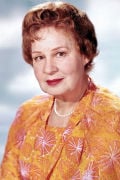
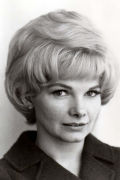
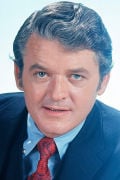
Plot OverviewThe story unfolds as Tom Wingfield, played by Hal Holbrook, reflects on his previous life with his household in a cramped St. Louis house during the Great Depression. The story is translucented his eyes, blurring the lines in between truth and memory. Tom lives with his self-important mom, Amanda Wingfield, represented by Shirley Booth, and his delicate sister, Laura Wingfield, played by Barbara Loden. Amanda, a faded Southern belle, clings to memories of her genteel past and has high wish for her children's futures. She is insistent that Laura needs to find an appropriate partner to escape their scenarios.
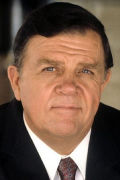
As Amanda's focus narrows in on protecting a suitor for Laura, Tom, a poet at heart trapped in an ordinary storage facility job, becomes progressively uneasy. To calm his mother, Tom brings home a colleague from work, Jim O'Connor, played by Pat Hingle, as a potential "gentleman caller" for Laura. The see, however, results in an evening of discovery and heartbreak. Laura, who is extremely shy and has a slight handicap, is temporarily drawn out of her shell by Jim's generosity. The encounter rekindles a long-lost sense of self-confidence in Laura till she discovers that Jim is already engaged to another female. This discovery shatters Laura's impressions, leaving the household in a state of more disarray.
Styles and SymbolismThe movie, like its phase counterpart, is abundant with themes of escape, memory, and the clash between reality and impression. The title, "The Glass Menagerie", signifies Laura's fragility and her inner world. The glass animals in Laura's collection resemble her delicate sense of self and her retreat from the cruelty of truth. Tom's yearning for flexibility and adventure contrasts sharply with his commitments to his family, emphasizing the repeating style of escape. Amanda's consistent reminisces about her previous suitors function as a tip of lost dreams and rejection of today reality.
Character AnalysisThe characters in "The Glass Menagerie" are depicted with depth and nuance by the cast. Shirley Booth's analysis of Amanda Wingfield is especially notable for its intricacy; she balances Amanda's domineering nature with an underlying vulnerability. Hal Holbrook embodies Tom's internal dispute, torn between familial responsibility and personal aspiration, while Barbara Loden sensitively communicates Laura's timidity and eventual heartbreak. Pat Hingle's portrayal of Jim O'Connor offers a look of normalcy and kindness that interrupts the Wingfields' stagnant lives, albeit briefly.
ConclusionIn general, the 1966 movie adaptation of "The Glass Menagerie" remains devoted to Tennessee Williams' poignant expedition of human fragility and the struggle between personal aspirations and familial responsibilities. Anchored by strong efficiencies, the movie welcomes audiences to assess styles that are as relevant today as when they first emerged, making it an ageless classic that captures the essence of Williams' significant intentions.
Top Cast