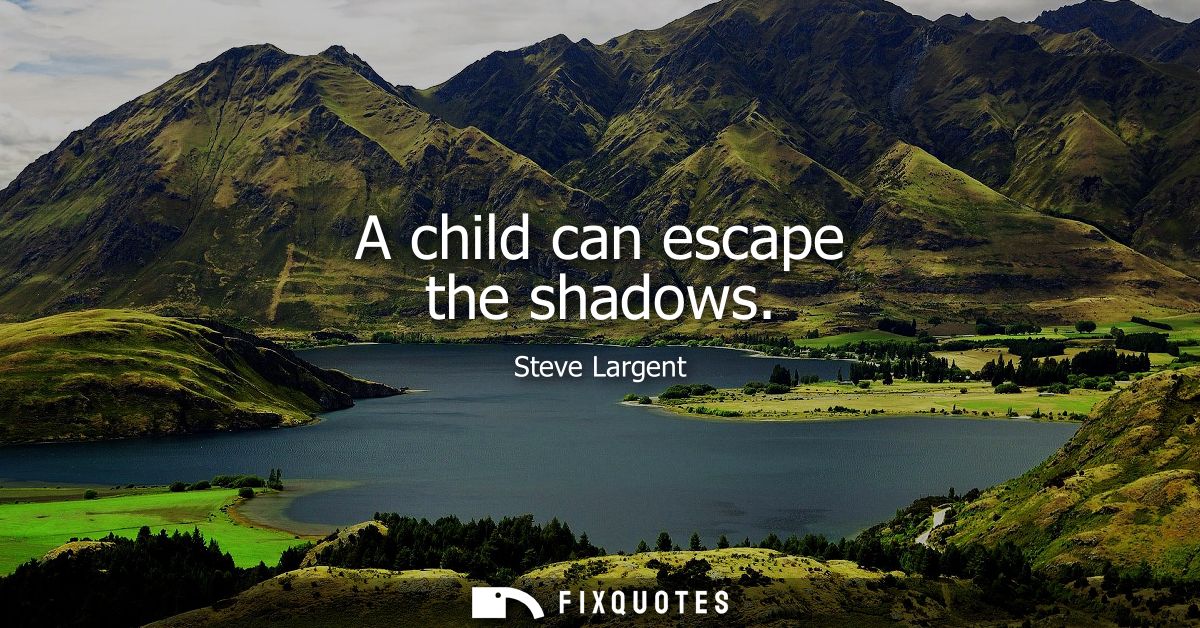
"A child can escape the shadows"
About this Quote
“A child can escape the shadows” lands like a halftime speech distilled to six words: spare, optimistic, and pointedly moral. Coming from Steve Largent - a Hall of Fame NFL receiver who later moved into politics - it reads less like poetry for poetry’s sake and more like a public-facing promise. The sentence is built around “can,” not “will,” which matters. It’s faith with an asterisk: possibility exists, but it isn’t guaranteed. That’s the athlete’s worldview sneaking in through grammar - outcomes are earned, not gifted.
The phrase “the shadows” does a lot of work precisely because it refuses to name what’s hiding there. Poverty, abuse, neglect, addiction, family instability, community violence - the line leaves room for every listener to plug in the hardship they recognize. That vagueness is strategic. It invites broad identification and, in a political context, bipartisan nods without committing to a specific policy diagnosis. “Escape” also frames the problem as something external, a place you’re stuck in, not a flaw you are. That’s compassionate language, but it also subtly shifts the focus toward individual ascent: the child as protagonist, hardship as atmosphere.
The most telling choice is “child,” not “people,” not “we.” It’s an appeal to protectiveness, the easiest moral lever in American public life. Largent’s intent feels clear: argue for hope and agency while keeping the message clean enough to fit on a podium, a campaign mailer, or a locker-room wall. The subtext is accountability wrapped in uplift: darkness is real, but it’s not destiny.
The phrase “the shadows” does a lot of work precisely because it refuses to name what’s hiding there. Poverty, abuse, neglect, addiction, family instability, community violence - the line leaves room for every listener to plug in the hardship they recognize. That vagueness is strategic. It invites broad identification and, in a political context, bipartisan nods without committing to a specific policy diagnosis. “Escape” also frames the problem as something external, a place you’re stuck in, not a flaw you are. That’s compassionate language, but it also subtly shifts the focus toward individual ascent: the child as protagonist, hardship as atmosphere.
The most telling choice is “child,” not “people,” not “we.” It’s an appeal to protectiveness, the easiest moral lever in American public life. Largent’s intent feels clear: argue for hope and agency while keeping the message clean enough to fit on a podium, a campaign mailer, or a locker-room wall. The subtext is accountability wrapped in uplift: darkness is real, but it’s not destiny.
Quote Details
| Topic | Hope |
|---|
More Quotes by Steve
Add to List