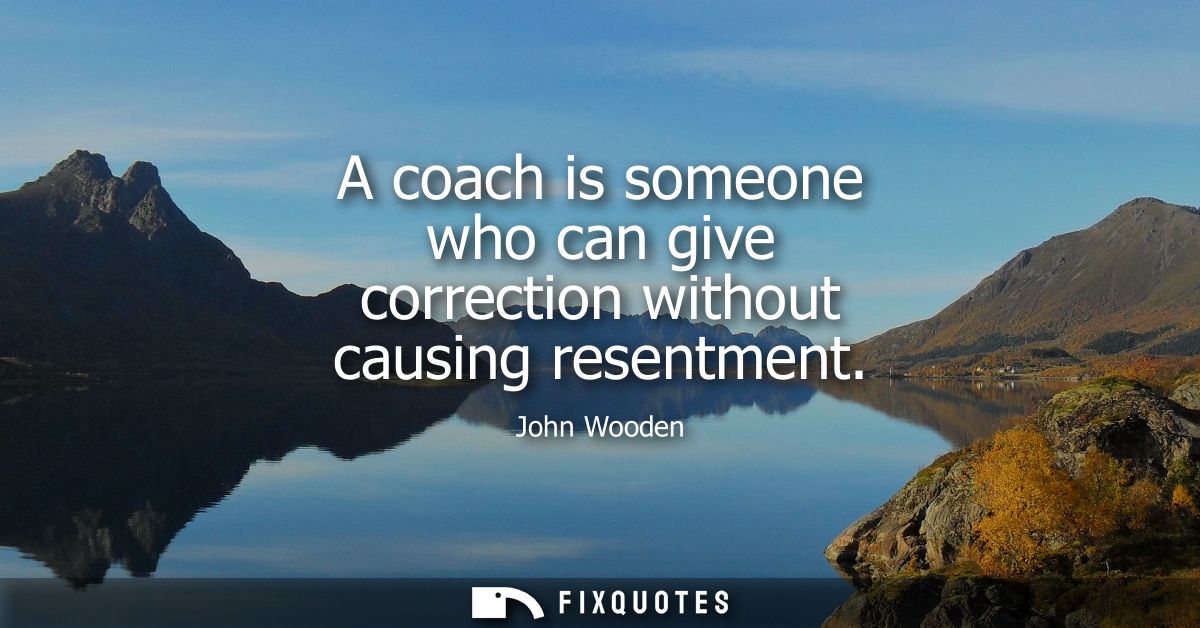
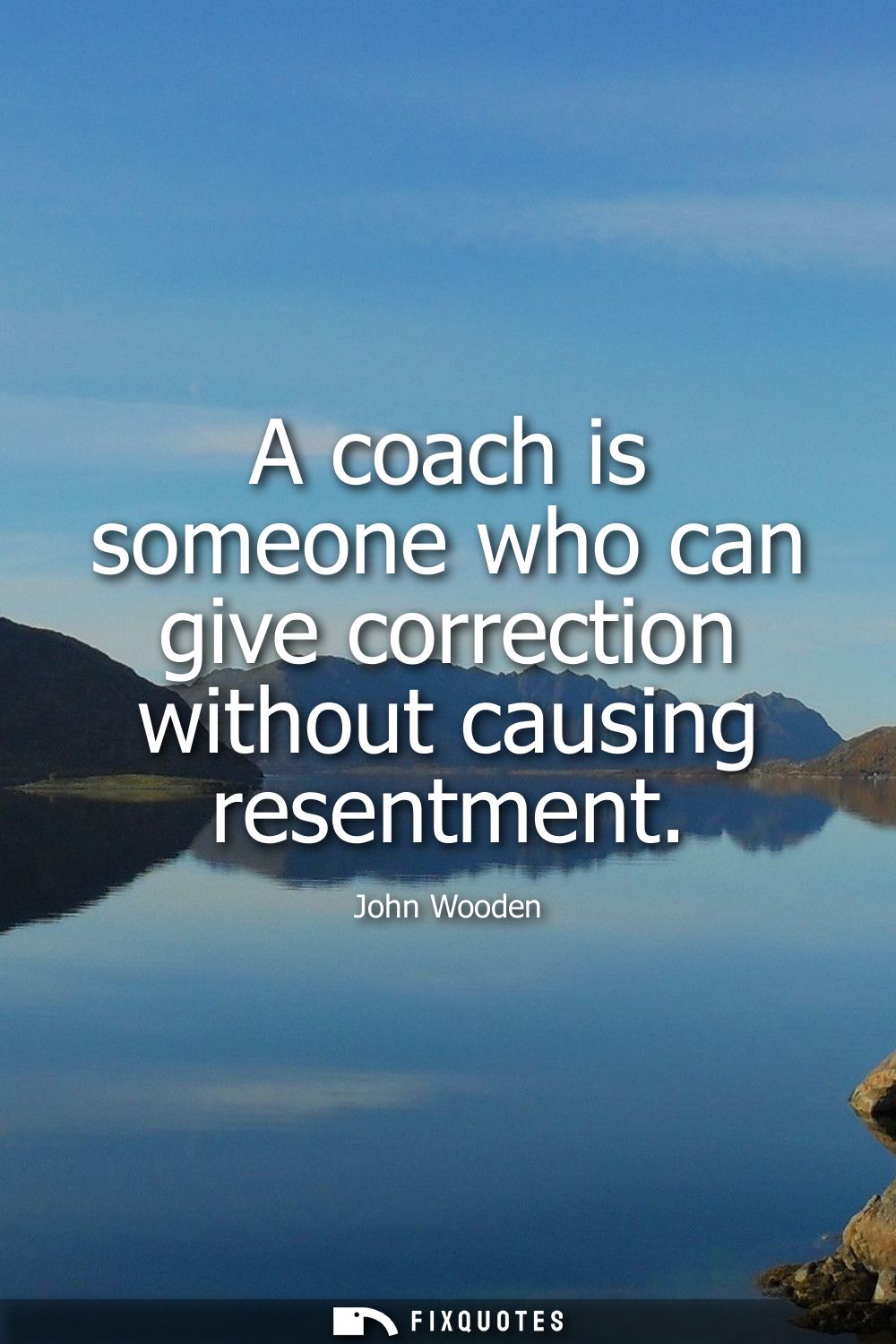
"A coach is someone who can give correction without causing resentment"
About this Quote
Correction is easy; correction that lands is a craft. John Wooden’s line is deceptively gentle, but it’s really a standard for power used responsibly. Coaches have authority baked in: they control minutes, roles, praise, and often a player’s sense of future. In that setup, “correction” can feel like judgment, or worse, humiliation. Wooden’s intent is to separate the act of improving someone from the ego-trip of being right.
The subtext is relational. If resentment flares, it’s not proof the athlete is “soft”; it’s a signal the coach missed the human. Wooden is arguing that effective feedback has to preserve dignity. You’re not just adjusting a jump shot or a defensive rotation, you’re managing identity: the player’s belief that they are capable, valued, still in the circle. Correction that doesn’t trigger resentment usually comes wrapped in clarity, consistency, and trust built before the critique arrives. It also implies timing and tone: private over public, specific over sweeping, behavior over character.
Context matters: Wooden coached in an era that romanticized hard-nosed discipline, when “toughness” often meant public shaming. His success at UCLA wasn’t just tactical dominance; it was a culture where accountability didn’t require cruelty. The quote doubles as a quiet rebuke to the stereotype of the authoritarian coach. Real leadership, he suggests, isn’t volume or intimidation. It’s getting someone to hear the hard thing and still want to run it back tomorrow.
The subtext is relational. If resentment flares, it’s not proof the athlete is “soft”; it’s a signal the coach missed the human. Wooden is arguing that effective feedback has to preserve dignity. You’re not just adjusting a jump shot or a defensive rotation, you’re managing identity: the player’s belief that they are capable, valued, still in the circle. Correction that doesn’t trigger resentment usually comes wrapped in clarity, consistency, and trust built before the critique arrives. It also implies timing and tone: private over public, specific over sweeping, behavior over character.
Context matters: Wooden coached in an era that romanticized hard-nosed discipline, when “toughness” often meant public shaming. His success at UCLA wasn’t just tactical dominance; it was a culture where accountability didn’t require cruelty. The quote doubles as a quiet rebuke to the stereotype of the authoritarian coach. Real leadership, he suggests, isn’t volume or intimidation. It’s getting someone to hear the hard thing and still want to run it back tomorrow.
Quote Details
| Topic | Coaching |
|---|---|
| Source | Help us find the source |
| Cite |
Citation Formats
APA Style (7th ed.)
Wooden, John. (2026, January 18). A coach is someone who can give correction without causing resentment. FixQuotes. https://fixquotes.com/quotes/a-coach-is-someone-who-can-give-correction-22066/
Chicago Style
Wooden, John. "A coach is someone who can give correction without causing resentment." FixQuotes. January 18, 2026. https://fixquotes.com/quotes/a-coach-is-someone-who-can-give-correction-22066/.
MLA Style (9th ed.)
"A coach is someone who can give correction without causing resentment." FixQuotes, 18 Jan. 2026, https://fixquotes.com/quotes/a-coach-is-someone-who-can-give-correction-22066/. Accessed 12 Feb. 2026.
More Quotes by John
Add to List