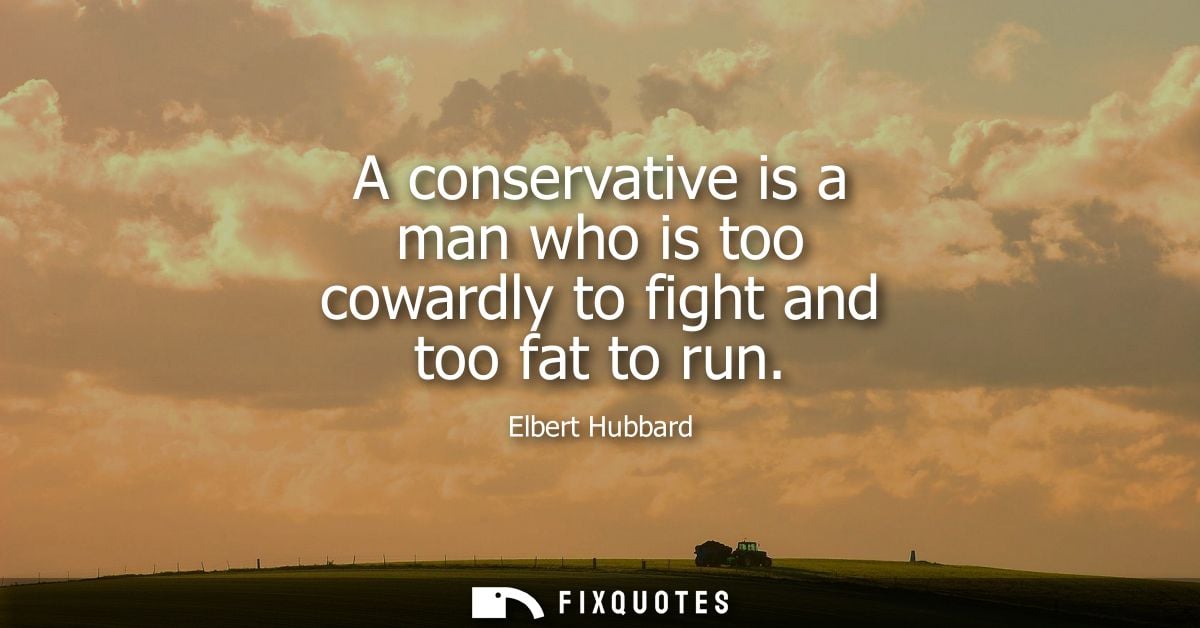
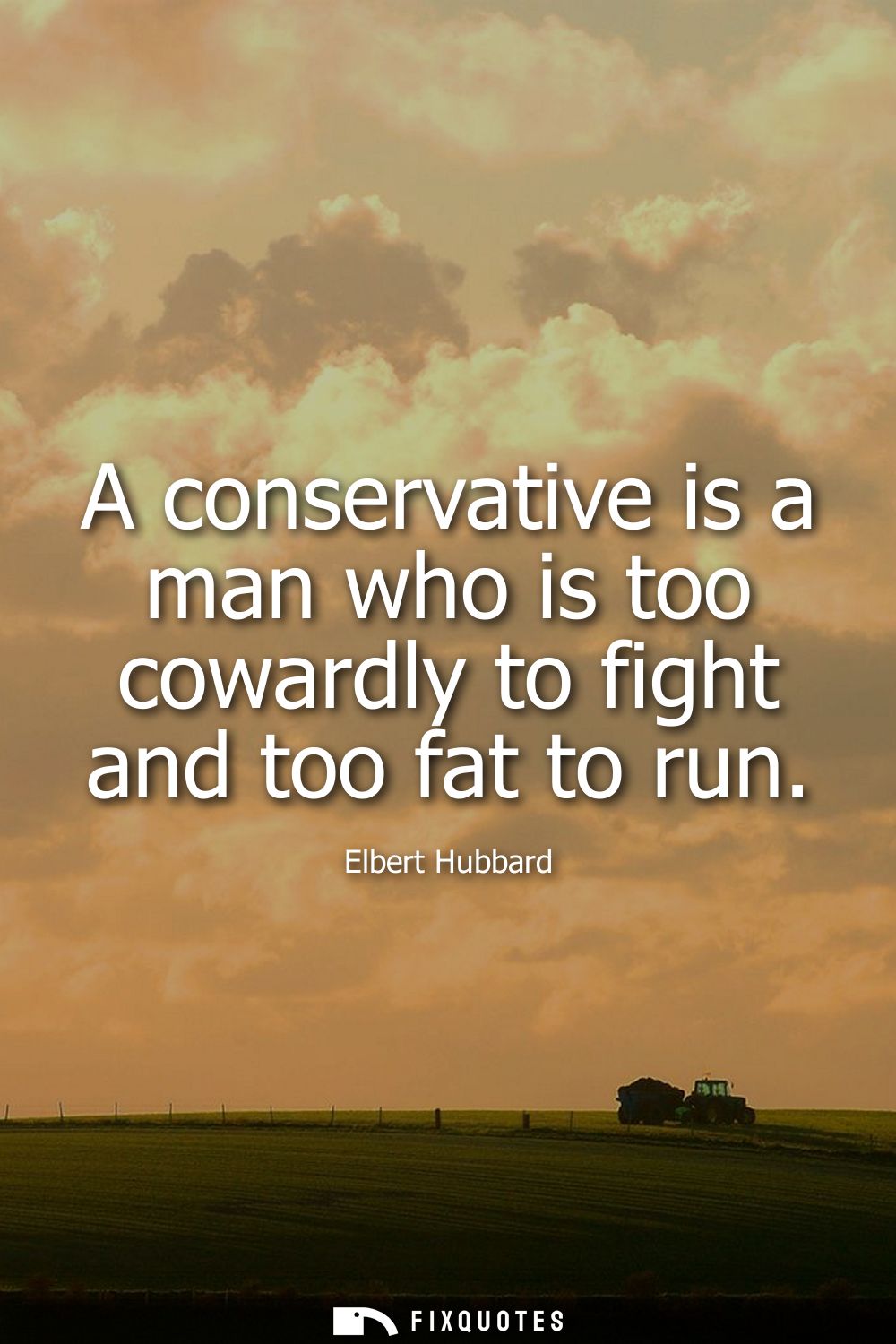
"A conservative is a man who is too cowardly to fight and too fat to run"
About this Quote
Hubbard was a writer-entrepreneur steeped in turn-of-the-century American boosterism, a world that fetishized hustle, vigor, and “strenuous life” rhetoric. In that context, “fat” isn’t just about weight; it’s code for complacency, indulgence, a life insulated from consequences. “Cowardly” isn’t just fear; it implies a refusal to risk status, money, or comfort in defense of anything real. Conservatism becomes less an ideology than a posture: a way to keep the furniture unbroken and the bill unpaid by someone else.
The subtext is as political as it is psychological. Hubbard suggests conservative caution is not prudence but self-interest dressed up as virtue. It’s also a deliberately unfair caricature, which is why it travels: insult is portable. By reducing an outlook to physical and moral flab, he turns debate into social sorting - a way for the speaker to signal vigor and superiority while bypassing policy entirely.
Quote Details
| Topic | Sarcastic |
|---|---|
| Source | Help us find the source |
| Cite |
Citation Formats
APA Style (7th ed.)
Hubbard, Elbert. (2026, January 15). A conservative is a man who is too cowardly to fight and too fat to run. FixQuotes. https://fixquotes.com/quotes/a-conservative-is-a-man-who-is-too-cowardly-to-16856/
Chicago Style
Hubbard, Elbert. "A conservative is a man who is too cowardly to fight and too fat to run." FixQuotes. January 15, 2026. https://fixquotes.com/quotes/a-conservative-is-a-man-who-is-too-cowardly-to-16856/.
MLA Style (9th ed.)
"A conservative is a man who is too cowardly to fight and too fat to run." FixQuotes, 15 Jan. 2026, https://fixquotes.com/quotes/a-conservative-is-a-man-who-is-too-cowardly-to-16856/. Accessed 12 Feb. 2026.