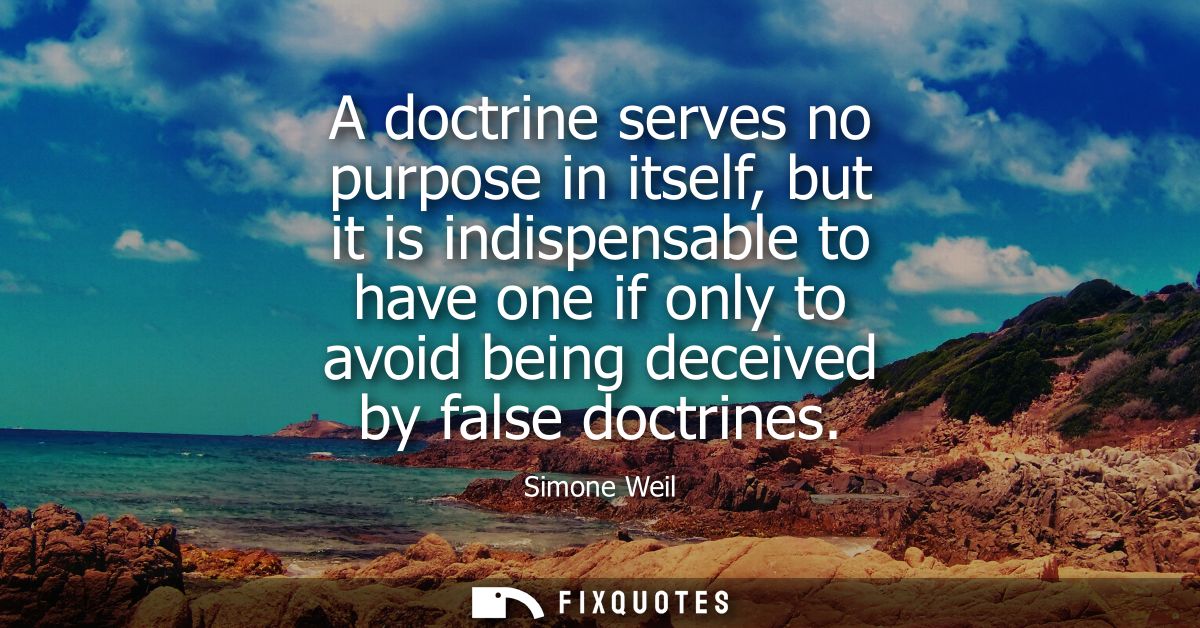
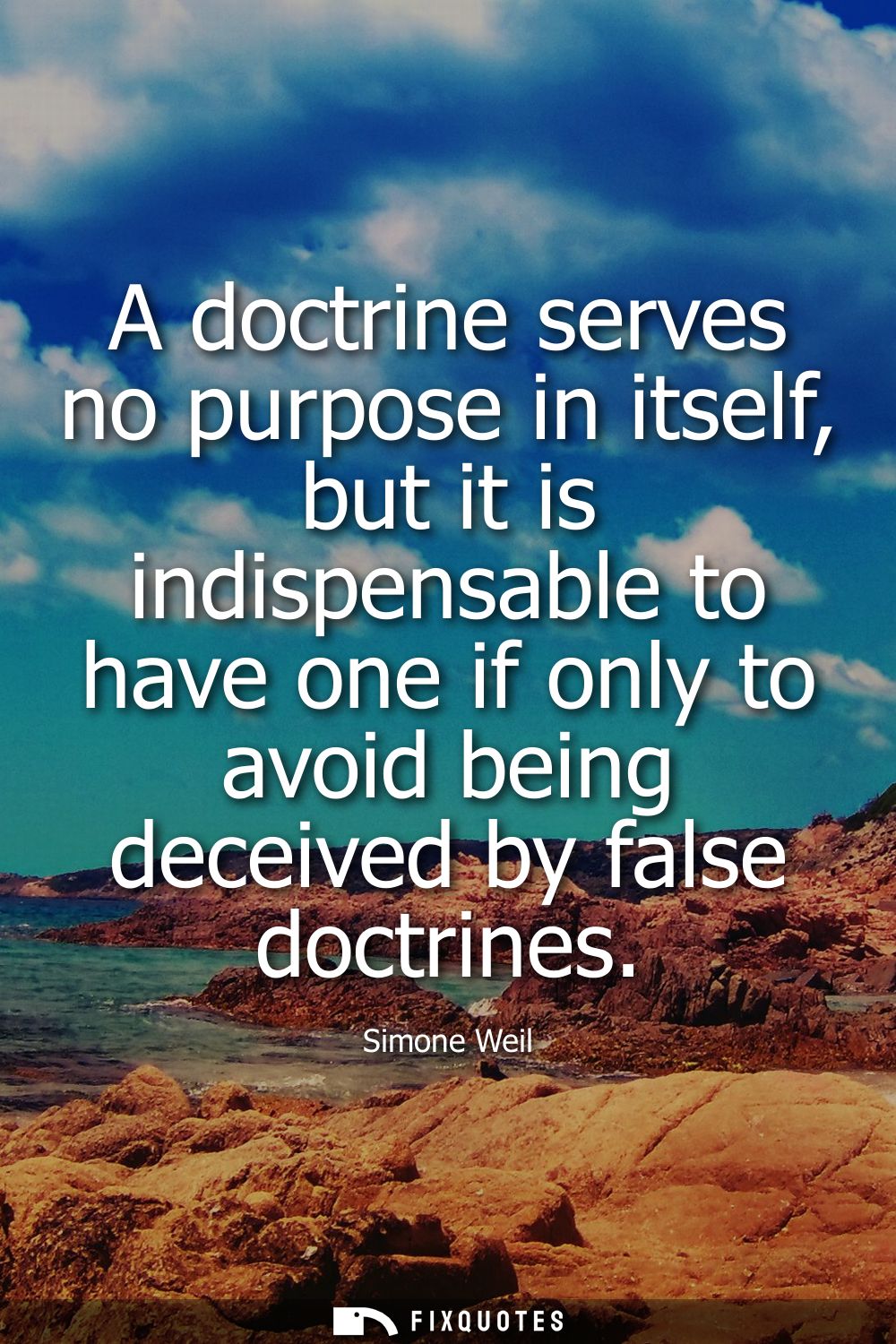
"A doctrine serves no purpose in itself, but it is indispensable to have one if only to avoid being deceived by false doctrines"
About this Quote
The subtext is a brutal diagnosis of intellectual life under pressure. When people drop doctrine in the name of openness, what often rushes in isn’t freedom but credulity: the charismatic leader, the fashionable ideology, the ready-made explanation that feels like moral clarity. Weil, writing in the shadow of totalitarian propaganda and the spiritual exhaustion of interwar Europe, understood how “false doctrines” don’t arrive as obvious lies. They arrive as consolations, as narratives that flatter your anger and simplify your duty.
Her intent isn’t to rehabilitate dogmatism so much as to demand disciplined thinking. A doctrine, for Weil, is a chosen framework you hold with severity, aware of its limits, precisely so you can test competing claims instead of being hypnotized by them. She’s arguing for an internal standard - not to win arguments, but to keep your moral and intellectual attention from being captured. In an age of slogans, that’s her austere kind of mercy.
Quote Details
| Topic | Truth |
|---|---|
| Source | Help us find the source |
| Cite |
Citation Formats
APA Style (7th ed.)
Weil, Simone. (2026, January 18). A doctrine serves no purpose in itself, but it is indispensable to have one if only to avoid being deceived by false doctrines. FixQuotes. https://fixquotes.com/quotes/a-doctrine-serves-no-purpose-in-itself-but-it-is-2909/
Chicago Style
Weil, Simone. "A doctrine serves no purpose in itself, but it is indispensable to have one if only to avoid being deceived by false doctrines." FixQuotes. January 18, 2026. https://fixquotes.com/quotes/a-doctrine-serves-no-purpose-in-itself-but-it-is-2909/.
MLA Style (9th ed.)
"A doctrine serves no purpose in itself, but it is indispensable to have one if only to avoid being deceived by false doctrines." FixQuotes, 18 Jan. 2026, https://fixquotes.com/quotes/a-doctrine-serves-no-purpose-in-itself-but-it-is-2909/. Accessed 30 Mar. 2026.