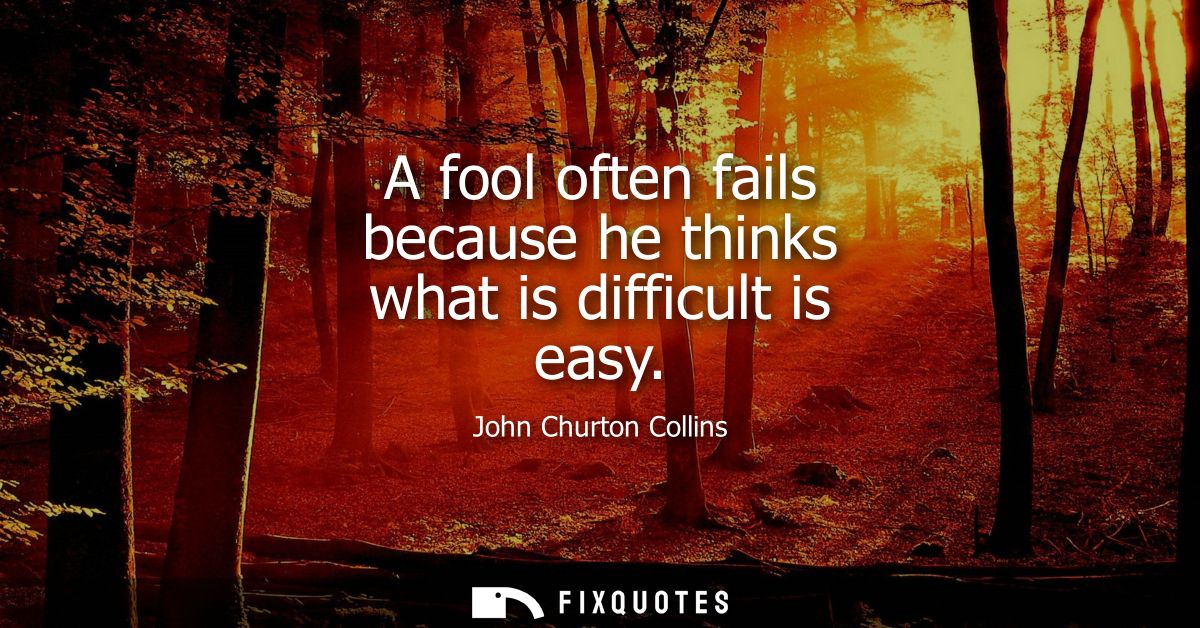
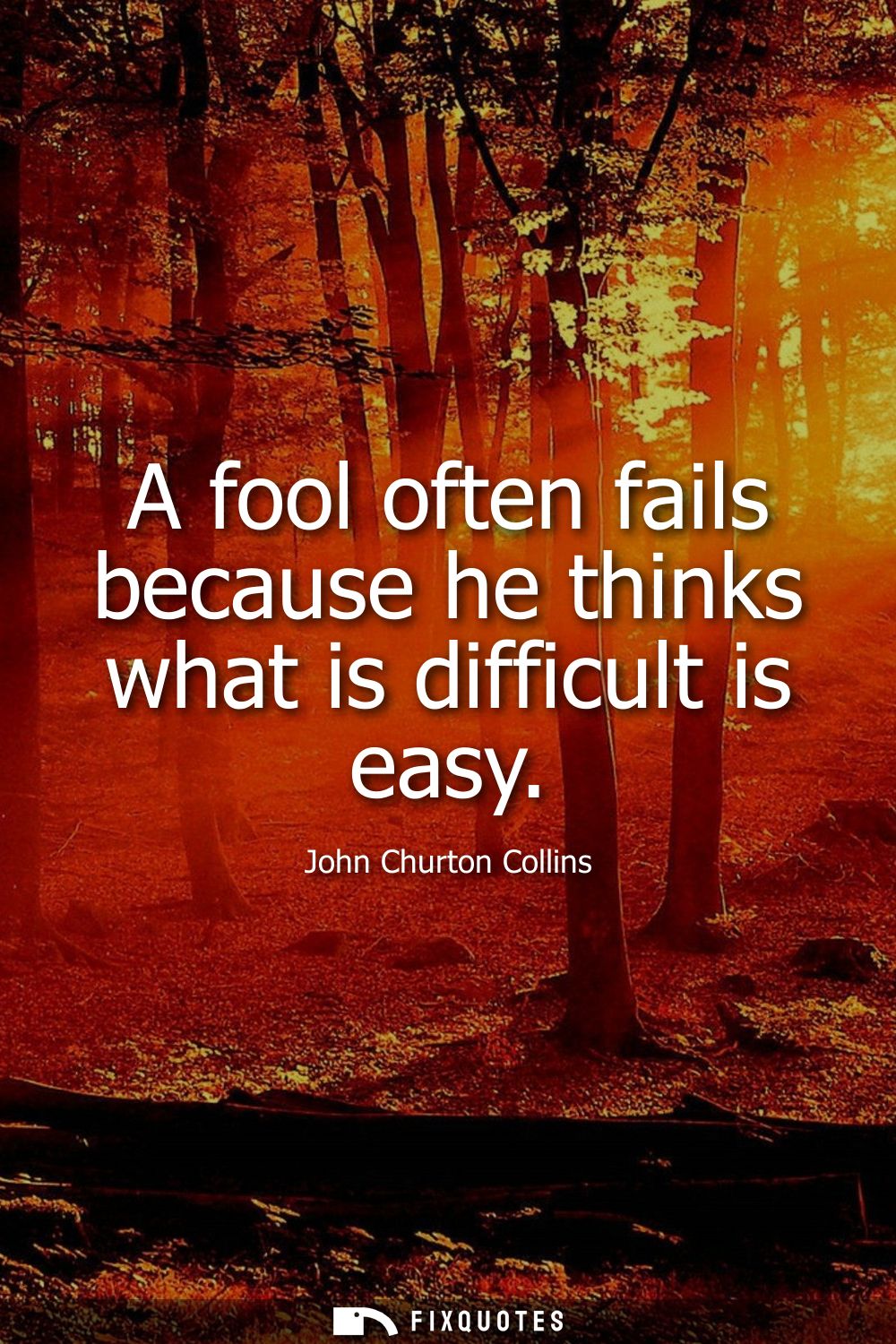
"A fool often fails because he thinks what is difficult is easy"
About this Quote
The sting in Collins's line is that it flips the usual story about failure. We like to blame defeat on tasks being too hard, on bad luck, on an unfair system. Collins, a professional critic with Victorian-era standards for rigor, points the finger at a quieter vice: the confidence that substitutes for competence. The fool doesn't trip because the mountain is tall; he trips because he assumes it's a curb.
The sentence works because it's built like a moral scalpel. "Often" keeps it empirical rather than preachy, while "thinks" makes the cause internal and voluntary. This isn't tragedy; it's self-inflicted. Collins is diagnosing a kind of intellectual laziness that masquerades as optimism: the belief that effort, craft, and preparation are optional. In that sense, the quote isn't really about stupidity; it's about miscalibration. The fool's defining error is not ignorance but a broken sense of scale.
As a critic, Collins lived in a world where people wrote, argued, performed, and published with varying levels of discipline. His context rewards an unforgiving attention to difficulty: the hard-won skills behind good prose, serious scholarship, ethical judgment. The subtext is a defense of expertise, but not the smug kind. It's a warning that the first step toward mastery is admitting friction exists. If you treat complexity like a speed bump, reality will eventually collect its debt, with interest.
The sentence works because it's built like a moral scalpel. "Often" keeps it empirical rather than preachy, while "thinks" makes the cause internal and voluntary. This isn't tragedy; it's self-inflicted. Collins is diagnosing a kind of intellectual laziness that masquerades as optimism: the belief that effort, craft, and preparation are optional. In that sense, the quote isn't really about stupidity; it's about miscalibration. The fool's defining error is not ignorance but a broken sense of scale.
As a critic, Collins lived in a world where people wrote, argued, performed, and published with varying levels of discipline. His context rewards an unforgiving attention to difficulty: the hard-won skills behind good prose, serious scholarship, ethical judgment. The subtext is a defense of expertise, but not the smug kind. It's a warning that the first step toward mastery is admitting friction exists. If you treat complexity like a speed bump, reality will eventually collect its debt, with interest.
Quote Details
| Topic | Wisdom |
|---|---|
| Source | Help us find the source |
| Cite |
Citation Formats
APA Style (7th ed.)
Collins, John Churton. (2026, January 16). A fool often fails because he thinks what is difficult is easy. FixQuotes. https://fixquotes.com/quotes/a-fool-often-fails-because-he-thinks-what-is-113464/
Chicago Style
Collins, John Churton. "A fool often fails because he thinks what is difficult is easy." FixQuotes. January 16, 2026. https://fixquotes.com/quotes/a-fool-often-fails-because-he-thinks-what-is-113464/.
MLA Style (9th ed.)
"A fool often fails because he thinks what is difficult is easy." FixQuotes, 16 Jan. 2026, https://fixquotes.com/quotes/a-fool-often-fails-because-he-thinks-what-is-113464/. Accessed 12 Feb. 2026.
More Quotes by John
Add to List