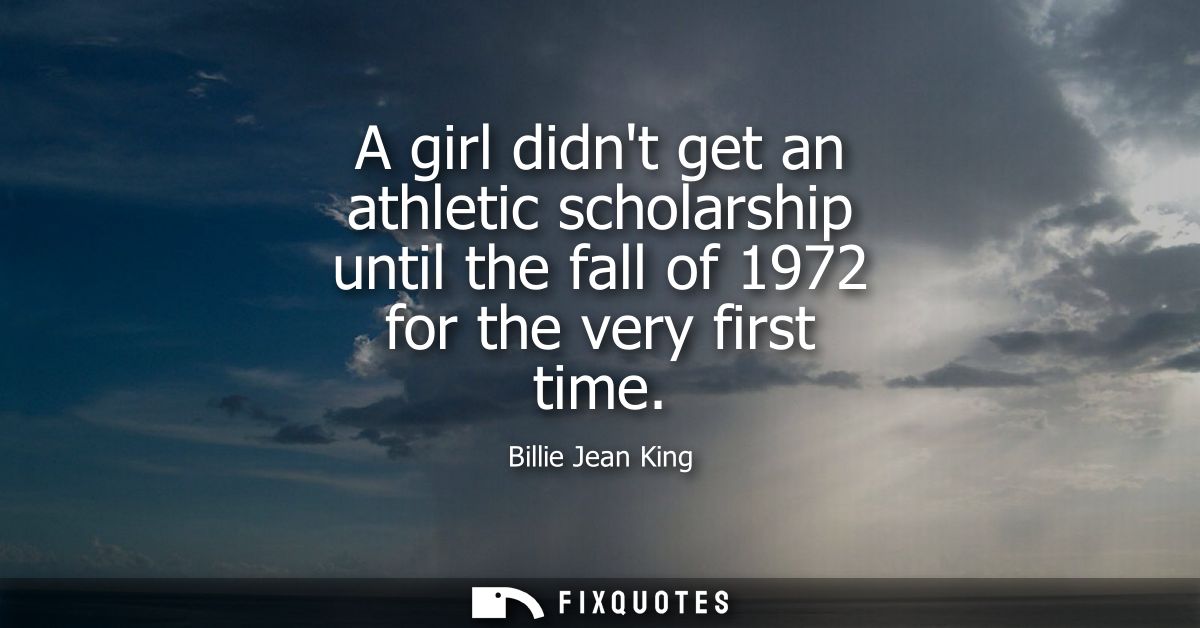
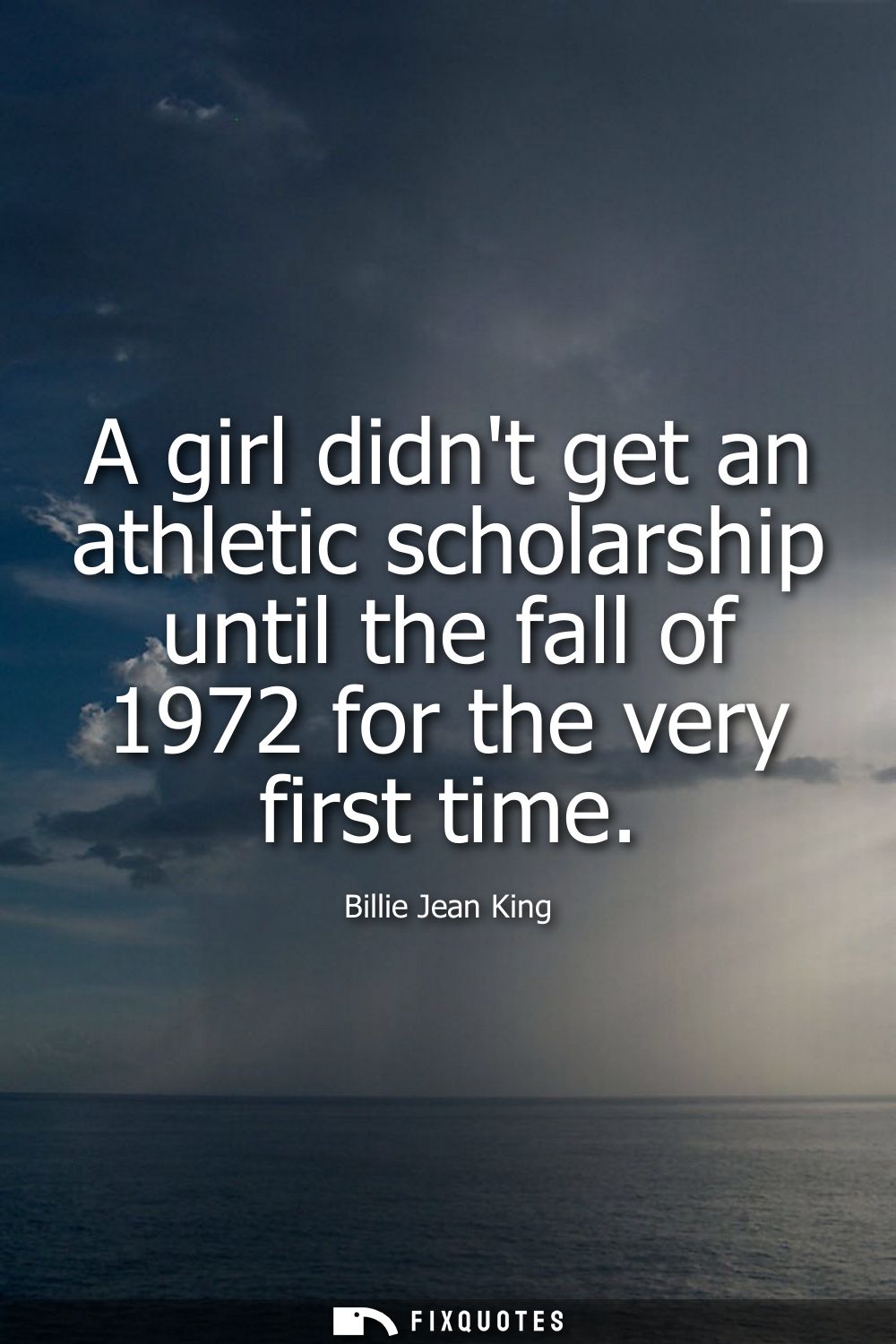
"A girl didn't get an athletic scholarship until the fall of 1972 for the very first time"
About this Quote
The context is Title IX, signed in June 1972, which forced federally funded schools to take gender equity seriously. King’s timing matters. She’s reminding us that before the law, there wasn’t a hidden pipeline of support waiting to be discovered; there was a structural refusal to build it. “For the very first time” reads like celebration until you hear the undertone: why did it take this long, and who benefited from the delay?
Subtextually, King is also reframing what a scholarship means. It’s not just tuition money; it’s legitimacy, coaching attention, facilities, media coverage, the permission to imagine sports as a future rather than a hobby. Coming from an athlete who fought public battles for equal pay and credibility, the line functions as both origin story and warning. Rights don’t arrive as a cultural mood shift - they land when people force institutions to attach resources to their rhetoric.
Quote Details
| Topic | Equality |
|---|---|
| Source | Help us find the source |
| Cite |
Citation Formats
APA Style (7th ed.)
King, Billie Jean. (2026, January 15). A girl didn't get an athletic scholarship until the fall of 1972 for the very first time. FixQuotes. https://fixquotes.com/quotes/a-girl-didnt-get-an-athletic-scholarship-until-39170/
Chicago Style
King, Billie Jean. "A girl didn't get an athletic scholarship until the fall of 1972 for the very first time." FixQuotes. January 15, 2026. https://fixquotes.com/quotes/a-girl-didnt-get-an-athletic-scholarship-until-39170/.
MLA Style (9th ed.)
"A girl didn't get an athletic scholarship until the fall of 1972 for the very first time." FixQuotes, 15 Jan. 2026, https://fixquotes.com/quotes/a-girl-didnt-get-an-athletic-scholarship-until-39170/. Accessed 12 Mar. 2026.