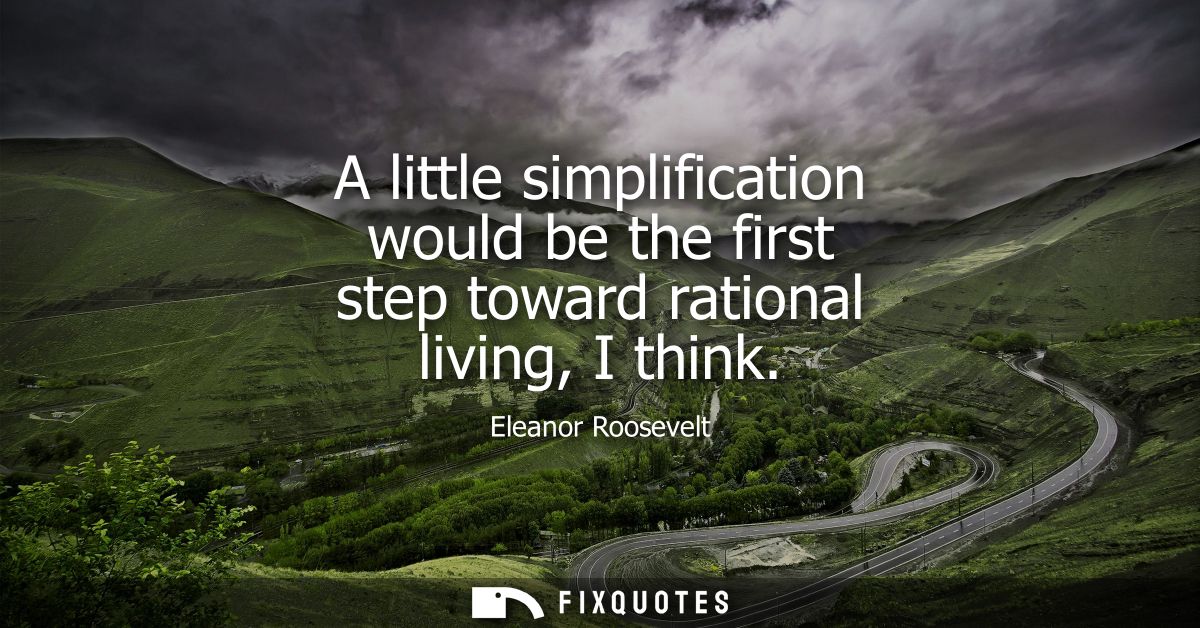
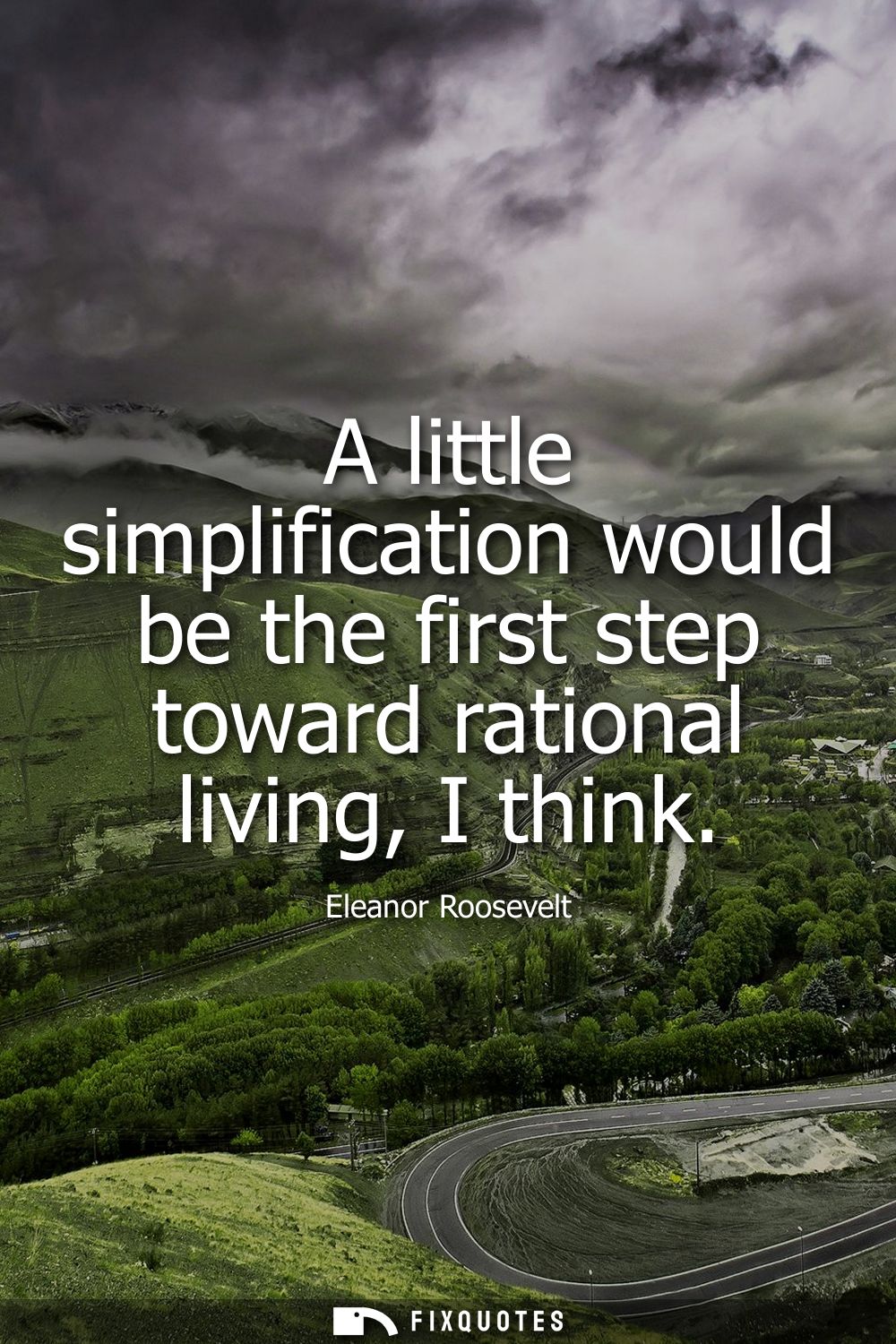
"A little simplification would be the first step toward rational living, I think"
About this Quote
The subtext is a rebuke to modern life before “modern life” became our favorite villain. Roosevelt is pointing at the cluttered moral math of consumption, status, and busyness and suggesting it makes people less clear-minded, not more successful. “Simplification” isn’t just tidying a drawer; it’s clarifying priorities, reducing performative obligation, refusing the social scripts that keep you anxious and compliant. In that sense, it’s political. A less distracted citizen is harder to manipulate and more capable of democratic judgment.
The phrase “first step” matters, too. It implies rationality isn’t a trait you’re born with; it’s a practice you build. Roosevelt’s “I think” softens the edges, projecting humility rather than command, but it also invites buy-in: try it and see. Coming from a First Lady who used her platform to expand civic imagination, the line reads like a small, domestic doorway into bigger agency: clear the noise, then act with intention.
Quote Details
| Topic | Life |
|---|---|
| Source | Help us find the source |
| Cite |
Citation Formats
APA Style (7th ed.)
Roosevelt, Eleanor. (2026, January 18). A little simplification would be the first step toward rational living, I think. FixQuotes. https://fixquotes.com/quotes/a-little-simplification-would-be-the-first-step-16876/
Chicago Style
Roosevelt, Eleanor. "A little simplification would be the first step toward rational living, I think." FixQuotes. January 18, 2026. https://fixquotes.com/quotes/a-little-simplification-would-be-the-first-step-16876/.
MLA Style (9th ed.)
"A little simplification would be the first step toward rational living, I think." FixQuotes, 18 Jan. 2026, https://fixquotes.com/quotes/a-little-simplification-would-be-the-first-step-16876/. Accessed 12 Feb. 2026.