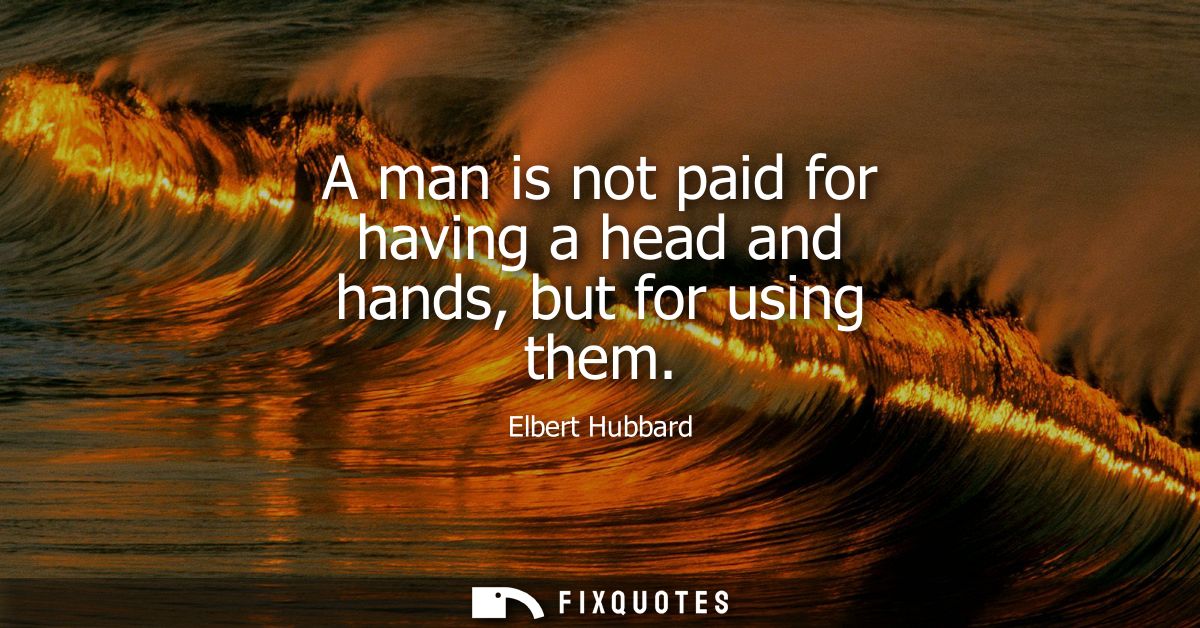
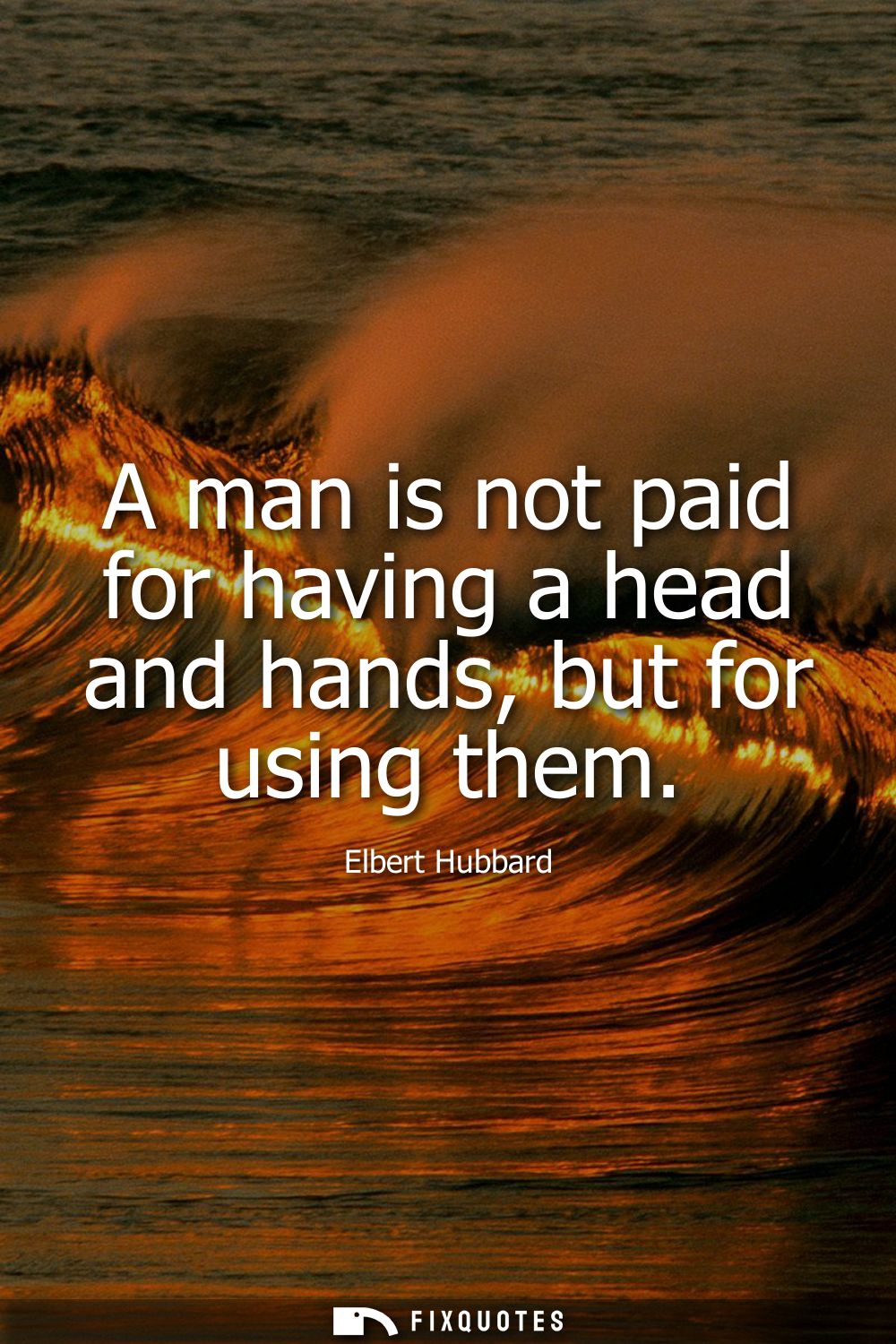
"A man is not paid for having a head and hands, but for using them"
About this Quote
Hubbard’s line is a velvet-gloved jab at entitlement, the kind of moral accounting that made the early 20th century’s hustle culture feel like a civic virtue. He’s not admiring the dignity of labor so much as policing it: you don’t get compensated for possessing potential, only for converting it into useful output. In a single sentence he demotes “having” to biological trivia and elevates “using” to a market test. The head and hands are just inventory; value appears only when they’re put to work.
The subtext is both motivational and disciplinary. It flatters the diligent reader (you are paid because you apply yourself) while scolding anyone who expects security as a birthright (your talents don’t entitle you to anything until they’re monetized). That’s why the phrase still travels so well in management talk: it frames wages not as a negotiated share of collective productivity but as a personal reward for correct self-deployment. The employer disappears; the system disappears; only the individual’s “use” remains.
Context matters. Hubbard, a writer-businessman tied to the Roycroft movement, operated in the American moment of industrial expansion, self-help philosophy, and a growing managerial class. The line carries an Arts-and-Crafts romance about purposeful work, but it also harmonizes neatly with Taylor-era efficiency thinking. Its rhetorical trick is how it makes a hard economic reality sound like a clean ethical rule: if you’re underpaid, the sentence quietly implies, look at your “use” before you look at power.
The subtext is both motivational and disciplinary. It flatters the diligent reader (you are paid because you apply yourself) while scolding anyone who expects security as a birthright (your talents don’t entitle you to anything until they’re monetized). That’s why the phrase still travels so well in management talk: it frames wages not as a negotiated share of collective productivity but as a personal reward for correct self-deployment. The employer disappears; the system disappears; only the individual’s “use” remains.
Context matters. Hubbard, a writer-businessman tied to the Roycroft movement, operated in the American moment of industrial expansion, self-help philosophy, and a growing managerial class. The line carries an Arts-and-Crafts romance about purposeful work, but it also harmonizes neatly with Taylor-era efficiency thinking. Its rhetorical trick is how it makes a hard economic reality sound like a clean ethical rule: if you’re underpaid, the sentence quietly implies, look at your “use” before you look at power.
Quote Details
| Topic | Work Ethic |
|---|---|
| Source | Help us find the source |
| Cite |
Citation Formats
APA Style (7th ed.)
Hubbard, Elbert. (2026, January 14). A man is not paid for having a head and hands, but for using them. FixQuotes. https://fixquotes.com/quotes/a-man-is-not-paid-for-having-a-head-and-hands-but-16861/
Chicago Style
Hubbard, Elbert. "A man is not paid for having a head and hands, but for using them." FixQuotes. January 14, 2026. https://fixquotes.com/quotes/a-man-is-not-paid-for-having-a-head-and-hands-but-16861/.
MLA Style (9th ed.)
"A man is not paid for having a head and hands, but for using them." FixQuotes, 14 Jan. 2026, https://fixquotes.com/quotes/a-man-is-not-paid-for-having-a-head-and-hands-but-16861/. Accessed 12 Feb. 2026.
More Quotes by Elbert
Add to List