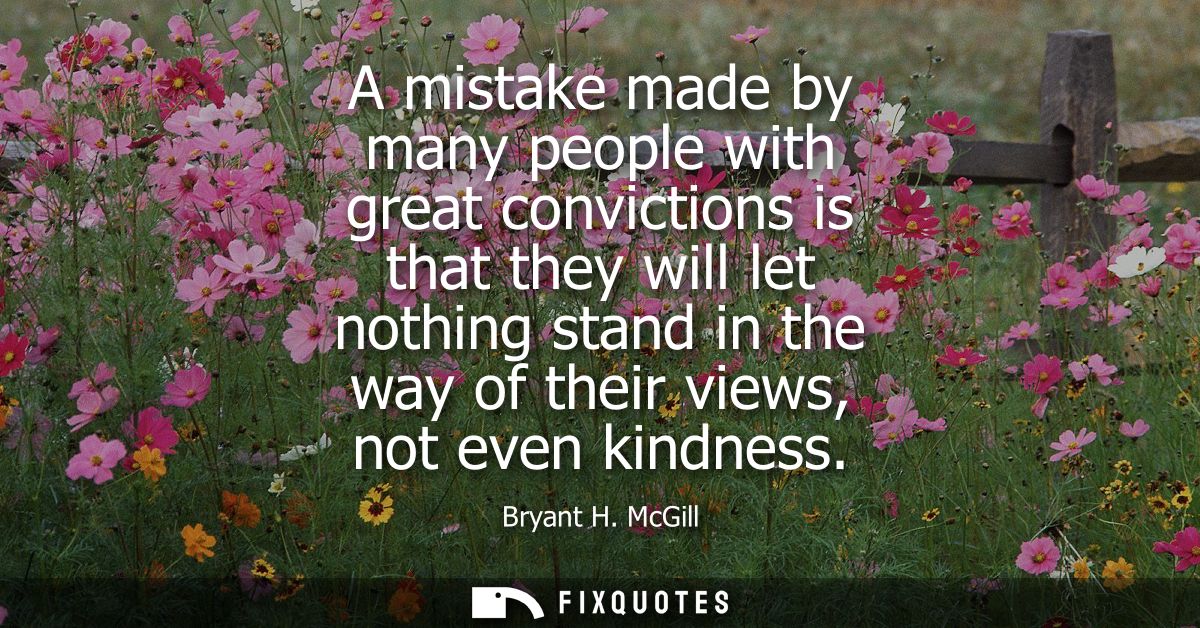
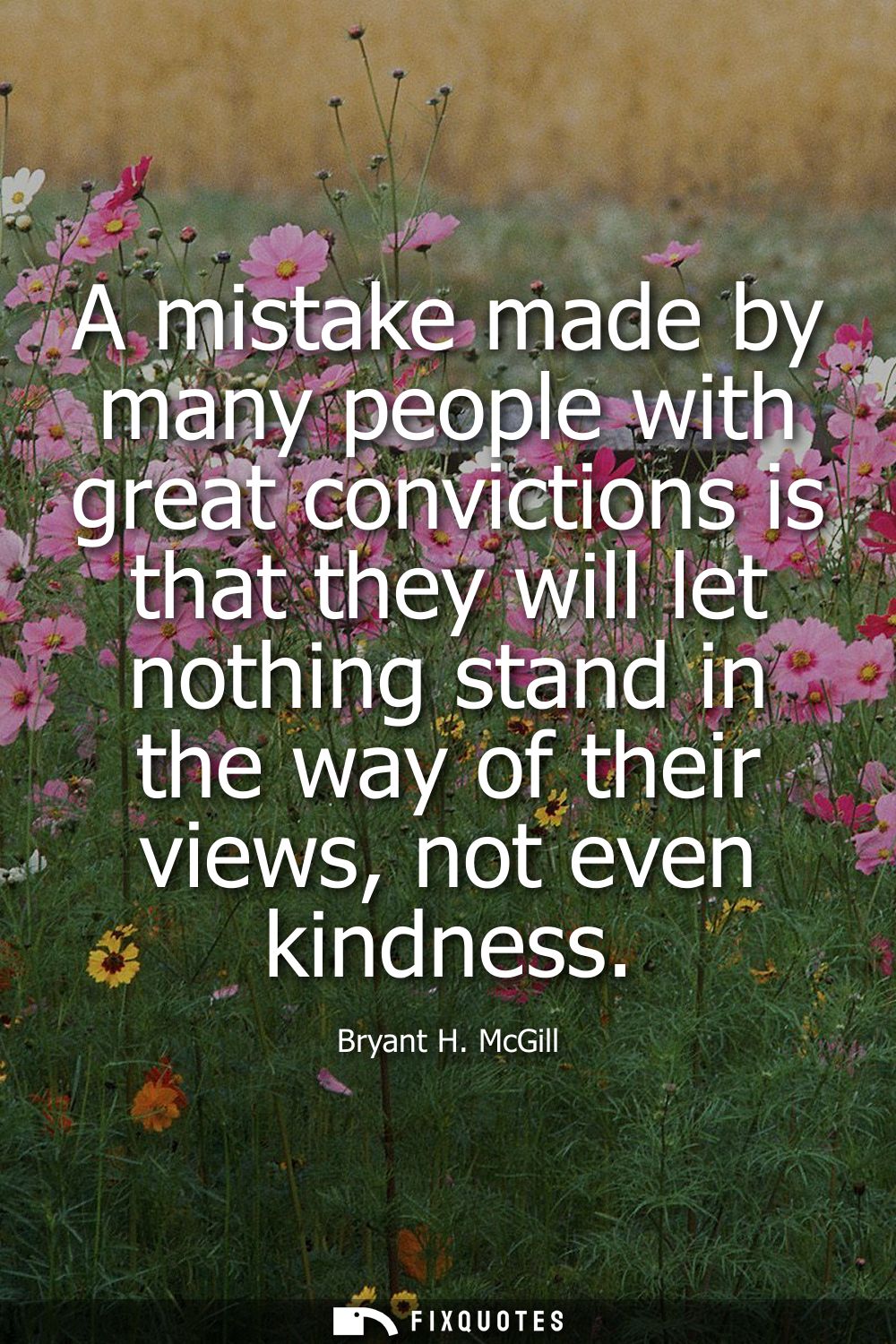
"A mistake made by many people with great convictions is that they will let nothing stand in the way of their views, not even kindness"
About this Quote
The intent isn’t to dunk on conviction itself; it’s to warn about conviction without restraint. “Let nothing stand in the way” borrows the language of achievement and moral crusade, the kind of phrasing you hear in self-help culture and activism alike. McGill flips that motivational cadence into a critique: when the goal is winning the argument or defending an identity, kindness becomes collateral damage. The subtext is that unkindness often arrives wearing a halo. People don’t feel mean; they feel necessary.
Contextually, the quote reads like a response to an age of performative certainty: social media pile-ons, ideological purity tests, and the impulse to treat disagreement as moral contamination. It’s also an interpersonal caution. In families, workplaces, and movements, the “right” person can become the most dangerous one to talk to because they’ve converted their beliefs into a license to steamroll.
McGill’s rhetorical power comes from its quiet accusation: if your convictions require you to stop being kind, you may be protecting your ego more than your principles.
Quote Details
| Topic | Kindness |
|---|---|
| Source | Help us find the source |
| Cite |
Citation Formats
APA Style (7th ed.)
McGill, Bryant H. (2026, January 17). A mistake made by many people with great convictions is that they will let nothing stand in the way of their views, not even kindness. FixQuotes. https://fixquotes.com/quotes/a-mistake-made-by-many-people-with-great-39411/
Chicago Style
McGill, Bryant H. "A mistake made by many people with great convictions is that they will let nothing stand in the way of their views, not even kindness." FixQuotes. January 17, 2026. https://fixquotes.com/quotes/a-mistake-made-by-many-people-with-great-39411/.
MLA Style (9th ed.)
"A mistake made by many people with great convictions is that they will let nothing stand in the way of their views, not even kindness." FixQuotes, 17 Jan. 2026, https://fixquotes.com/quotes/a-mistake-made-by-many-people-with-great-39411/. Accessed 31 Mar. 2026.