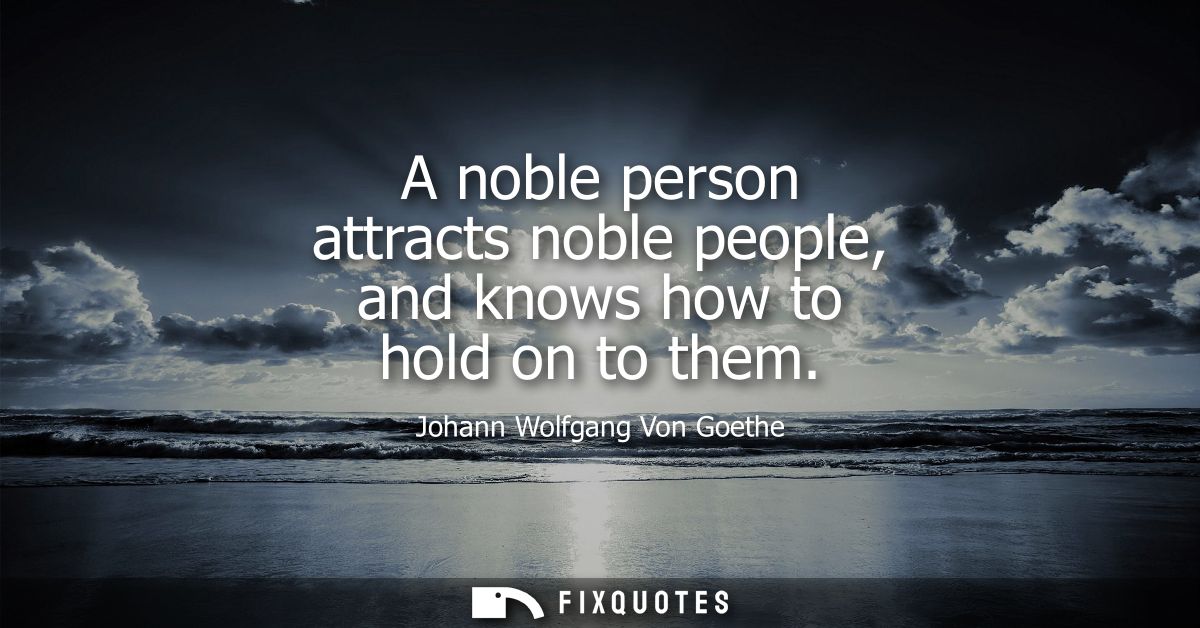
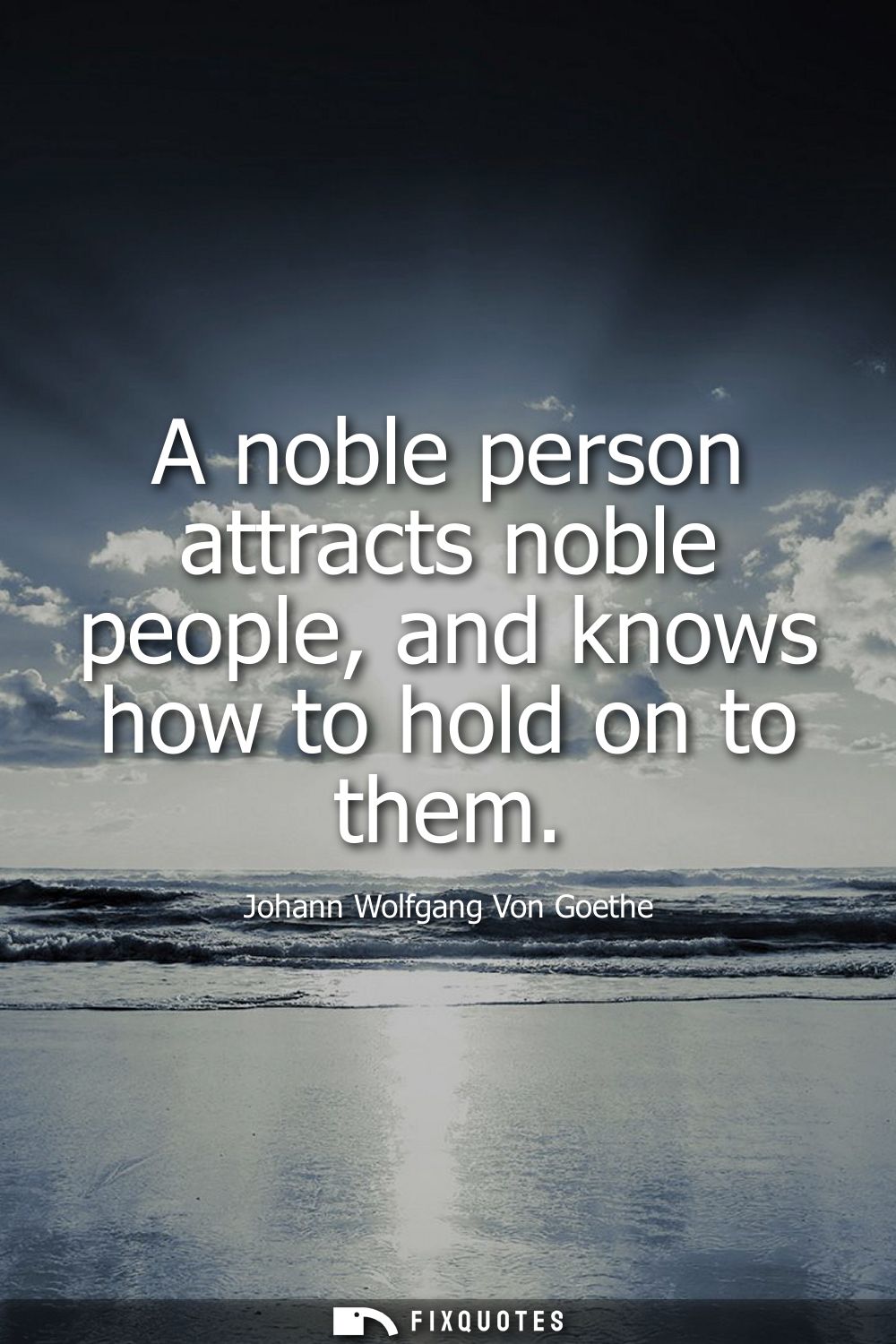
"A noble person attracts noble people, and knows how to hold on to them"
About this Quote
The second clause sharpens the blade. Plenty of people can draw admiration in a flash; “knows how to hold on to them” shifts from charisma to cultivation. Goethe’s “noble person” isn’t just impressive at parties. They practice the unglamorous arts of loyalty, tact, and steadiness. The subtext is that worthy relationships are not trophies you collect; they are responsibilities you maintain. If noble people drift away, it’s not only their fickleness on trial, but your capacity for reciprocity.
Context matters: Goethe lived in a Europe where “noble” still echoed with class hierarchy, court manners, and reputations that could make or break a life. Across his work, though, he keeps prying virtue away from pedigree and relocating it in Bildung - self-formation through art, experience, and restraint. Read that way, the line becomes a quiet rebuke to status-chasing. The real aristocracy, Goethe suggests, is composure under pressure and generosity without performance - the kind of inner rank that draws the right company and can actually keep it.
Quote Details
| Topic | Honesty & Integrity |
|---|---|
| Source | Help us find the source |
| Cite |
Citation Formats
APA Style (7th ed.)
Goethe, Johann Wolfgang Von. (2026, January 17). A noble person attracts noble people, and knows how to hold on to them. FixQuotes. https://fixquotes.com/quotes/a-noble-person-attracts-noble-people-and-knows-32083/
Chicago Style
Goethe, Johann Wolfgang Von. "A noble person attracts noble people, and knows how to hold on to them." FixQuotes. January 17, 2026. https://fixquotes.com/quotes/a-noble-person-attracts-noble-people-and-knows-32083/.
MLA Style (9th ed.)
"A noble person attracts noble people, and knows how to hold on to them." FixQuotes, 17 Jan. 2026, https://fixquotes.com/quotes/a-noble-person-attracts-noble-people-and-knows-32083/. Accessed 31 Mar. 2026.