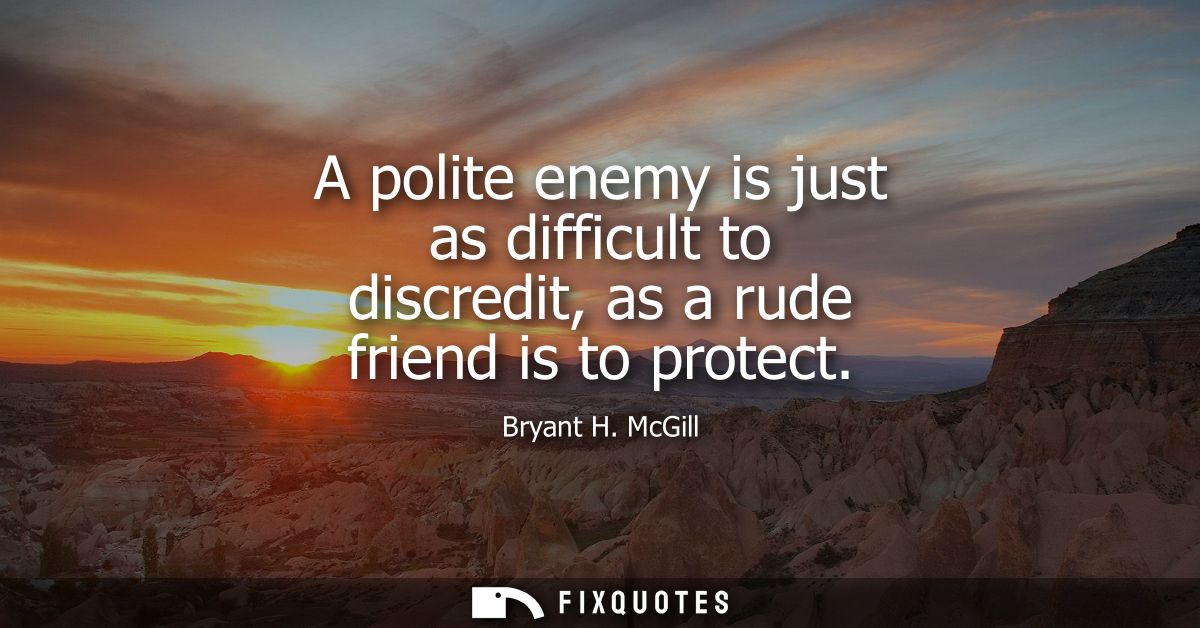
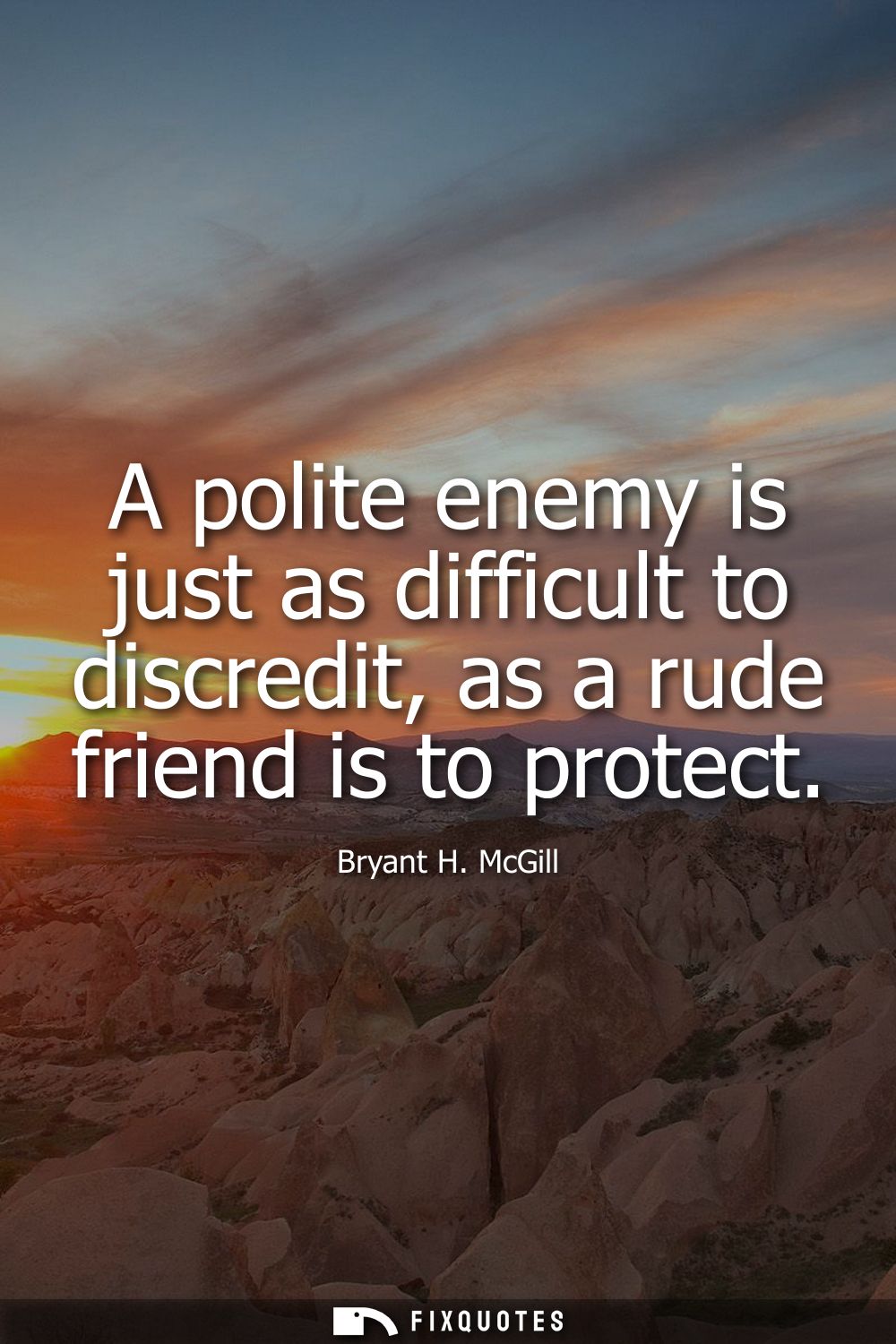
"A polite enemy is just as difficult to discredit as a rude friend is to protect"
About this Quote
The second half flips the knife. A rude friend doesn’t just embarrass themselves; they conscript you into their mess. Loyalty becomes reputational risk management. You can’t defend their cause without inheriting their tone, and tone is often what outsiders judge first. McGill is pointing at a social truth that feels especially contemporary: people read character through presentation, then retrofit the facts.
The subtext is a warning about how easily ethics gets confused with aesthetics. We treat politeness as proof of good faith and rudeness as proof of bad faith, even though both can be strategic. The “enemy” may be weaponizing civility; the “friend” may be right but socially radioactive. The intent isn’t to preach etiquette; it’s to urge discernment: don’t outsource your moral judgments to style, because style can be engineered - and it can also sabotage you.
Quote Details
| Topic | Fake Friends |
|---|---|
| Source | Help us find the source |
| Cite |
Citation Formats
APA Style (7th ed.)
McGill, Bryant H. (2026, February 16). A polite enemy is just as difficult to discredit as a rude friend is to protect. FixQuotes. https://fixquotes.com/quotes/a-polite-enemy-is-just-as-difficult-to-discredit-41467/
Chicago Style
McGill, Bryant H. "A polite enemy is just as difficult to discredit as a rude friend is to protect." FixQuotes. February 16, 2026. https://fixquotes.com/quotes/a-polite-enemy-is-just-as-difficult-to-discredit-41467/.
MLA Style (9th ed.)
"A polite enemy is just as difficult to discredit as a rude friend is to protect." FixQuotes, 16 Feb. 2026, https://fixquotes.com/quotes/a-polite-enemy-is-just-as-difficult-to-discredit-41467/. Accessed 27 Mar. 2026.